Choosing services on the comprehensive AWS platform can be overwhelming for users. This article will help you make an informed decision about whether AWS EC2 or AWS Lightsail cloud servers are right for you.
AWS LightSail and AWS EC2 are similar services that provide virtual cloud servers. Although the functionality of these services seems almost similar, both services are designed for different use cases.

AWS EC2
AWS EC2 is a core cloud service provided by AWS that you can use to provision virtual cloud servers. Instances provisioned from EC2 are like a blank slate. These servers are highly customizable and can be configured and used in any way you desire. EC2 can theoretically service an unlimited set of virtual machines.
Amazon also offers many choices when choosing instance types for EC2 virtual machines. Depending on your use case, you can choose between instances that are optimized for CPU, memory, storage, GPU, and networking.
EC2 is one of the most widely used services on AWS. It integrates with most other AWS services on the platform and is highly customizable to support all kinds of use cases.

AWS Light Sail
AWS Lighsail is a cloud service provided by AWS. The Lighsail service allows users to provision preconfigured cloud servers such as LAMP, WordPress, Node.js, and Magento to quickly set up application architectures without manually installing software. For a detailed overview of Lightsail, see the Amazon Lightsail: Everything You Need to Know article.
AWS designed Lightsail to be easy to understand and use, even for complete beginners.
Lightsail and EC2 are both powerful services used to provision virtual cloud servers. Let’s take a look at the differences between these services.
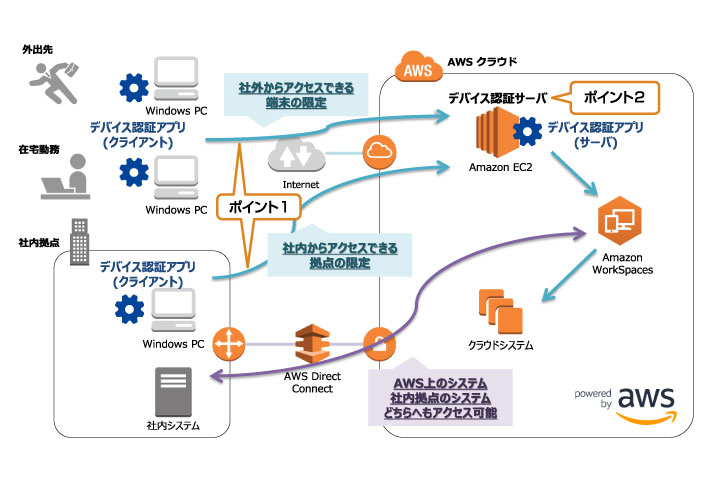
AWS Lightsail and EC2
Usage
Lightsail is an easy-to-use service designed for simple web applications and websites. It is specially designed for beginners and non-technical users who can use this service in just a few clicks and easily set up their website. We recommend that you avoid using LightSail for very complex applications and limit it to small to medium workloads.
EC2 is a larger and more complex service. It is used for all kinds of applications, from small web applications (Lightsail also works) to big data and machine learning applications. EC2 can potentially be configured to host any application. It can handle even the most complex architectures.
Ease of use
As mentioned before, LightSail is an easy-to-use service designed specifically for beginners. The entire process of starting a Lightsail server and deploying your application to the server can be accomplished with just a few clicks. Provides an all-in-one experience for virtual server creation and application deployment.
EC2, on the other hand, requires more manual configuration and sometimes other services such as AWS CodeDeploy or CodePipeline to streamline application deployment workflows.
All resources related to your Lightsail instance are managed in the same dashboard. In contrast, each resource in EC2 (such as static IPs, security groups, and EBS volumes) has its own dashboard and options.
So if you just want to get started with AWS and run a small application, Lightsail is your best bet. You don’t need much technical AWS knowledge to start an application with Lightsail.
communication network
Lightsail machine networking is managed by AWS. Users can only add rules to the Lightsail firewall. Networking for EC2 instances is managed by you using VPCs, security groups, and subnets.
subnet
AWS Lightsail does not have native support for subnets. AWS allows you to create public and private subnets based on your application use case. Lightsail is only for websites, so hosting these servers in private subnets isn’t supported. EC2 instances, on the other hand, can be deployed in any subnet, public or private.
So if your use case requires you to deploy web or other applications into a private subnet, you can only do that with AWS EC2.
Scalability
Lightsail instances cannot be scaled, at least not automatically. Additionally, Lightsail instances cannot be modified after they are launched. Therefore, if you change your instance type, you must launch a new instance and change your plan.
EC2 is a highly scalable service. You can use AutoScaling Groups in the EC2 Dashboard to horizontally scale your EC2 instances. This means you can increase or decrease the number of instances serving your application. You can also change your EC2 instance to a new instance type after you launch it.
EBS volume
EBS is a block storage service that can be integrated with EC2 machines for storage purposes. EBS volumes are separate network drives that you can attach and detach from your EC2 instances.
Lighsail does not support EBS volumes.
Pricing
AWS Lightsail has a fixed “monthly” pricing schedule that varies from $3.50 PM to $160 PM based on the type and specs of your Lightsatil instance. This service offers a free tier of 3 months from the date you sign up.
AWS EC2 has multiple pricing models. On-Demand Instances are available at fixed, pay-as-you-go rates. Alternatively, you can reserve instances at a discounted price for a set period of time. The EC2 free tier is available for 12 months from the date you sign up.
load balancing
Load balancing is a native feature of Lightsail, and LightSail load balancers are easy to use with your Lightsail instances.
EC2 has four different types of load balancers, each with unique specifications and use cases that can be integrated with EC2 instances.
monitoring
It is possible to monitor your Lightsail instances, but you are limited to a few parameters. EC2 offers a variety of metrics and options for monitoring.
encryption
Lightsail encryption is managed by AWS and enabled by default. When using EC2 instances, users can choose to enable or disable encryption.
Use case Lightsail
- Lightsail is inexpensive and easy to configure, making it suitable for setting up development/test environments.
- Very useful for beginners looking to explore AWS and run applications with limited cloud knowledge.
- For use cases that require predictable monthly costs.
- Consolidate load balancers, networks, and databases into one console.
Use case EC2
- EC2 offers multiple pricing models and ways to take advantage of discount options for better pricing.
- These are used for complex applications.
- For applications in private subnets.
- For automatic scalability.
- Gain complete control and flexibility over your instances.
- Optimize instance types for specific use cases, such as using CPU-optimized instances for machine learning jobs.
conclusion
Both Lightsail and EC2 are mature tools aimed at a variety of customers and use cases. Frankly, EC2 is a much more powerful service than Lightsail. It can do everything a Lightsail instance can do, and more. But power comes with a lot of complexity, a lot of choices, and sometimes confusion. Therefore, if you are new to AWS, jumping directly to the EC2 console may not be the right choice for you.
Lightsail is suitable for new AWS users who don’t want to go through the hassle of configuring virtual servers and want ready-to-use infrastructure. It is also specifically targeted at small to medium-sized, simple web applications. Lightsail instances can be easily upgraded to EC2 instances, so you can always set up your primary application in Lightsail before slowly upgrading to EC2.
We hope this article helps you make the right decision between the two services.


![How to set up a Raspberry Pi web server in 2021 [Guide]](https://i0.wp.com/pcmanabu.com/wp-content/uploads/2019/10/web-server-02-309x198.png?w=1200&resize=1200,0&ssl=1)


