Over the past few years, the craze for Bitcoin has been increasing. People want to learn about this cryptocurrency, Bitcoin mining, and the mechanisms behind it, to fuel their geeky minds, profit from it, and experiment with this new technology.
Bitcoin enables fast, accurate, and low-cost money transfers around the world. It revolutionized modern concepts of commerce and money.
However, Bitcoin is still a mystery to many. People are confused about it, its usage and how to obtain it. And one of the biggest questions concerns Bitcoin mining.
Now, let’s unravel the mystery!
Let’s get started by defining some important concepts.
What is Bitcoin and Blockchain?
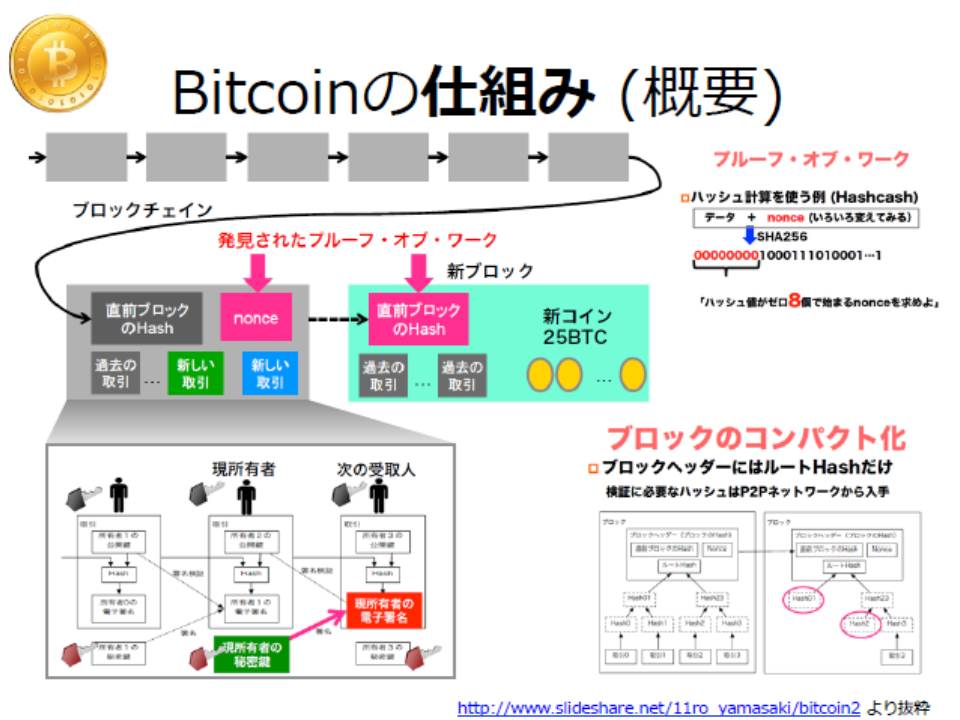
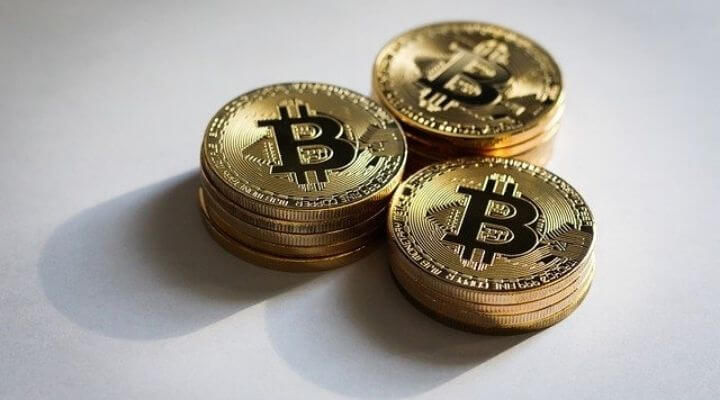
Bitcoin (BTC) is the first and most famous digital currency or cryptocurrency. It is sent and received directly between users on peer-to-peer (P2P) networks, without intermediaries, central banks, or governing bodies.
This cryptocurrency was invented in 2008 by Satoshi Nakamoto (an unidentified person or group of individuals). Its implementation was released as open source software in 2009 and was first used. Bitcoin transactions are verified using cryptography by network nodes and recorded on a distributed public ledger, also known as a blockchain.
Bitcoin is built on blockchain technology. This immutable, shared ledger can store transactions and records in chronological order on an extensive network of computers spread across different locations around the world. It is a special type of database that uses distributed ledger technology to ensure that records cannot be tampered with, increases the transparency of transactions, and uses modern encryption techniques such as SHA-256. It’s safe.
Anyone on the Bitcoin network can send and receive Bitcoins from anywhere. All you need to do is create an account on the network and earn BTC by mining Bitcoin or purchasing online. Bitcoin can be used for online shopping or as an investment.
How is Bitcoin different from traditional currencies?
Traditional currencies and Bitcoin both have value, but they are different.
Issuance : Traditional or fiat currencies are issued and regulated by governments. It can be tangible in the form of coins or banknotes that you can carry around or keep in a bank, or it can be intangible in the case of digital payments.
Unlike traditional currencies, Bitcoin is not issued by a central authority. These are non-tangible or virtual currencies that only work in digital form.
Governance : Government agencies regulate the production of currency and its circulation and prosecute the use of counterfeit currency, apart from fulfilling other related responsibilities.
As a result, people will trust printed money more. For example, the Federal Reserve (the central bank of the United States) supports the US dollar, and the Bank of England regulates the British pound.
Bitcoin, on the other hand, does not involve a central authority that regulates the creation, distribution, and management of Bitcoin. Thousands of computers around the world, called nodes, back these Bitcoins. Nodes help validate transactions and store data about previous transactions in a public ledger that anyone can access.
Limited Supply : While there is an infinite supply of fiat currencies, only 21 million Bitcoins can be created.
Transaction fees : Because payment companies process fiat currencies, transactions can be quite costly, and even more expensive for international transfers. With Bitcoin, there are no intermediaries, so there are almost no fees for transactions.
Safety : Fiat currencies are subject to fluctuating government policies and regulations, which creates uncertainty. However, Bitcoin uses concepts such as encryption, decentralization, consensus, and proof of work for security and is not compliant with such policies.
Transaction Cancellation : You can cancel, reverse, or charge back your fiat currency. That’s not possible with Bitcoin. Once a transaction occurs, it cannot be changed.
Speed : Bank transactions can take many days to be confirmed and finally reflected in the recipient’s bank account. However, Bitcoin transactions are instantaneous based on the speed of the network.
There are a lot of good things about Bitcoin, but how do you get it?
You can buy online, earn Bitcoin rewards for online transactions, and perform Bitcoin mining . Now, let’s learn about Bitcoin mining.

What is Bitcoin mining?
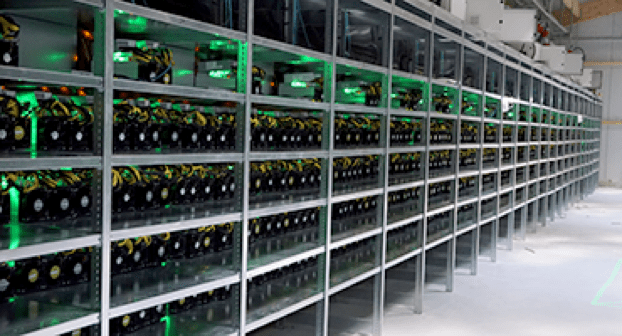
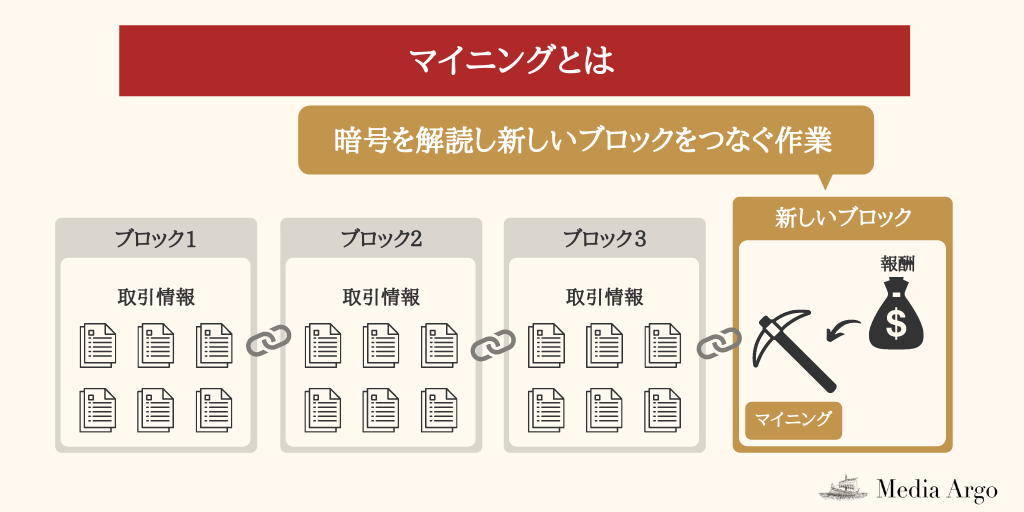
Bitcoin mining refers to the process of digitally validating Bitcoin transactions on the Bitcoin network. People who mine Bitcoin (miners) must solve complex cryptographic hash puzzles to verify blocks containing transactions. Solving these problems requires strong computing resources and power.
Once they are resolved and the transaction is verified, the blocks are updated on Bitcoin’s distributed ledger. Through this effort, miners earn Bitcoins. This complete process is called Bitcoin mining.
Additionally, there are two main purposes for Bitcoin mining:
- Generate new Bitcoin by solving complex mathematical problems
- To maintain the security and reliability of the Bitcoin network by validating transactions
How does Bitcoin mining work?
The Bitcoin network is built on blockchain technology, which uses cryptographic hashes and timestamps of each block that must be added to the chronological order to ensure the security of the entire ledger.
Each block contains information about verified transactions and is added to the blockchain once verified. The unique features of blockchain technology then make it nearly impossible to tamper with the transaction.
Here’s how Bitcoin mining works:
#1.Settings
Before miners can start mining Bitcoin, they need specific tools and need to figure out how to solve complex problems efficiently. Bitcoin’s creator, Satoshi Nakamoto, designed the network to mine a block every 10 minutes.
Therefore, miners have everything at hand for this 10-minute pace, and this difficulty increases even more as miners with more computing power participate in mining.
#2.Mining requirements
Mining Bitcoin requires advanced tools and large amounts of computing resources. Therefore, Bitcoin miners are suitable for:
Mining Hardware : The hardware for mining Bitcoin has changed over the years. Bitcoin miners use graphics processing units (GPUs) with advanced graphics cards, field programmable gate arrays (FPGAs), or application specific integrated circuits (ASICs) for effective mining. was using. The latter is the most efficient in terms of consumption.
Mining pools : Miners can choose to mine solo or pool mining
Software and e-wallet : You will need mining software such as BeMine, Kryptex Miner, or ECOS that can implement the protocols defined for the Bitcoin network. Miners also need an electronic wallet to collect and store their rewards as Bitcoin.
#3.Transaction
When an individual sends Bitcoin to someone, it is a transaction. These transactions are added to a block and the node or computer must ensure that it is connected to the Bitcoin blockchain where everyone in the network can see it.
When someone initiates a transaction on the Bitcoin network, there are three elements involved at the core: the input, output, and amount of the transaction.
For each transaction as input, the mining software creates a unique complex cryptographic hash. The software then groups the transactions needed to generate a block. The grouping is represented as a Merkle tree or a hash tree, where each leaf node has a hash of the block and non-leaf nodes have hashes of its child nodes.
Additionally, the Merkle tree contains an overview of all transactions in a block and is essentially a data structure. In this case, the transaction hashes are paired using the encryption SHA-256.
#4.Solve the puzzle
The hash that can identify the entire Merkle tree is called the root hash or Merkle root and is stored in the block header. Block headers contain block data and attributes such as the Bitcoin software version, hash of previous block, timestamp, root hash, target, and cryptographic nonce (any number used only once during cryptographic communication). will appear.
Bitcoin miners use this information to solve hash puzzles and verify transactions. For this, we find the hash of the given target after analyzing the difficulty. The target is a 67-digit number stored in the block header that determines the difficulty of Bitcoin mining depending on the total number of miners participating in solving the problem. Difficulty is automatically adjusted based on the time it took miners to solve the previous 2,016 block problem.
Additionally, Bitcoin miners calculate the hash of the block to solve the puzzle by continuing to add one nonce to the target’s block header until a value smaller than the target is obtained. Once the issue is resolved, a new block is generated and verified by the network nodes.
For a block to be verified, a majority of nodes must verify it, and the block must contain proof of work (PoW). Chronological chaining of blocks and PoW protect the blockchain from modification. The block is then added to the Bitcoin network.
As many miners participate, the first miner to solve the hashing problem is rewarded with Bitcoin.
#5.Bitcoin distribution
Bitcoin mining began in 2009 with the Bitcoin genesis block, which produced 50 Bitcoins. Since then, many more Bitcoins have been mined and released into circulation. However, there is an upper limit. Only 21 million Bitcoins can be mined based on the source code.
Fact: As of September 2021, approximately 18.82 million Bitcoins have already been mined, representing approximately 89% of the total amount of Bitcoin that will ever exist.
How are Bitcoin miners rewarded?
When Bitcoin was released in 2009, every blockminer was given 50 Bitcoins. Eventually, it dropped to 25 Bitcoins in 2012, 12.5 Bitcoins in 2016, and 6.25 Bitcoins in 2020. This process of splitting the block reward in half is called Bitcoin halving. This happens after mining every 210,000 blocks and takes approximately 4 years.
This means that if a block is found by solving a puzzle, the miner’s reward will be halved. The benefit of Bitcoin halving is that it reduces Bitcoin inflation and velocity. Therefore, it helps maintain the stability of Bitcoin’s value. The most recent Bitcoin halving took place in May 2020, and the next one is expected to occur in 2024. This process will continue until approximately 2140, when all Bitcoins have been mined.
What happens when all 21 million Bitcoins are mined?
So how do miners make money? Well, they only make money from transaction fees. When a miner finds a new block, he obtains permission from the Bitcoin network to collect transaction fees from each transaction he adds to the block.
Currently, successful miners receive 6.25 new Bitcoins as transaction fees and rewards. And to claim it, Coinbase (a special transaction) is added to the block and the miner becomes the recipient.
Why mine Bitcoin?
People mine Bitcoin for various reasons. You may be drawn to Bitcoin for a single reason, such as profit or a love of technology, but once you start digging deeper into the details of Bitcoin, you may find more motivations to mine Bitcoin. Let’s take a look at the main reasons why people mine Bitcoin.
Enthusiasm for new technology
Many people with a technology background or who are passionate about technology find it interesting to learn about Bitcoin. They seek innovation, want to stay up to date on new technologies and trends, and may love to experiment. Therefore, you may be naturally drawn to learning how to mine Bitcoin, which combines modern technologies such as blockchain, cryptography, distributed ledger technology (DLT), and peer-to-peer networking.
Expansion of business scope
Experts in related fields can enter the Bitcoin world and mine Bitcoin. For example, much of the work in grid computing is similar to Bitcoin mining. It’s in demand because it’s fun and allows you to work with others to solve problems.
When you mine Bitcoin, you help solve the problems associated with creating payment networks and currencies without a central authority.
privacy
The Bitcoin network provides anonymity to people. Therefore, by solving problems and finding blocks, you can earn Bitcoin while remaining anonymous. Your privacy and identity are protected because your name, not your number, is hidden. However, always be careful not to publish your address.
profit
Bitcoin is a currency and you get rewards when you mine it. Therefore, people use it for profit. However, this is difficult because Bitcoin’s price fluctuates frequently and the mining process requires large investments.
But if you succeed in this, you can earn a lot of money. At the time of writing, the price of 1 Bitcoin alone was USD 59,301.40. Isn’t it worth a try?
Bitcoin mining concerns
While Bitcoin offers many advantages, excitement, and profits when successfully mined, there are also special concerns. This is why Bitcoin is not legalized in many countries such as Russia, China, etc. However, many countries have structures that allow the use of Bitcoin, including Australia, Brazil, the United States, India, and European countries.
Fact : On June 9, 2021, El Salvador became the first country in the world to legalize Bitcoin. The US dollar remains the country’s main currency, but BTC is used for transactions where Bitcoin is accepted.
Let’s take a look at some of the concerns regarding Bitcoin and its usage.
high power consumption
Bitcoin mining is an energy-intensive process that is not only costly but also a threat to the environment. This method can consume more electricity than a large city or a small country like Switzerland.
decentralized
Fiat currencies are controlled by each country, and that comes with reputation and accountability. However, Bitcoin has no governing body. Anyone can create any number of accounts, join the network, and buy and sell Bitcoin almost anonymously. Trust issues arise not only with users but also with governments.
volatility
Currencies need to be stable to support the economy, and governments strive to maintain stability. However, Bitcoin is highly volatile. No one knows when it will reach that height and when it will suddenly crash. And the market will react accordingly.
If Bitcoin starts to fall, vendors may stop accepting Bitcoin as payment. At the same time, many do not use it as legal tender to purchase goods. Instead, they hold it as an investment and expect it to rise in value.
criminal act
Many cybercrimes plague the Bitcoin world. There have been cases where people have lost millions of dollars by creating fake crowdfunding investments. And no one can be held responsible for such activities.
How to get the most out of Bitcoin mining?
As highlighted above, the reward system for Bitcoin mining has been significantly reduced over the years. Once all Bitcoins have been mined, you will no longer be rewarded with Bitcoins, only transaction fees will be paid. Bitcoin mining also involves an investment of thousands of dollars in hardware, systems, and computing resources.
At this point, finding a way to get the most out of Bitcoin mining will bring great results. Here’s how:
# 1.Selecting high-performance hardware
The number of Bitcoin miners is increasing. Therefore, you need high-performance computer hardware that can deliver lightning-fast calculations and give you an edge over your competitors. A high hash rate is required for best output performance.
ASIC-based hardware is the most advanced and can generate hundreds of trillions of hashes per second. Such advanced hardware is expensive and can run into the thousands of dollars.
#2.Please choose the appropriate location
Location is also an important consideration for effective Bitcoin mining. This is because electricity costs vary depending on location, and Bitcoin mining consumes a large amount of electricity.
Therefore, choosing a suitable location with relatively low electricity costs, of course, with a strong Internet connection will be a good option. This is one of the reasons why developed countries excel in this field.
#3.Check power consumption
Bitcoin mining consumes a lot of electricity, so the cost will vary accordingly. Therefore, before you start mining Bitcoin, make sure your budget can accommodate this high cost. You also need to calculate your mining investment and decide whether the profits will be enough to cover your electricity costs.
#4. BTC price
It is important to always keep an eye on observing and tracking Bitcoin prices. This is because, at the moment, you can earn rewards in Bitcoin in addition to transaction fees. Therefore, the higher the market capitalization of Bitcoin, the greater the profit.
#5.Both in the pool and solo
Choosing the best one for you will also help you succeed in Bitcoin mining. If you mine alone, the probability of getting a reward is lower than if you mine in a group. By combining computing power to mine Bitcoin in a pool with thousands of other Bitcoins, the difficulty of mining to solve blocks is reduced.
When a Bitcoin miner is successful, they receive Bitcoin based on their contribution of computing power. So choose the right method, be it a mining pool or a solo hustle.
Conclusion💰
Bitcoin is a new concept and is still in the early stages of its use. This allows anyone to start mining and provides several benefits such as earning huge profits, keeping the network secure, and gaining technical expertise.
The real mystery will be revealed after 21 million Bitcoins are mined, but we hope that technology advances further to negate Bitcoin concerns. Looking at its unique features, Bitcoin seems to have a promising future.
Learn more about blockchain here.


![How to set up a Raspberry Pi web server in 2021 [Guide]](https://i0.wp.com/pcmanabu.com/wp-content/uploads/2019/10/web-server-02-309x198.png?w=1200&resize=1200,0&ssl=1)


