Using a hardware crypto wallet is the best way to safely store your private keys and is popular among serious cryptocurrency investors.
Crypto wallets help you interact with blockchain technology. They support buying, selling, storing, mining, staking, and everything possible on the particular blockchain they target.
However, some crypto wallets such as Guarda , Trust , and Ledger are multi-currency. It allows you to access many blockchains from a single user interface.
Based on internet connectivity, crypto wallets can be divided into two categories.
hot wallet
These are the most popular of the two and easily accessible. These are usually freeware available for desktop and mobile platforms. Just download the application and register for the service.
These wallet providers can keep your private keys themselves or hand them over to you (self-storage). Perhaps the latter is known for having the least dependence on third parties. However, some users still prefer custodial wallets to minimize liability.
Although hot wallets are considered less secure (in fact, they have been compared to cold wallets), nearly all hacks involve cryptocurrency exchanges. This is when an investor stores their virtual currency on an exchange, relying on the exchange company for the safety of their assets.
And depending on the size of the exchange, they can be lucrative targets for cybercriminals who want to make quick work of those practicing poor security protocols.
In conclusion, if you are a beginner in the field or can store your private keys in a safe place, you don’t need a hardware wallet. You can easily survive with a hot wallet.
But if you’re a serious crypto investor who expects top-notch security for your funds, now is probably the time to upgrade…

hardware wallet
Hardware (or cold) wallets take the most dangerous thing out of consideration: the internet. However, this is not entirely true for everyone, as some users are connected to the network during transactions.

Hardware wallets are further classified into two types.
non air gap
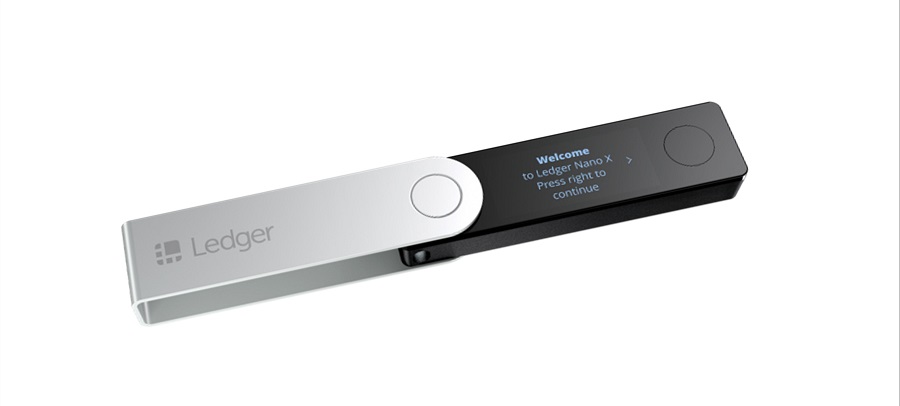
These use the internet during processing via a USB cable, but otherwise remain offline. Additionally, it comes with a physical button to confirm transaction details.
The most common examples of non-air-gapped wallets are Ledger Nano X , Trezor One, etc.
air gap
The other type transfers information wirelessly and coined the term air-gapped entirely. They exchange information via QR code/Bluetooth/NFC and are never connected to the internet.
Although this type of wallet is perceived to be more secure, a few experts disagree and believe that switching to a fully air-gapped wallet is unnecessary.
Finally, airgap vs. non-airgap is a time-consuming debate that often does not lead to a clear conclusion.
Instead, we will take a look at hardware wallets as a whole and see how they perform compared to hot wallets to see the differences.
How do hardware wallets work?
Hardware wallets work much like hot wallets or software wallets. The only difference in behavior is transaction validation.
While hot wallets display details on the host device and ask for authorization on the host device itself, cold wallets do all of this on an integrated application (such as Ledger Live for Ledger devices) and provide an executable user interface. It will come true.
However, the last few steps that actually validate the transaction are performed on a hardware device, which makes a big difference.
Another big differentiator is the fact that the private key remains offline even while connected to the respective application.
So, technically, the hardware wallet acts as an additional security measure and is used for authentication while the integrated application still plays an important role.
Although not recommended by hardware wallet manufacturers, these hardware wallets can be combined with some hot wallets. In this case, the hot wallet acts as a unified user interface and replaces the wallet’s native application.

How can I secure my hardware wallet?
The protocols for securing crypto assets in hardware wallets are similar to those applied to self-custodial hot wallets.
All you need to do is ensure the security of your seed phrase and any additional authentication such as a PIN. Additionally, the device itself must be protected from unauthorized physical access.
However, unless you have a recovery seed phrase, there is no need to worry if your PIN-protected device is stolen. By doing so, you can restore your funds to a similar new device or other compatible wallet.
conclusion
Finally, hardware wallets are custodians of your private keys, making your overall security robust. Additionally, you can also use these devices with compatible hot wallets, giving you the best of both worlds.
Now that you know about hardware wallets, let’s take a look at some of the best hardware wallets.


![How to set up a Raspberry Pi web server in 2021 [Guide]](https://i0.wp.com/pcmanabu.com/wp-content/uploads/2019/10/web-server-02-309x198.png?w=1200&resize=1200,0&ssl=1)


