Are you concerned about the safety of centralized exchanges? Don’t worry; you can use decentralized exchanges to protect your crypto assets.
The collapse of FTX, one of the key centralized crypto exchanges, has caused concern among traders and investors. People are thinking of alternative ways to secure their cryptocurrencies.
The collapse of FTX , caused by founder Sam Bankman Fried, is not an unusual incident in the cryptocurrency industry. QuadrigaCX, which billed itself as Canada’s largest cryptocurrency exchange, filed for bankruptcy in 2019.
Following the failure of QuadrigaCX , founder Gerald Cotton passed away in 2018. Separately, $120 million worth of customers’ crypto assets were also trapped.
Netflix has released a documentary based on the QuadrigaCX scam, “ Trust No One: The Hunt for the Crypto King .”
Bitfront, a US-based cryptocurrency exchange, has also decided to shut down. Due to repeated problems, decentralized exchanges have gained acceptance .
For example, Telegram plans to build a decentralized exchange following FTX’s problems.
First, let’s understand what a decentralized exchange is.
What is a decentralized exchange (DEX)?
Decentralized exchanges are decentralized applications (DApps) that allow you to buy and sell crypto assets without intermediaries. Direct transactions occur between the digital wallets of buyers and sellers.
Decentralized exchanges use smart contracts to exchange crypto assets between users. Additionally, these exchanges provide transparency for all cryptocurrency transactions.

The trading process on DEX is also simple. Just visit the exchange, connect your wallet, and trade your tokens. . It’s so simple!
There are different types of decentralized exchanges. The main ones are:
- On-chain order book: This order book type of DEX uses the blockchain to execute transactions. This is considered the most transparent and decentralized process.
- Off-chain order book: Unlike on-chain, this DEX uses centralized authority to execute trades and manage the order book.
- DEX Aggregator: Here, data from various DEXs is compiled to increase liquidity for buying and selling crypto assets.
- Automated Market Makers (AMMs): These DEXs use smart contracts to create liquidity pools and use algorithms to perform automated trading.
Let’s take a look at why people prefer decentralized exchanges.
Advantages of decentralized exchanges over centralized exchanges
The major advantages of decentralized exchanges are:
#1.Privacy
If you want to use the features of a centralized exchange, knowing your customer (KYC) is mandatory. On the other hand, decentralized exchanges can be accessed without any user authentication process.
You can trade cryptocurrencies without providing any personal information. This privacy feature protects users from identity theft.
#2.No counterparty risk
Unlike centralized exchanges, decentralized exchanges do not hold funds. This feature also helps prevent the misuse of funds that has recently occurred on the FTX exchange.
Suppose you are using a centralized switch. Before you can trade, you need to deposit funds at the exchange. In this case, you are putting your funds at risk on the exchange.
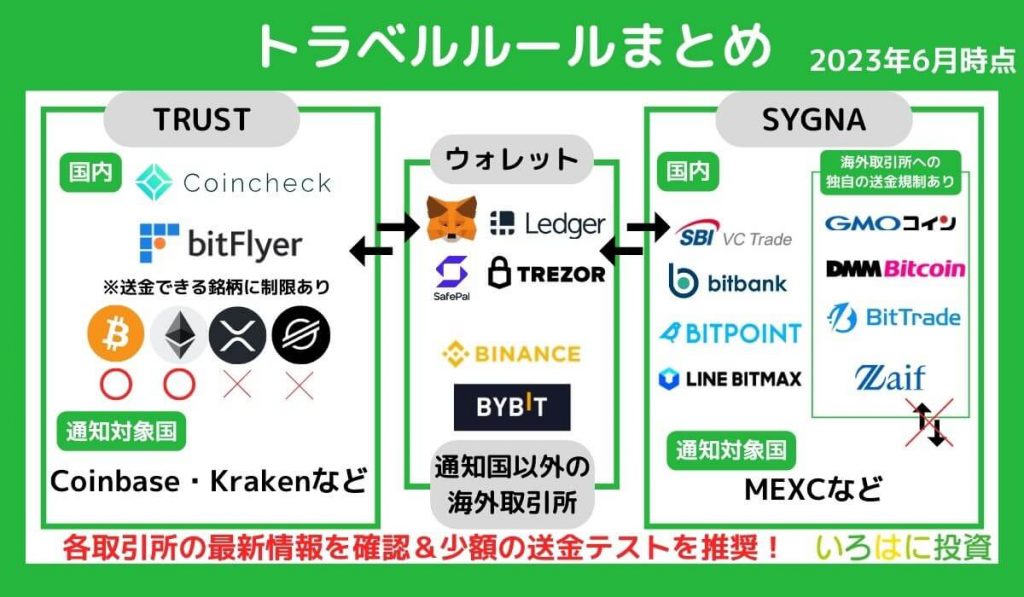
In contrast, when using a decentralized exchange, your assets are securely stored within your cryptocurrency wallet. All you need to do is connect your wallet to the exchange when buying or selling.
#3.Reducing security risks
Cryptocurrency hacking is one of the major risks associated with centralized exchanges. For example, the Mt.Gox, Bitfinex, and Coincheck hacks are famous examples of hacks involving millions of dollars worth of cryptocurrencies.
For decentralized exchanges, your crypto assets are securely stored in hot or cold wallets. Targeting individual wallets is also less viable and unprofitable for hackers.
#4.Token availability
Centralized exchanges list only a small number of crypto tokens. Moreover, most such exchanges only support limited projects.
On the other hand, you can also use decentralized exchanges to trade new tokens. Decentralized exchanges are useful if you want to buy tokens at an early stage.
The top decentralized exchanges available are:
uniswap
With over $3 billion in Ethereum total value locked (TVL), Uniswap is one of the largest decentralized exchanges. This DEX has overtaken Coinbase to become the second largest Ethereum trading platform after Binance.

Uniswap DEX works based on automated market makers (AMM) powered by smart contracts. Uniswap allows you to exchange ERC-20 assets while remaining anonymous.
UNI is the native token of the Uniswap platform. These tokens can be used to earn rewards and vote on governance proposals.
Apart from swapping tokens, you can become a liquidity provider and receive rewards. Uniswap’s transaction fee is 0.3%.
Supported networks: Ethereum, Optimism, Polygon, Celo, and Arbitrum.
Supported wallets: Coinbase Wallet, MetaMask, WalletConnect.
pancake swap
Built on the BNB Chain, PancakeSwap is a leading decentralized exchange. This DEX can be used to exchange BEP-20 tokens.
PancakeSwap averages nearly 2 million monthly users. Additionally, this DEX executes an average of 55 million trades per month.
PanecakeSwap also works with AMM models using smart contracts. Apart from that, it also has the advantage of low transaction fees.
You will need to pay a transaction fee of 0.25% of the total translation value. Additionally, you will also have to pay network fees.
CAKE is PancakeSwap’s native token that has multiple use cases. CAKE can be used for staking, yield farming, and voting purposes.
Supported networks: BNB Smart Chain, Aptos, and Ethereum.
Supported wallets: MetaMask, Binance Wallet, Coinbase Wallet, Trust Wallet, WalletConnect, Opera Wallet, Brave Wallet, MathWallet, TokenPocket, SafePal, Coin98, and Blocto.
curve
Curve is a DEX built on Ethereum. Curve, founded by Russian scientist Michael Egorov, also works based on the AMM model.
If you plan on trading stablecoins, consider Curve DEX. Curve’s efficient smart contract algorithms provide price stability.
In addition to price stability, Curve DEX also limits high price slippage. Apart from that, fees are as low as 0.04% of the total transaction amount.
Apart from that, Curve provides a user-friendly platform for trading tokens. Additionally, you can also choose custom price slippage to avoid large price fluctuations.
Curve has a native token CRV. This token can be used to pay fees and receive staking rewards.
Supported networks: Ethereum, Avalanche, Arbitrum, Celo, Fantom, Gnosis, Kava, Optimism, Moonbeam, and Polygon.
Supported wallets: MetaMask, Ledger, Torus, Trezor, Coinbase Wallet, Formatic, Portis, and WalletConnect.
1 inch
How about a decentralized exchange where you can find cryptocurrencies at the lowest prices? Great! That is the function of 1 inch DEX.
1inch aggregates other DEXs and is different from other decentralized exchanges. This DEX helps you choose the best market price for your cryptocurrencies.
On the positive side, 1inch doesn’t charge any fees for deposits, withdrawals, or transactions. You only need to pay fees for the DEX you use for trading.
You can trade ERC-20 tokens using 1 inch. Additionally, 1inch provides high liquidity for traded tokens.
Supported networks: Ethereum, Polygon, BNB Chain, Optimism, Avalanche, Gnosis, Fantom, Arbitrum, Aurora, and Klaytn.
Supported wallets: 1 inch WalletConnect, Trust Wallet, MetaMask, Binance Chain Wallet, WalletConnect, Coinbase Wallet, Venly, Ledger, KeepKey, Trezor, Portis, CoolWallet, Fortmatic, MEW, Torus, Bitski.
sushi swap
SushiSwap is a DEX built on the Ethereum network and is considered an extension of UniSwap. Apart from trading tokens, SushiSwap allows you to farm, stake, and lend out various crypto assets.
SUSHI is a utility token of SushiSwap DEX. You can stake SUSHI and earn a portion of transaction fees.
SushiSwap’s transaction fee is 0.3%. Here, liquidity providers and SUSHI token holders will receive 0.25% of the fees.
Supported networks: Ethereum, Polygon, Arbitrum One, Avalanche, Fantom, BSC, Gnosis, Moonriver, Arbitrum, Fuse, Celo, Moonbeam, OKXChain, Baba, Harmony.
Supported wallets: MetaMask, WalletConnect, Gnosis Safe, Coinbase Wallet.
balancer
Balancer is an Ethereum-based DEX that helps you deposit or exchange ERC20 tokens. Apart from that, Balancer also provides arbitrage opportunities.
BAL is Balancer’s native token. You will receive BAL tokens for every successful transaction.
Balancer has a strong liquidity pool with a TVL of over $1.5 billion . Ethereum accounts for over 90% of the available liquidity.
Another feature of Balancer is its customizable pools with different rates. Fees range from 0.0001% to 10%.
Supported networks: Ethereum, Polygon, Arbitrum.
Supported wallets: MetaMask, WalletConnect, Tally, Coinbase Wallet.
Radium
Are you a fan of Solana? Then try Raydium, a decentralized exchange based on Solana.
Raydium also provides a TradingView charting interface. This feature helps you analyze the price before trading your tokens.
RAY is Raydium’s governance token. Staking rewards will also be distributed in RAY tokens.
Raydium charges a fee of 0.25% of the transaction amount. Additionally, SOL requires you to pay minimal network fees.
Supported networks: Solana
Supported wallets: Phantom, Sollet, Ledger, Solflare, Torus, WalletConnect, Brave.
bancor
Bancor is a popular DEX built on Ethereum. This decentralized exchange provides simple and secure access to trade crypto tokens.
Bancor can be used to perform automated token trading. In addition, liquidity providers receive interest.
Bancor Network Token (BNT) is Bancor’s native token. This token is therefore used to reward liquidity providers.
Transactions executed on Bancor are subject to minimal network fees that vary depending on the transaction amount. Gas fees are also required separately.
Supported networks: Ethereum and EOS.
Supported wallets: MetaMask, WalletConnect, Ledger, Coinbase Wallet, Trezor, Gnosis Safe, Frame, Portis, Torus, Fortmatic.
quick swap
Are you looking for a polygon-based DEX? Then QuickSwap comes in handy.

Built on Polygon, QuickSwap is popular among DEXs. Its big advantages are lower fees and faster trading times.
QUICK is QuickSwap’s governance token. QUICK holders can also participate in voting and create innovative proposals.
QuickSwap charges a 0.3% fee for each swap. Liquidity providers receive this fee.
Supported networks: Polygon
Supported wallets: Trust Wallet and MetaMask.
last word
In the world of cryptocurrencies, there is a common expression: “It’s not the key, it’s not the coin.” Simply put, you only have full control over your crypto assets when they are stored in your wallet.
With a centralized exchange, you are trusting your cryptocurrency to a third party. As a result, these exchanges have complete control over your assets.
Instead, you can use decentralized exchanges to avoid misuse of your funds. Plus, you’ll enjoy other safety features.
This article contains a list of top decentralized exchanges. In summary, you can choose a decentralized exchange based on your preferred network and wallet.
You can also explore the best crypto staking platforms.


![How to set up a Raspberry Pi web server in 2021 [Guide]](https://i0.wp.com/pcmanabu.com/wp-content/uploads/2019/10/web-server-02-309x198.png?w=1200&resize=1200,0&ssl=1)


