How would you react if your website used to get 100,000 monthly users and you woke up in the morning with zero traffic? Scary, right?
We know how difficult it is to go from over 100 to #1 in the SERPs. 📈
However, modern websites are eager to use shortcuts and tend to disrupt Google’s managed and protected ecosystem.
But Google doesn’t like shortcuts.
Just like the traffic police, if you don’t follow the rule book, you will be stopped and face heavy penalties. If you do not clean up or correct the violation, your access from the web will be restricted.
But for most site owners, Google penalties remain a mystery.
This article explains how Google penalties work, what types of actions trigger them, and how to recover from them.
What is a Google penalty?

Simply put, Google penalties are penalties imposed on websites that don’t follow the Webmaster Guidelines .
Just like in soccer, referees impose penalties for unethical behavior. Similarly, Google has a webspam team and certain AI-powered tools that monitor websites across their platforms and penalize websites if they do something wrong or don’t comply with Google’s guidelines. I will give you.
When a website is penalized by Google, its ranking on search engine results pages (SERPs) plummets. Even worse, your website may become unsearchable on Google.
This only means that once you are listed on the Google Penalty Radar, your traffic will immediately drop to zero.
Why does Google penalty occur?
Simply put, Google Penalty helps Google fight spam. Websites that manipulate or abuse ranking factors or quality guidelines are considered spammers by Google and will be subject to penalties.
As you know, Google is built on two core ideologies.
- Protect your customers from spammers
- Provide quality answers to users
Google sticks to its core and has an AI-driven system that can detect spam at the “crawling” stage.
According to Google, these systems provide 99% protection against spam. Additionally, this system is familiar with a set of quality guidelines that explain what Google expects from your website.
As of December 2022, Google launched another AI-based anti-spam system, SpamBrain. This helps discover both sites that buy links and sites that are used to pass outgoing links.
Google penalties can occur for a variety of reasons, but the following triggers often result in a penalty:
- Keyword stuffing
- hidden link
- irrelevant keywords
- spam domain
- Duplicate content
- illegal redirect
- cloaking
- ignored sitemap
- Bad inbound link
- thin affiliate page
- Spyware, adware and viruses
There are many other actions and events that can trigger a Google penalty.
How do Google penalties affect SEO?
The impact a Google penalty has on your SEO depends on the scale of the violation. Here are some penalties that can directly or indirectly affect your website’s SEO.
#1.Keyword penalty
If you receive a keyword penalty, it means that Google has raised a red flag for one or some of your website’s ranking keywords. Such penalties typically result in the penalized domain losing its ranking position in the SERPs for that particular keyword.
However, this penalty is limited to only the penalized keyword; all other keywords are unaffected. Yes, you can rank #1 for keywords that don’t get penalized 🥇.
#2. URL or directory penalty
Penalties at the URL or directory level affect all ranking positions of the penalized URL or directory.
All keywords in and around that particular URL will plummet in terms of rankings. In most cases, URL penalties are often caused by:
- Create multiple websites with slight changes and adjustments to URLs
- Set up multiple subdomains targeting specific regions to focus users on pillar pages
#3.Delisting or de-indexing
When Google removes a website from a so-called list, the entire domain is removed from Google’s index. I can’t find it anywhere!
You’ll see this even if you run a Google search on your exact domain 👇🏻
.png)
#4.Domain- wide penalty
If a large number of keywords on your domain are flagged by Google, you may receive a domain-wide penalty. When that happens, the ranking shatters like glass and there is no “instant” way to recover from it.
Check your website for Google penalties
.png)
One of the most obvious signs of a Google penalty is a significant drop in organic traffic or SERP rankings.
Normal fluctuations in SERP rankings are common, but if the drop seems dramatic, you may have been penalized by Google.
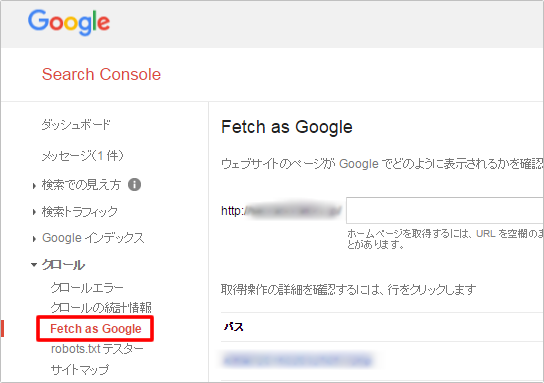
To verify this, use Google Search Console and look for manual penalties on your page.
Go to Security and Manual Actions > Manual Actions and look for any errors.
If you believe a mistake was made, you can also submit a penalty review request on the same tab. However, if you see ” No issues detected ,” then there is no problem.
Algorithmic penalties, on the other hand, are harder to diagnose because you don’t receive updates about them from Google. It’s not even in Google Search Console.
This lack of information complicates algorithmic penalty detection.
A sure sign of an algorithmic penalty is a noticeable drop in website traffic and rankings as soon as a new algorithm update is published.
In fact, a better way to understand this is to research your competitors’ SERP rankings as soon as you think you’ve been penalized. You may ask why this is so.
If your competitors are losing rankings as fast as you and within the same time period, there’s a pretty good chance that a new algorithm update has flagged common keywords in your industry.
Types of Google penalties
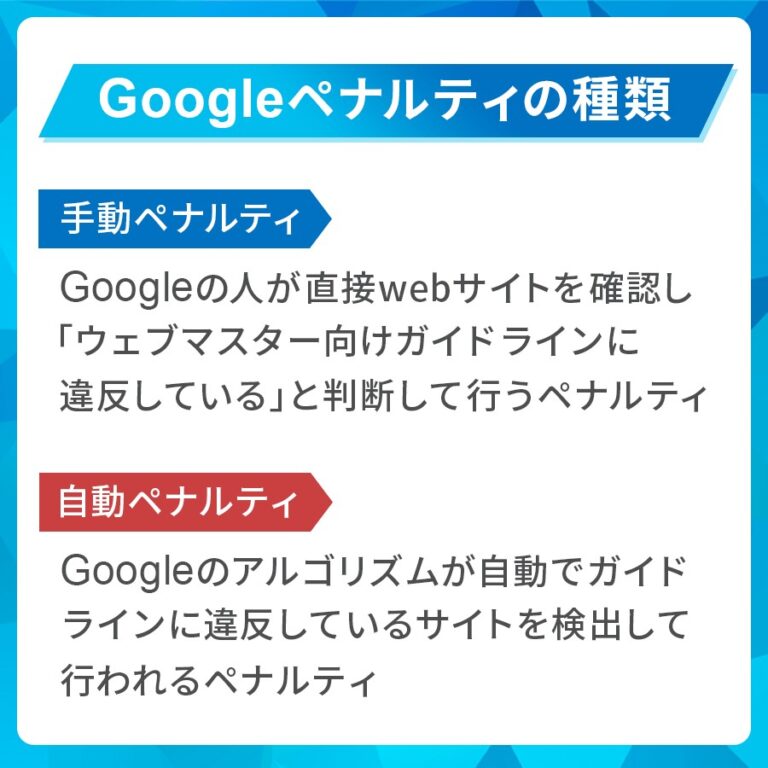
Generally, Google imposes penalties in two ways: manual penalties and algorithmic penalties.
Manual penalties occur when an authorized Google employee manually reviews a domain and suspects it violates Google’s Webmaster Guidelines. In this case, employees can actively take action on the domain.
Possible reasons why a website may be subject to a manual penalty include:
- User-generated spam
- sneaky redirect
- Keyword stuffing
- Duplicate content
- Buy links (links to or from your site)
In addition to this, Google penalties may occur due to algorithm updates such as Google Panda Update and Google Penguin Update.
Recover from Google Penalty
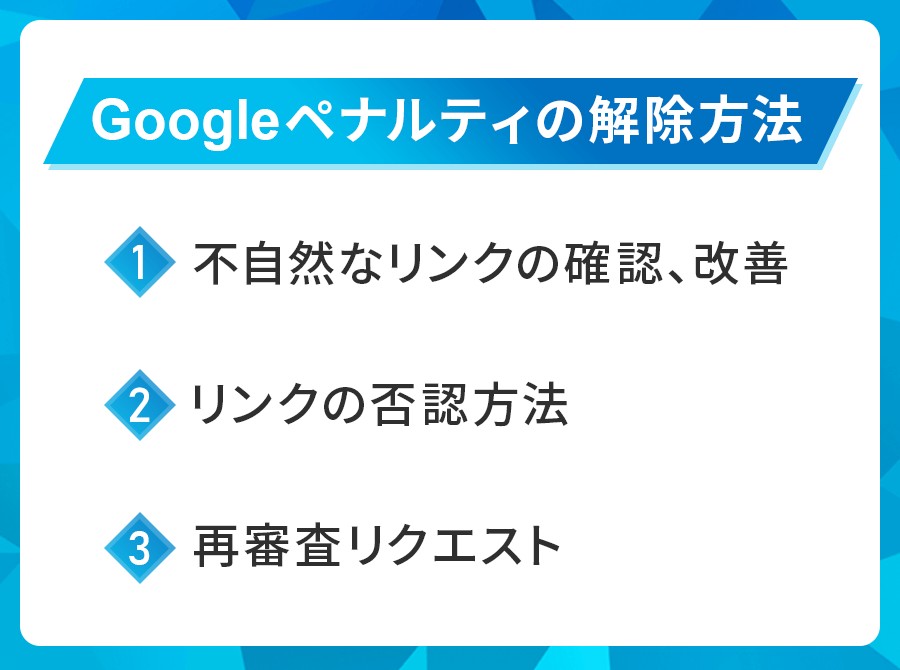
A Google penalty can lead to a significant loss of traffic and revenue for your business. Also, if your business is completely online, it’s wise to find and fix problems as soon as possible.
While most penalties are due to poor SEO practices, some penalties are caused by errors on Google and can be rectified by communicating the same to Google’s core team.
However, if the penalty is not an error, here is a simple checklist you can use to recover from a Google penalty.
#1. Make sure you’re not mistaking poor SEO for a Google penalty
Are you sure your website is behaving strangely because of a Google penalty? Or are you an SEO team?
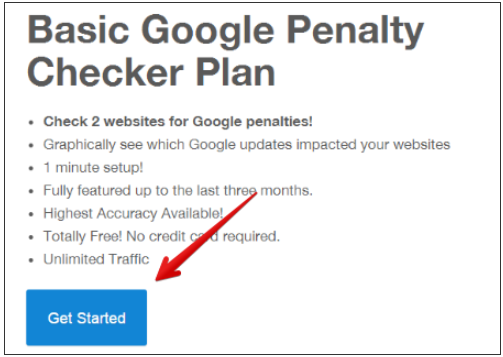
To make sure you’re on the right track, use the Website Penalty Indicator . This tool helps you identify why, where, and how your site was affected.
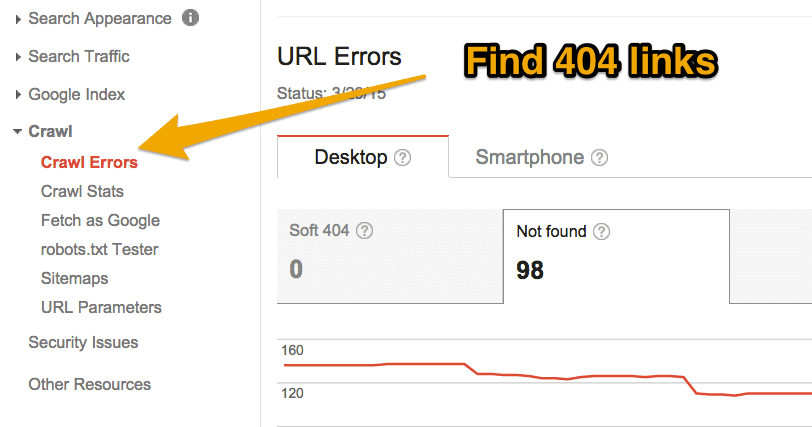
#2. Investigate recent algorithm updates
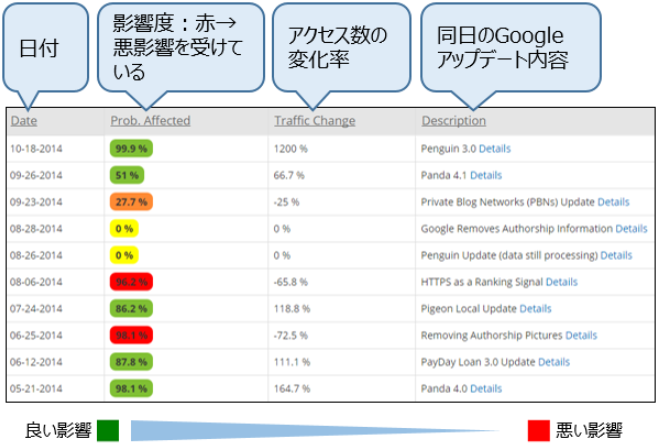
Algorithmic penalties are difficult to identify and take time to resolve. Additionally, there is no record of when Google actually imposed the penalty. So, to make sure you deal with algorithmic penalties, switch to the Google Analytics dashboard.
The GA dashboard helps you compare your website traffic to known Google algorithm changes.
GA4 allows you to see a report consisting of the number of visits to your site from Google Search.
Select a date range (preferably one year) to see a dramatic drop in traffic. If you’re not aware of any algorithm updates that caused the decline, check out our list of Google algorithm updates from the past two years.
Once you know which algorithm penalized your site, thoroughly investigate the update to find out which rules it violated. For example, if a Penguin update penalizes your site, you need to improve your backlink and anchor text distribution.
Similarly, if a Panda update causes a penalty, it could be an issue with content quality or poor UX/UI design. Recovery time typically depends on your research and how quickly you discover algorithm guidelines that don’t fit your site.
#3.Perform a full-fledged SEO audit
SEO practices are the main reason for Google penalties.
While regular SEO audits should be an essential part of your marketing strategy, technical SEO audits can help you diagnose traffic drops and resolve issues.
A full-fledged SEO audit can help you identify common SEO issues, such as:
- Malicious or spammy backlinks
- Keyword stuffing
- Sitemap error
- loading speed
You can use our website audit tool to perform a technical audit and find problems with your website.
However, if your site still performs poorly after resolving all SEO-related errors, the penalty may be due to content-related violations.
#4.Performing a content audit
A content audit involves collecting and analyzing the content on your website, such as landing pages and blog posts.
Essentially, performing a content audit is similar to managing your website’s inventory. Its main focus is to provide insight into what content to create, update, rewrite, and delete.
Search engines determine the value of a website through content, so a content audit is necessary. Therefore, any form of duplicate, outdated, or spam content can lead to penalties and lower rankings in the SERPs.
For example, let’s say you have a website related to travel, but the content it contains is similar to others. That could be wrong, but since search engines operate based on algorithms, you may feel that this is an attempt to deceive you.
Therefore, you may be subject to a Google penalty.
To start your content audit, use Semrush, Screaming Frog, or HubSpot’s content inventory tools.
Once you have resolved all issues, submit a penalty reconsideration request with a summary of the issue and resolution.
#5. Analyze user-generated content
After analyzing your content, you should take note of all user-generated content (if any) on your website.
Yes, content created by others on your website can also be subject to a Google penalty. Usually found in forums, comments, and user profiles.
To recover from such penalties, follow these steps:
First, identify the pages where users can leave comments.
Next, look for spam.
- promotional comment
- Comments with irrelevant links
- spammy username
- Auto-generated or general comments
- Review and remove content that violates Google’s Discovery policies .
You can find spam comments in the comments section of your WP dashboard. A spam comment looks like this:

#6.Unnatural links to and from websites
Link building is very important for your website’s SEO. However, buying links or participating in link schemes to boost organic SERPs is clearly against Google’s Webmaster Guidelines.
Manually checking each link can be a tedious task, but certain tools like Majestic SEO can help with this process.
Additionally, you can use Google Search Console to identify fraudulent inbound and outbound links. Once you have fixed the issue, please submit a reconsideration request.
How long does it take to recover from a Google penalty?
According to Google, there is no set time frame for returning a penalized site to the SERPs.
However, in the case of a manual penalty, the recovery time is 10% depending on the time it takes to fix the problem, explain the cause and solution of the problem in the reconsideration request, submit the reconsideration request, and have the request accepted. ~30 days . .
It’s a long process. 😪
Algorithmic penalties can significantly increase reporting time. But again, it depends on how quickly you can resolve existing problems.
Considering past incidents, some websites have been reported to be affected after up to two years, but most sites can expect recovery in six months.
Learn the course: SEO and penalties
#1. SEO Masterclass by Udemy
SEO Masterclass is a content-packed 4.5-hour self-paced SEO training course that anyone can use to learn in-depth search engine optimization and improve their website with better mobile SEO, Google SEO, local SEO, and WordPress SEO. will help you improve your rank.
More than 120,000 participants have already registered for the course. This course has an impressive 4.5 rating from over 1,800 reviews.
# 2.Ultimate SEO Training 2022
Another solid SEO training course on Udemy provides a step-by-step process to rank #1 in Google SERPs. This course covers keyword research, technical SEO, and more.
The best part about this course is that you will learn from SEO agency owners. What could be more logical and useful than that?
This course is a bestseller with a 4.7 rating from over 6,000 reviews.
#3. SEO complete course

The Complete SEO course by Mark Williams-Cook is great fun for learners. This is a powerful SEO treatment with over 11 hours of on-demand videos and over 50 downloadable resources.
This course brings together all the latest SEO strategies and tactics used by top agencies and successful websites.
Plus, everything is available at an affordable price, making it a great choice for beginners who want to learn from industry veterans.
#4.Search Engine Optimization (SEO) Specialty
With over 130,000 participants, Coursera’s SEO Specialization is one of the industry’s leading SEO training courses. This course will help you strengthen your theoretical knowledge behind Google search and other search engine algorithms.
Apart from SEO techniques, this course is great for learning how to build productive and successful relationships with your clients.
summary
A Google penalty can have a serious impact on your business. It is important to understand the different types of penalties and the steps required to recover from them.
Some penalties can be difficult to recover from, but with the right knowledge and tools, it is possible to recover.
Remember this; shortcuts to getting website traffic may work in the short term, but if you want to play the long game, good SEO with quality content is key.


![How to set up a Raspberry Pi web server in 2021 [Guide]](https://i0.wp.com/pcmanabu.com/wp-content/uploads/2019/10/web-server-02-309x198.png?w=1200&resize=1200,0&ssl=1)


