Although Privacy Coin is a cryptocurrency, it has some stealth mechanisms built into it. Learn more, understand how they work, and understand some features to get a head start.
There are many articles telling you that Bitcoin (and other cryptocurrencies) transactions are not anonymous.
All details are available on a public ledger known as the blockchain, so anyone can see the records.
The key is to connect public addresses to individuals. that’s it. You can then see everything about that particular user: all transactions including amount, timestamp, recipient, etc.
On the contrary, few people know what to do with it after I withdraw my salary from a nearby ATM.
This drawback of regular cryptocurrencies is solved by these privacy coins.
What is Privacy Coin?
These are created to hide some information about blockchain transactions that could lead to prying eyes.

However, privacy coins are not 100% anonymous (nothing is!), and their assumed “privacy” varies greatly depending on the design of the particular protocol they are dealing with.
Still, it is more anonymous than Bitcoin as some important details are hidden.
How does Privacy Coin work?
There are so many ways this could play out in a digital public ledger.
Some companies hide information such as addresses and transaction amounts to protect confidentiality. Another technique uses ring signatures, which make it impossible to tie a transaction to a specific individual.
Some protocols even write and create coins with every transaction.
In conclusion, there is no single way to ensure privacy. You can see how this works with these top privacy coins.
Monero

Currently the largest privacy coin by market capitalization, Monero is private by default. This means there is no risk of your transaction details being leaked to anyone.
Use stealth addresses, ring signatures, and RingCT to cover senders, recipients, and transaction amounts.
Stealth addresses generate a single-use address for each transaction. Additionally, it is kept separate from the public address used to receive payments.
Ring Signatures retrieves a group of public addresses from the blockchain, and transactions can be signed by anyone, making the output less likely to be tied to a specific user.
RingCT is an upgrade to Ring Signature that aims to improve anonymity by hiding participants, coin locations, etc.
Monero is widely accepted by top cryptocurrency exchanges and third-party online stores.
Zcash
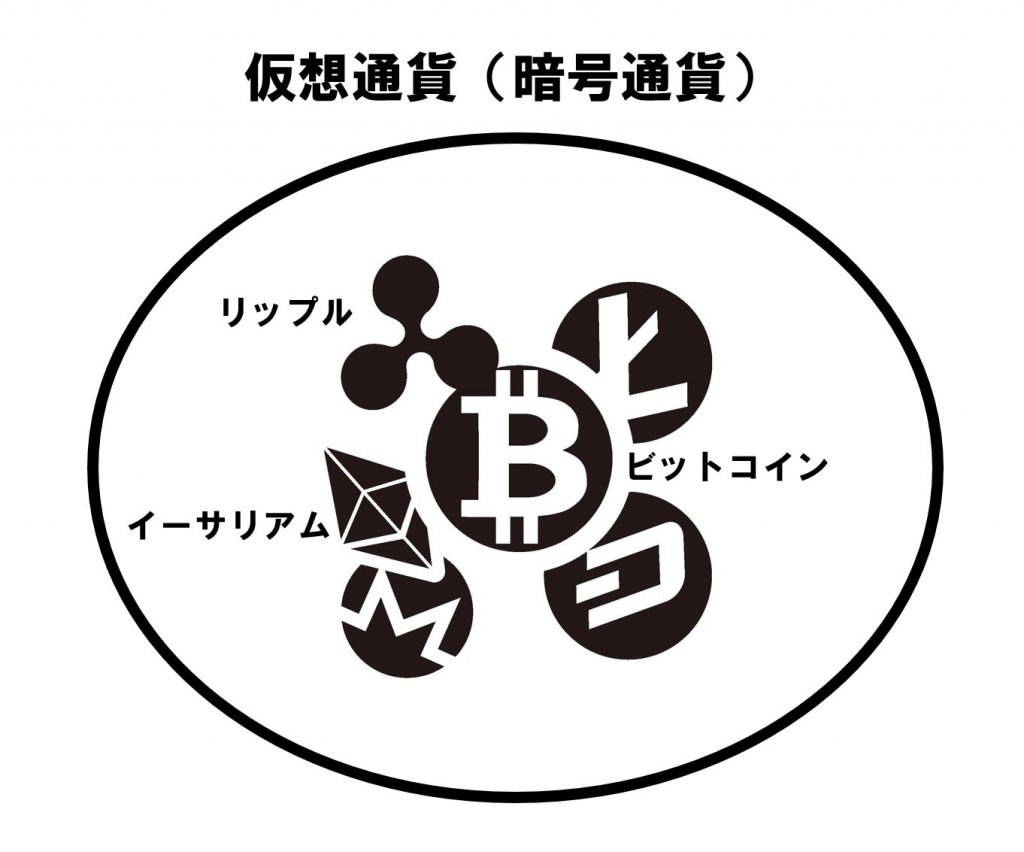
Zcash offers the best of both worlds. It can be anonymous or visible like a “standard” blockchain transaction.
This is made possible by two addresses: Z and T. “Z” addresses are shielded for privacy and “T” is open. A ZZ transaction hides everything except the fee, whereas a TT event lists the amount, fee, and address.
Furthermore, all details of the correspondence between Z and T are visible except for Z’s public speeches.
For compliance, Zcash introduces zk-SNARKs. This stands for Zero-Knowledge Succinct Non-Interactive Argument of Knowledge. Simply put, this helps prove the legitimacy of a transaction without revealing any details. So you can verify transaction claims to anyone without exposing your public address.
There are many top exchanges that support Zcash, including Binance, Kraken, Coinbase, Gemini, and Bitfinex.
However, the problem is that they do not support shielded Zcash and mostly only transparent Zcash.
However, the advantages of Zcash are fast block times, reasonable block sizes, and low transaction fees.
Decredo
Decred leverages DiceMix Light to introduce the CoinShuffle++ (CSPP) mixing protocol to anonymize blockchain transactions.
Here, the output address is encrypted so it is impossible to match the input address. Additionally, it masks the ownership of DCR coins.
Decred operates on multiple exchanges, including major exchanges such as Binance and OKX, but warns that using these cryptocurrency exchanges is not completely private.
Instead, we propose our own DCRDEX for maximum anonymity and security during trading. DCRDEX can be used without the usual KYC process and has no transaction fees.
Filo
Firo , formerly known as Zcoin, is powered by the Lelantus protocol.
Remember what makes a blockchain event permanent: its history. You can track all your coins and see how many hands have changed.
Firo removes it from the picture.
What happens is that every transaction burns and redeems all coins. Additionally, all redemptions are zero knowledge. That is, no one will know that you burned the coins.
Firo has further updated this to Lelantus Spark . This has no redemption, instead all amounts are masked.
Several top platforms support Firo exchange/exchange, including Binance, BITTREX, and its native firoDEX.
Zen

ZEN (Horizen) takes a similar optional approach to privacy as Zcash (mentioned above) by using zk-SNARKs.
This provides T and Z addresses for performing visible (TT) and hidden (ZZ) transactions, respectively.
Private transactions hide participants’ addresses and amounts. However, TZ transactions reveal the T address along with the proceeds.
ZEN has excellent availability on top tier exchanges.
However, to take advantage of the privacy features, you must generate a Z address using the application SPHERE .
secret
Secret is a little different here. It proposes privacy as a service for any coin or complete blockchain.
The purpose is to share or hide transaction details as per your convenience. The secret protocol cloaks the asset in a private version (ETH ➡️ sETH) that can be reverted to its original state if necessary.
All of this action is supported by secret token smart contracts, which can encrypt token balances, wallet addresses, transaction amounts, and more.
Note that interactions with Secret smart contracts will still be visible.
Another factor that differentiates this from the entry above is that you can also create anonymous DeFi applications and make private NFT transactions.
Currently, it is compatible with a variety of blockchains including Ethereum, Binance Smart Chain, Monero, and more.
Are Privacy Coins legal?
Cryptocurrencies already have pseudo-anonymity, and these (and more) private coins add to this anonymity.
So, while you may not hear about outright bans, many cryptocurrency exchanges do not support private coins or private versions thereof.

Similarly, as already mentioned, some top exchange portals do not support shielded Zcash.
Therefore, there may be an ongoing struggle within law enforcement authorities over how to regulate such tokens and avoid misuse.
However, one size does not fit all, so you should search for region-specific laws regarding private cryptocurrencies.
summary!
While someone could “research” to track every transaction on the blockchain, private coins like Monero completely solve this problem.
These coins have their own versions of privacy and use cases.
PS: Cryptocurrency is a strange world with some pleasant surprises. One of them is the movement to acquire (M2E) cryptocurrencies/tokens.


![How to set up a Raspberry Pi web server in 2021 [Guide]](https://i0.wp.com/pcmanabu.com/wp-content/uploads/2019/10/web-server-02-309x198.png?w=1200&resize=1200,0&ssl=1)


