Database modeling is a subject that has everything to do with the decisions you make in advance of your project or business. It’s not difficult to understand why.
Any solution in the form of a system or software must work based on data modeling, and data modeling works with data warehouses.
As an example, imagine your company is in the retail industry and has hundreds of product lines. Because we buy and sell products every day, we need to work with data about those products and the people who buy them.
Therefore, you need a system that can process this information in an organized way that makes sense for your company. At this point, modeling comes into play as a support base for performing operations.
Interested and want to know more? Keep reading!
What is data modeling?
Data modeling is defined as structuring and ordering a set of data so that it can be easily and correctly processed by a database.
The purpose of data modeling is to give a systematic and clear order to groups of unorganized information, making subsequent analysis and processing more efficient.
Data modeling is used in conjunction with database management systems. Its function is to store, modify, and extract information from the target database. However, modeling is done according to this manager, who is responsible for managing all necessary operations.
Steps involved in data modeling
In data modeling, like building a building, developing a software or application starts with the basics. So the modeling follows a kind of script and is basically divided into three stages.
#1.Conceptual data modeling
It consists of a theoretical model that represents a modeling scheme. This is primarily used during the preliminary stages of a project to “sketch” the work you plan to do.
Conceptual data modeling is coordinated by a data architect. The data architect’s primary role is to provide the best conceptual overview of the data being processed.
#2.Logical data modeling
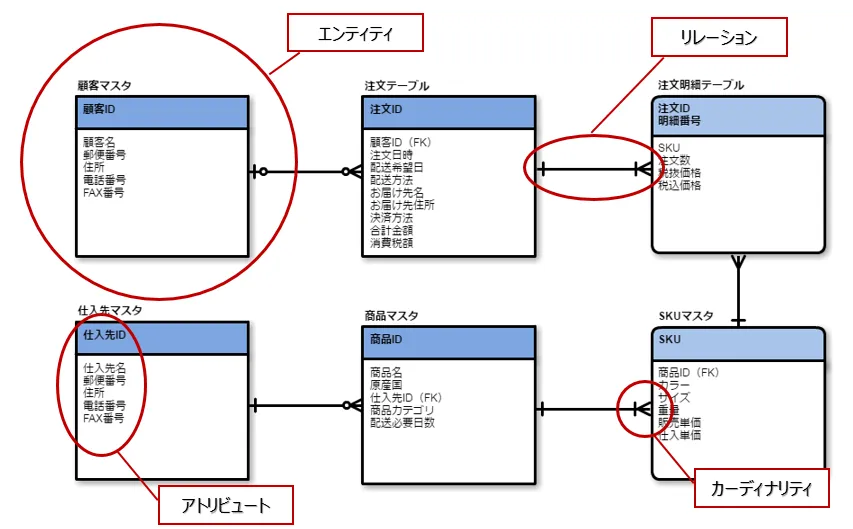
This is a step beyond conceptual data models. At this point, the appropriate attributes, relationships, and cardinalities are defined. In this way, the design you are creating will be more contextualized and provide details to more accurately address the subject matter in question.
#3.Physical data modeling
Finally, there is physical data modeling, which consists of the final phase of data modeling. In this part, modeling of the physical data is created based on the models created in the conceptual and logical stages.
Here you can see the various elements that make up the complete diagram of the final model, such as tables, columns, data according to type, views, restrictions, and various processes that will be integrated into the database.
Why is data modeling important?
Without data modeling, programming becomes impossible because logical relationships cannot be established. Therefore, some liken this feature to a closet.
Each type of clothing, accessory, or object has specific compartments indicated according to the item’s attributes. For example, socks are usually stored in a drawer because they are small and can be stored in a small space that is easily accessible. Hang your coat on a hanger and store your shoes in a shoe rack.
The importance of data modeling, therefore, lies in its ability to randomly make sense of something that has no purpose in itself. This is the basics that help you create order and organize your tasks and decision-making process.
Here are some of the benefits of data modeling:
- Data modeling allows you to visualize information in a way that makes it easier to understand.
- Organized data can undergo quality control to avoid errors. To do this, the database manager integrates a set of rules to filter and detect data that does not meet minimum quality standards.
- This allows the structuring and organization of data to be placed and distributed in a very precise order, making it easier to handle and process it.
- Helps identify duplicate or unnecessary data.
- Indicates whether certain data is missing from the modeling.
- Professionals responsible for creating, analyzing, and manipulating data start with a solid foundation for building or working with databases.
- Ensure consistency in enterprise system design.
- We understand that large amounts of messy data can come from various sources within an organization.
- Optimize communication between developers and business intelligence systems.
- You can design high-quality databases aimed at improving the creation of applications.
Now that we’ve talked about what data modeling is, let’s take a look at the best data modeling tools.
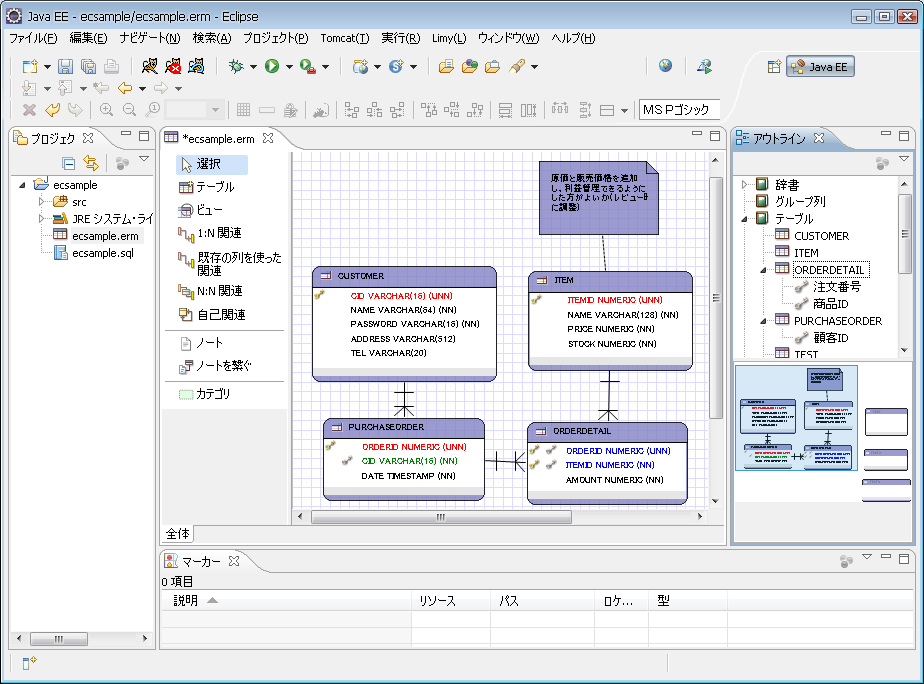
SQLDBM
SqlDBM is one of the most popular web-based data modeling tools. SqlDBM supports SQL Server, MySQL, PostgreSQL, Snowflake, and Amazon Redshift. It provides an intuitive interface for data modeling and view mode options that allow you to focus on specific parts of your model.
SqlDBM offers numerous features such as ALTER scripts, team collaboration, DB and DW transformations, automatic layout, and many export options including SQL and document export capabilities. SqlDBM provides a free version for 1 project.
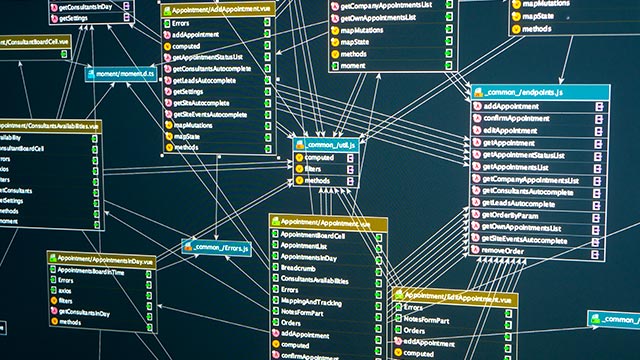
DB designer
DBDesigner is a web-based data modeling tool built in Java. It has a reputation for its simple UI. Provides support for most major databases. DBDesigner supports both forward and reverse engineering functionality. There are also many export options, including SQL export.
DBDesigner is available in over 25 languages. It also offers team collaboration, public sharing options, and project management features. DBDesinger offers a free tier of paid plans and a free trial.

Navicat is a popular data modeling tool. Supports data modeling at all three levels. Navicat supports the most popular databases and Crow’s Foot, IDEF1x, and UML notations. It also has both forward and reverse engineering capabilities, as well as comparison and synchronization capabilities.
Navicat also provides an export SQL feature that allows you to easily generate individual parts of your model. This reduces the overall modeling process time. This tool also supports PAM and GSSAPI authentication. Navicat offers a 14-day free trial with all features supported.

Toad data modeler
Toad by Quest is a cross-platform data modeling tool that supports over 20 different platforms. It is a simplified data modeling tool that supports multiple databases and supports both logical and physical modeling. Toad also offers interesting features such as detailed reporting, model customization, and reverse engineering.
Toad also provides easy migration and synchronization using ALTER scripts, making it more user-friendly. Toad also offers a free trial to get familiar with the tool.
Idera ER
Idea ER is an enterprise data modeling tool that not only models major databases but also supports big data and business intelligence data types. It provides advanced two-way comparisons as well as reverse and forward engineering options. Idea ER supports the creation and validation of enterprise processes based on the BPMN 2.0 standard.
Apart from UML and XML, Idera also supports QVT and OCL. It also offers several other enterprise modeling features, including agile change management, universal mapping, enterprise glossary, security center groups, centralized reporting, and team collaboration. Idera also offers on-demand trials.
Bertabello
Vertabelo is a web-based data modeling tool that supports the most popular databases and provides access-based collaboration options. It also provides reverse engineering, automatic diagram layout, XML export/import, and SQL preview capabilities. Vertabelo also has visual search options that make data modeling much easier.
design
DeZign is an easy-to-use data modeling tool from Datanamic. Provides a visual environment for modeling over 15 databases, including major bases such as Oracle, MS SQL, MySQL, and PostgreSQL. In addition to data model collaboration, DeZign also provides forward and reverse engineering options. Dezign offers a 14-day free trial.
moon modeler
Datensen’s Moon Modeler is a data modeling tool specifically designed to model databases such as MongoDB, PostgreSQL, MySQL, MariaDB, and SQLite. Moon Modeler provides an option to import GraphQL schemas. It also supports other database modeling features such as HTML reporting, reverse engineering, and collaboration options. Moon Modeler also offers a 14-day free trial.
conclusion
Data modeling tools make it easy to model your data, and in most cases you don’t even have to write much code. Still, it is important to consider many factors such as database, platform, budget support, and most importantly, you must keep your requirements in mind when choosing a data modeling tool.
Watch the video version of this article below.
Please like and subscribe to our Youtube channel .


![How to set up a Raspberry Pi web server in 2021 [Guide]](https://i0.wp.com/pcmanabu.com/wp-content/uploads/2019/10/web-server-02-309x198.png?w=1200&resize=1200,0&ssl=1)


