Learn the role of the Internet of Things (IoT) in sustaining, innovating, and growing the retail industry across products, geographies, and customer groups.
The retail industry relies heavily on existing and emerging technologies. From local drugstores and big box grocery stores to online marketplaces, we’re already seeing major changes in the industry.
You can now order groceries, groceries, and consumer goods online and pick them up at your home. Additionally, e-commerce retailers are experimenting with self-driving cars and drones to deliver orders.
That’s just the customer’s perspective. Emerging technologies are also helping the retail industry manage supply chains, warehousing, online ordering, secure payment gateways, and more. IoT is another emerging technology that will take your retail business to the next level.
Keep learning how IoT can help transform the retail industry.
What is IoT?

The Internet of Things (IoT) is a network of smart devices, ambient sensors, and software that brings convenience to life in the home and office.
IoT includes smart gadgets such as Google Home, Amazon Echo, smart lights, smart thermostats, and smart appliances. These connect to your home’s Wi-Fi and communicate with each other, reducing energy waste and human effort in daily tasks.
And indeed, IoT brings both quality and quantity to industrial applications such as manufacturing, warehousing, and retail industries. This is known as the Industrial Internet of Things (IIoT).
IoT in retail includes both home-based IoT and IIoT. This brings added value to the retail chain, from production to the consumer’s home and everything in between.
The role of IoT in the retail industry
Here’s how to use IoT or IIoT in the retail industry.
- Smart GPS tracking devices, RFID scanners, motion sensors, and cloud computing help large retail chains and distribution agencies move products from point A to point B securely.
- IoT helps retail stores and e-commerce websites deliver personalized promotional offers to target users at home or in-store.
- Retail IoT and IIoT can collect numerous data points about customers, employees, vendors, and all stakeholders, making retail supply chains more secure.
These are just some of the basic scopes of IoT in the retail industry. You can use IoT in creative ways in your retail store or e-commerce website. The idea is to gain an edge over competitors by providing a smooth customer journey from product discovery to sale.
How will IoT in retail transform the industry?
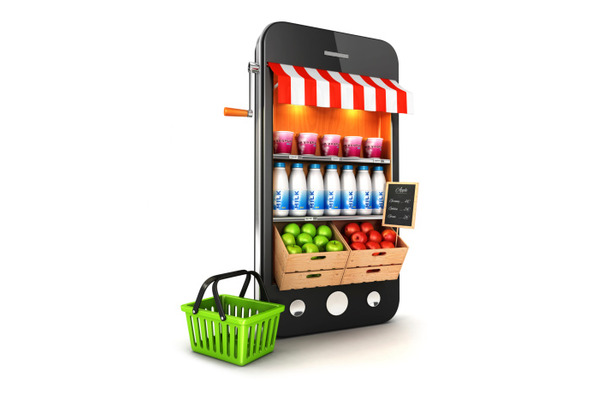
IoT in retail helps businesses understand how customers shop in online and offline stores. Where do most customers go? How do restaurant guests order? What are guest preferences for hotel check-in? These important marketing questions can be answered using IoT analytics data. That’s easy to answer.
Retail business owners no longer need to rely on third-party agencies for market trend reports that don’t apply to their business. In addition to customer experience and marketing, IoT can also transform the entire retail backend, including staff management, supplies, ordering, vendor relationships, inventory, and business security.
Here are some examples of how IoT is reshaping the way retail functions in the digital age.
#1. IoT wearable

Retail chains, hotels, restaurants, etc. can offer smart wearables to their loyal and premium customers. Using data collected from these wearable devices, retail companies can proactively prepare for the arrival of VIP and premium customers. Wearables can then direct customers to the right shelves, collect what they need, check out digitally, and save time while shopping.
Wearable devices can also help retailers offer personalized loyalty points and discounts to loyal and repeat customers. Therefore, there is no longer a need to display complex promotional offers within your store.
#2. In-store waiting time notification
A variety of in-store smart devices, such as smart cameras, motion sensors, and RFID scanners, continuously collect store data about store foot traffic and average customer checkout times.
Therefore, the system displays the estimated waiting time outside the store on a distal screen or sends personalized notifications directly to registered consumers.
#3. Digital product guidance and promotion
Retailers can easily create a profile for each customer and guide them through their regular shopping list. Customers no longer have to walk through the entire grocery store to find what they need.
To achieve this, retailers can use Bluetooth Low Energy devices and sensors. These smart devices allow businesses to push in-store directions, promotional information, and more onto shoppers’ smartphones.
#4. Real-time product delivery notifications
E-commerce retailers and brick-and-mortar retail chains offering home delivery have begun using a variety of IoT devices to send accurate, real-time messages about product deliveries.
Smart RFID scanners send product data to cloud software as goods leave the warehouse. The cloud app then uses the delivery vehicle’s GPS tracking to create an estimated delivery time. Things like delivery speed, traffic conditions, and outages are also taken into account.
#5. Supply chain and logistics selection
Large retail companies need to choose their logistics and supply-side vendors wisely to save on supply chain costs.
IoT devices such as GPS, RFID scanners, motion sensors, and smart cameras allow you to test vendors before signing up with an affordable, high-quality service provider.
#6. innovative digital store
One of the prime examples of innovative IoT-based retail is the Amazon Go store. With Amazon Go, customers can pick up what they need and continue doing business as usual. You don’t have to wait in line and pay for your products. The Amazon app automatically charges customers when they leave the store.
For this convenient and automated customer purchasing process, Amazon uses next-generation technologies such as sensor fusion, computer vision, IoT devices, smart cameras, artificial intelligence, and machine learning (ML).
Benefits of IoT in Retail
See below how you can benefit from having your physical and online retail stores within reach of an IoT network.
#1. Empowerment of store staff
A variety of IoT devices and sensors allow you to constantly track customers in your store. If a customer can’t find what they need, smart cameras and speakers understand the problem and communicate it to in-store staff.
Store staff can approach customers and guide them to the products they are looking for.
#2. waste reduction
IoT devices help retail chain owners manage electricity and gas usage efficiently. Smart thermostats, refrigerators, lighting systems, etc. can automatically reduce energy consumption when a particular store has low foot traffic.
#3. store security
IoT devices based on Bluetooth Low Energy, GPS tracking, RFID scanners, etc. can help store owners create a virtual barrier around their retail stores. Smart security cameras can constantly monitor the products on the rack. By combining all of these smart IoT devices, retailers can virtually eliminate the risk of shoplifting.
#4. Product placement

Retailers can use motion sensors and smart cameras to identify store areas that have the most foot traffic or are considered upscale. Store managers can then place promotional products in these premium locations to earn better product placement and sales commissions from manufacturers.
#5. Retail store management and tracking
The high volume of foot traffic at retail stores makes it difficult to replenish shelves. Plus, not knowing which products on your shelves are out of stock can be embarrassing.
You can leverage IoT devices such as RFID scanners, smart cameras, object recognition software, and weight sensors to create smart shelving. If you see a spike in sales for a few products, your store’s backend or restocking team will immediately receive a notification to replenish the sold products.
#6. omnichannel experience
Build a robust IoT network within your store and integrate it with your e-commerce platform. Therefore, customers who have already experienced online shopping at your online store can experience the same convenience when visiting your physical store. Easily sync online and in-store promotions and discounts.
Disadvantages of IoT in Retail
As well as the benefits of IoT in the retail industry, there are some challenges and issues you should be prepared to face as you embark on the path of IoT transformation in your online or brick-and-mortar stores. A summary of these challenges follows:
#1. safety
The most obvious challenge of IoT in retail is cybersecurity. If a retail IoT architecture is not end-to-end encrypted, there is a significant risk of intrusion and ransomware attacks.
Companies should also regularly audit IoT devices and software communication networks to prevent loopholes and digital vulnerabilities.
#2. IoT hardware and software
There are only a few manufacturers of IoT hardware and software, including Intel, Google, Cisco, Bosch, and Siemens. This could create market monopoly for smart sensors, devices, chipsets, firmware, and software.
Therefore, these manufacturers will control market prices and unless they reduce prices to reasonable levels, it will be difficult for small retailers to purchase these products.
#3. employee training

IoT devices and control software are very new technologies that require retail chain owners to invest time and money in training their existing employees. Retail companies also need to hire IoT data analytics experts to extract customer insights from retail IoT networks.
#4. Risks related to employment stability
IoT is another name for automation. Unemployment will rise because businesses will need fewer people in retail stores. Governments and businesses need to plan for employee rehabilitation.
The future of IoT in retail
The Internet of Things is becoming cheaper every day. Urban customers are adopting smart devices faster than experts expected in the early days of IoT development. That is evident from the various current market trends and statistics outlined below.
- Grand View Research predicts that IoT in retail will become a $161 billion industry by 2028, up from $31.99 billion in 2020.
- As predicted in the retail IoT report above, the IoT hardware sector is expected to capture the highest revenue for IoT in retail (a whopping 60%).
- The software portion of IoT in retail transformation is also expected to rapidly grow to $3.38 billion in total market revenue by 2029, according to a Maximize Market Research report.
- Experts suggest that the revenue potential from IoT device management will also increase from $1.88 billion to approximately $15.66 billion in 2022.
The above statistics clearly indicate that the business and career scope of IoT in retail will expand significantly in the future. For those involved in software development, hardware manufacturing, IoT device management, and maintenance, it’s a safe marketplace for long-term investment and income.
IoT and augmented reality in retail will be the next iteration of retail industry transformation. Depending on customer activity across online and offline platforms, retailers can provide accurate product recommendations to customers who value quality and time over price.
Author’s note
Like smartphone shopping apps, contactless payments, RFID scanners, and GPS localization, IoT in retail is also a trending technology. All global reports suggest that there will be huge investments in this area in the future.
If you are a business owner, look for IoT transformation opportunities to make your business relevant to today’s digital ecosystem. Are you a new graduate? Explore IoT learning resources to help you land a great job in the IoT development and maintenance field.
Finally, if you are an IoT vendor, start finding new customers in the retail industry to supply hardware and software to retail giants like Walmart, Tesco, and Costco Wholesale.
Learn how IoT in retail can transform the retail industry, from raw material sourcing and vendor discovery to store security and customer experience. To enjoy first-mover advantage, you need to adopt IoT now, before competing retailers jump in.
Next, check out open source Internet of Things (IoT) platforms and tools.


![How to set up a Raspberry Pi web server in 2021 [Guide]](https://i0.wp.com/pcmanabu.com/wp-content/uploads/2019/10/web-server-02-309x198.png?w=1200&resize=1200,0&ssl=1)


