Customers are the most important factor in determining a company’s success. In today’s competitive environment, even if your own company doesn’t provide a great service and experience to its customers, there may be companies that consistently provide a great service and experience. That’s why customer effort scores are important for businesses.
What is CES?
Customer Effort Score (CES) indicates how interested your customers are in doing business with you by interacting with you to get a job done or achieve a goal. It is a customer satisfaction metric whose main purpose is to solve customer problems in customer interactions, reduce problems and increase customer retention.
CES is determined by a customer survey that requires customers to rate their level of customer interaction on a scale from very easy to very difficult. A high customer effort score indicates that customers feel easy to interact with the company, whereas a low CES means that customer dissatisfaction is very high and customer effort is high.
Importance of CES
Let’s find out why CES is important and how it can help your business.
- Predicting customer loyalty – CES, along with Net Promoter Score (NPS) and Customer Satisfaction Score (CSAT), influence customer loyalty. A low CES indicates that the service is labor intensive and the customer is disloyal to the company.
- Predicting customer purchasing behavior – CES helps businesses predict the likelihood that customers will purchase their products or services in the future.
- Likelihood of customer referrals – Dissatisfied or dissatisfied customers are more likely to share their bad experiences through reviews, resulting in negative word-of-mouth. The happier your customers are, the more likely they are to refer you to your company.
- ROI of CES – Here are some statistics that suggest why CES is important for businesses.
- CES predicts customer loyalty to be 1.8x higher than CSAT and 2x higher than NPS.
- 88% of customers with high CES are likely to spend more.
- 94% of customers who experience high CES are likely to repurchase.
How do I calculate CES?
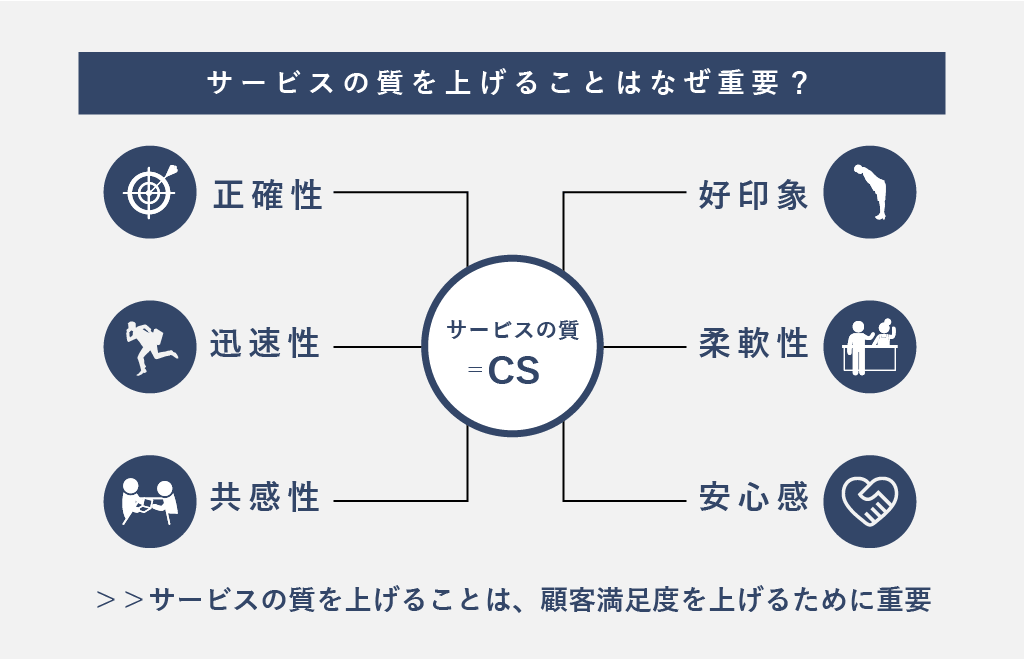
The steps to calculate CES are as follows:
Step 1
The first step is to conduct a customer engagement survey. This can be done via email or on the page after purchase. The survey includes ratings of companies based on customer experience.
There are various methods you can use to present your CES survey.
# 1.Likert scale :
This is a text-based scale: “Strongly Disagree, Disagree, Neutral, Agree, Strongly Agree.” It usually has a 5-7 point scale for customers to share their answers.
#2. Scale from 1 to 10:
In this method, customers answer on a scale of 1 to 10. For a question about how easy or simple it was for a customer to do something, a range of 7 to 10 is associated with a positive response, whereas for a question to rate level of effort, a score of 1 A range of ~3 is associated with a positive answer. result.

#3. 1-5 Scale: The scale numbered 1-5 corresponds to very difficult, difficult, neutral, easy, and very easy.

#4.Emotional face
This is a simple metric that customers can easily assess by associating their effort level with a happy, neutral, or sad face. This method allows customers to respond intuitively and quickly.

Step 2
The next step is to compile some great CES questions. Don’t ask your customers irrelevant questions. Format your questions in two ways:
- Make a statement such as “To what extent do you agree with the following statements?” This is done according to a Likert scale from 1 to 7.
- For example, direct questions such as how much effort is required to solve the problem. This applies well to facial emotions and the 1-10/1-5 scale.
Step 3
Now is the time to decide when is the right time to send out your CES survey.
- After a customer has had an interaction that leads to a purchase.
- Immediately after a customer interacts with customer service.
- In the immediate aftermath of an interaction, the customer experience can be negative.
Step 4
The final step is to calculate the CES based on your findings. Here, CES is calculated as:
Customer Effort Score (CES) = Total Customer Effort Score / Total Number of Responses
For example, if your company received the answers 4, 5, 4, 3, 3, your CES would be:
(4+5+4+3+3)/5 = 3.8
In this case, the customer effort score would be 3.8.
Factors influencing CES
A customer’s effort score is directly proportional to the number of clicks it takes the customer to complete the task. Here are some factors that directly impact CES:
- Long checkout process – Customers hate filling out long forms with cart information, shipping, billing, etc. This increases effort and impacts CES.
- Poor customer support – The longer a customer waits for their inquiry or issue to be resolved, the more effort they have to expend.
- Poor post-purchase experience – Providing a good customer experience after purchase is just as important as before. If you ignore this factor, your business may not be able to retain customers and may receive bad feedback.
Strategies to improve CES
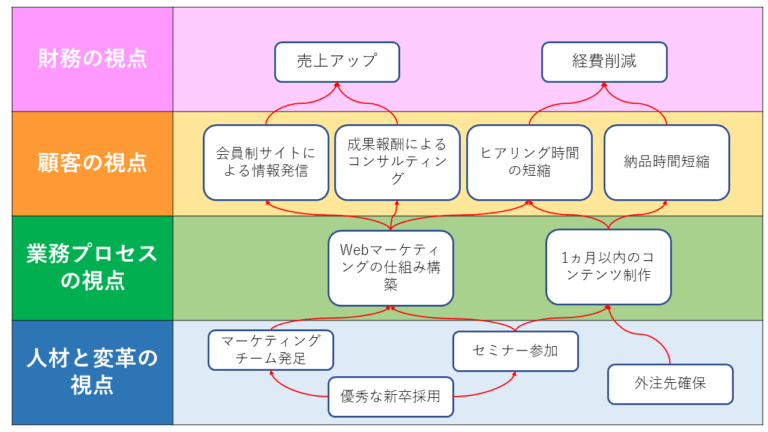
A high CES can negatively impact your business and cause you to lose customers. Businesses need to implement various strategies to improve customer effort scores through multiple factors, strategies, precise resources, and human resources.
Here are some proven strategies to help businesses improve their customer effort scores.
#1. Build a customer-centric culture
Customer-driven companies constantly improve their services to increase customer satisfaction. A customer-centric culture drives companies to provide a positive customer experience at every stage of the customer journey. Your customer service team must be trained to listen to your customers and act on your goals.
Here are some examples of how to foster a customer-driven culture.
- Customer loyalty programs: Through this strategy, brands can reward their customers with loyalty programs to retain them. Compensation is determined based on frequent transactions, length of service with the company, etc.
- Customer reviews: Customer service must be trained to listen to customers, whether the feedback they give is positive or negative. Please take steps to resolve the issue as soon as possible.
- Prompt response time: We care about our customers and try to respond to them as soon as possible to ensure their questions are resolved. When customers receive responses and their questions are quickly resolved, they are more likely to develop a positive image of your company.
- Dealing with Negative Feedback: Yes, responding to negative feedback is equally important, but most companies fail at it. Instead of panicking when you receive a negative review, focus on closing the feedback loop and developing strategies to reduce its impact.
#2. Easy access for customers

Customers are much happier when they can quickly contact them through their preferred medium for inquiries and issues. One way to keep your customers happy is to offer omnichannel support so that your customers can get help with their issues and questions through any channel.
Here are some examples to make it easier for your customers to contact you.
- Social Media Customer Service: One of the mediums through which customers prefer to interact with brands is social media. Providing social media customer service allows you to quickly resolve customer questions through Facebook, Twitter, Instagram, and more.
- Provide self-service to customers: Businesses should provide self-service options to customers by providing FAQs and chatbots so that customers can resolve issues on their own.
#3. Improved customer service

Customer service is the direct link between your brand and your customers. Providing top-notch customer service is essential to attracting and retaining customers.
Here are some examples of how businesses can improve customer service.
- Improving first contact resolution: First contact resolution indicates how often customers are able to resolve their questions in their first interaction with your company. If your problem or question remains unresolved no matter how many times you contact us, it can have a negative impact on your customers. Training agents to improve first contact resolution, such as replying to customers as quickly as possible, improves CES.
- Gathering context: Asking customers questions over and over again is very frustrating and shows how irresponsible the company is towards the customer. Implement a system where customer queries are automatically routed as needed and your support team has all the information they need to support the customer.
- Customer Service Performance Evaluation: Good customer service is essential not only to retain customers but also to increase sales. Both existing and potential customers have questions that need to be addressed professionally and quickly.
#4. understand your customers

Understanding your customers is the key to providing great customer service and building strong customer relationships. By getting to know your customers better, you can increase customer satisfaction and generate more leads and new sales through positive word-of-mouth recommendations.
Here are some ways businesses can better understand their customers.
- Customer Profiling: The goal of customer profiling is to identify, describe, and segment customers based on their behavior, characteristics, personality, purchasing habits, and other variables. It primarily focuses on understanding customer needs and pain points.
- Lead with empathy: Treating customers with empathy increases customer satisfaction because they feel understood, cared for, and respected. It leads to a positive customer experience.
- Accountability: Take responsibility for any mistakes that cause inconvenience to customers.
learning resources
Customer Effort Score – Complete Guide
This is a complete guide for anyone who wants to identify customer effort score challenges and find better solutions to them. It includes content to define, create, design, and implement your CES strategy in the best possible way. It helps companies create streamlined processes to improve and maintain good CES.
| preview | product | evaluation | price | |
|---|---|---|---|---|
 | Complete Guide to Customer Effort Score | $80.69 | Buy on Amazon |
What you’ll find inside:
- All the tools you need to self-assess your customer effort score.
- Featuring new and updated case-based questions.
- It includes seven core levels of CES maturity.
- It helps you identify areas where you can improve.
If you’re a business owner, manager, consultant, etc., this guide will train you how to self-analyze and ask the right questions to improve the ROI of your Customer Effort Score.
last word
Overall, customer effort score is a great way to learn how your company is perceived by your customers and how much effort they are willing to spend interacting with you.
You should conduct a CES survey to understand customer responses in detail and simplify data processing. If implemented correctly, a CES strategy will improve the customer experience and ultimately increase customer retention.


![How to set up a Raspberry Pi web server in 2021 [Guide]](https://i0.wp.com/pcmanabu.com/wp-content/uploads/2019/10/web-server-02-309x198.png?w=1200&resize=1200,0&ssl=1)


