There’s a lot of buzz surrounding voice search, the new trend that’s making marketers climb the wall upside down.
What’s all the fuss about? Is there any substance to this trend?
Yes, more and more people are comfortable using voice assistants to perform tasks like web searches. According to a report published by National Public Media , there are more than 40 million smart speaker users in the United States alone.
And this number is expected to increase, not just in the United States but around the world.
Despite this, there seem to be a lot of misconceptions about the growth of smart speakers and especially the use of voice search. Some “studies” state that by 2020, more than 50% of all searches will be done using voice. As far as I know, that number is currently 20%.
Now think for a moment about a 30% increase in just one year. It feels a little out of this world. That’s because it is. At best, we can expect voice search usage to level out and see a slight increase in new adaptations over the next few years.

But marketers like to sell ideas, and perhaps rightly so in the case of voice search.
The sooner you start adapting to this technology, the sooner you will gain a solid business advantage for years to come. And if anything, voice assistant technology will only get smarter and more capable.
For first-time users: What is voice search?
Voice search lets you speak to your smart device instead of manually typing a search query. While preparing dinner in the kitchen, you can look for missing ingredients without getting distracted from the process.
Although the topic of voice search seems to come up frequently now, it has been around for several years.
For example, Apple’s Siri has been steadily growing since 2011. Similarly, Google’s voice technology and Amazon’s Alexa are prime examples of products that integrate high-end voice capabilities.
Why is voice search important?
It’s clear that good speakers are becoming more popular, as is the use of mobile apps that offer voice search capabilities.
According to Statista , voice search-based e-commerce transaction value in 2023 is expected to be 400% higher than in 2021.

As the global smart speaker market rapidly evolves, smart speaker use cases are expanding beyond just the smart home. “Many companies, including Amazon, are integrating smart speakers into industries such as hotels, retail stores, hospitals, and other business locations,” said Jason Lowe, senior analyst at Canalys.
There are many good reasons to focus on voice-related technology. But it’s even more important if you’re actively optimizing for better search engine visibility. No matter what analysts say about the growth of voice search in the coming years, the number of people who are comfortable using voice for searches is increasing.
What will be the top voice search device?
The Western market for smart speaker devices is relatively linear at the moment, with brands like Apple, Amazon, Microsoft, and Google dominating the market. As far as voice search is concerned, most devices are well equipped with simple speech-to-text conversion capabilities.

However, it may be helpful to take a closer look at each product to better understand its unique features and possibilities.
For example, Google Home Hub has a screen attachment that can further improve the user experience for searching for recipes while cooking. You’ll also be able to watch news and other programming without having to switch back and forth between your TV and computer.
Here is the complete list:
- amazon echo
- google home
- Google Assistant
- microsoft cortana
- Apple Siri
- Android voice search
News has just begun, but there is an announcement that Amazon Echo has sold over 100 million devices. This should give room for the proliferation of smart speaker technology. Voice search is so easy to use — “Alexa, how can I…?” — there’s no reason why people wouldn’t want to at least try voice search for a while.
E-commerce: You’re unlikely to shop using a voice-assisted device.
Digiday’s Suman Bhattacharya thinks the concept won’t get much attention for the time being.
Amazon reportedly had a 65% share of the U.S. smart speaker market as of September 2018, but a recent report in The Information found that among those who own Alexa-enabled devices, Amazon Only 2% of people purchased it.
This involves many user-based factors.
For example, it would be foolish to think that you can buy a new winter coat just by using your voice. An element of visual exchange and research is required. Blindly purchasing a product by saying a few words is not appealing to most consumers.

At the same time, the number of users using voice devices to purchase domestic goods will also increase.
- toilet paper,
- tableware,
- cleaning liquid,
- household supplies,
- And general home appliances.
It’s a product from a brand you can trust. Simple household items that you’ll want to get your hands on. But nothing more, at least for the time being.
This doesn’t mean you shouldn’t start optimizing your e-commerce site for voice search users. Being ahead of the curve can give you a competitive edge against your closest rivals. It would also be beneficial to consider future case studies to better prepare your store for voice search if the trend rises above surface level.
Do you know what your brand looks like?
More or less, brands are always chasing money. This means that avoiding voice search will not be possible for some time. As voice search permeates search indexes, algorithms look for user-friendly and light-hearted answers to return to users.
Writing SEO-friendly copy is one thing, but making sure that copy sounds good is quite another. For brands, the growth of voice search means finding an authentic brand voice – a balance between insightful content and quick answers.

Most products are advertised in the third person, and startups in particular pepper their landing pages with third-person jargon. A new marketing initiative is optimizing your copy so it sounds good when spoken on a smart speaker.
Further developments are expected in this field.
Marketing: Food for Thought
Marketing with smart speakers? How difficult can it be? In most cases, no one knows where voice search will go soon.
But still, marketers are bracing for big changes in this space. If you remove the visual aspect from regular search, how do you drive user engagement beyond the 3-second interaction when a user asks a question? Time (and money!) spent designing your website! ) will all be wasted?

The New York Times published an article exploring this very question .
Marketing on voice devices is still in its infancy. Rubenstein compared it to when brands started creating apps for mobile devices. But over time, many of the activities people do on screens will be replaced by voice interactions, she said.
Given the context of voice search, simple questions can depend on one answer. As a result, the SERPs will be completely repositioned as voice devices prefer a single site for concise answers.
You should also consider promoting your company to voice users. But it’s too early to say anything. Companies that own smart technology will want to make many direction decisions. That’s something you can be sure of.
Best practices: How to optimize voice search
If you’re new to voice search optimization, this checklist will help clarify what you’re up against.
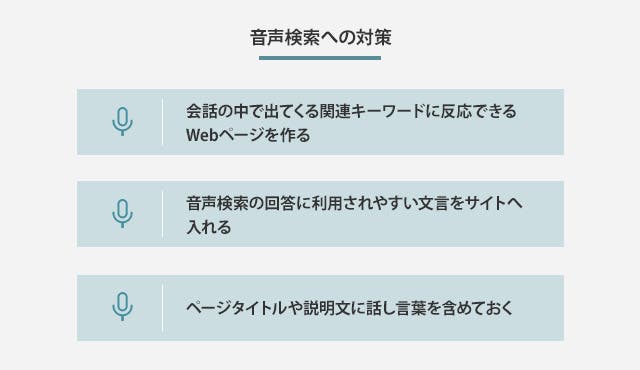
Always insist that the writer adapt a conversational tone and clear paragraph structure.
- Add your business information to local SEO directories and keep them updated.
- Learn about “skills” such as Alexa Flash Briefing. Skills help users get the content they want faster.
- Continue implementing AMP pages on your site and start using the schema’s Speakable attribute. Speakable (beta) allows you to mark appropriate content for accessible audio output.
- Go back and optimize your images with appropriate tags and titles. Tens of millions of Google Home users want to see great photos.
- Work on growing your brand’s online presence. For example, keep yourself posted on review sites as well as regularly. Please use exact words when responding to good or bad reviews.
- Use listings and snippets that Google and other search engines can pick up as featured content.
Keep your focus on long-tail keywords and write with a clear intent on strict SEO aspects. What do you intend your readers to learn from your content? What is the message?
Everything else follows the same traditional rules. performance, ease of use, etc.
Closing declaration
Voice search is about to get interesting. This year will likely be the first year that more marketers come together to do experiments and other exciting activities. With hundreds of millions of users, no market remains untapped.
Keep an eye out for major developments from Google and Amazon. There’s no doubt that both companies want to continue to drive ways to monetize this phenomenon.
If you don’t have one yet, get an intelligent speech device and run some experiments. You can get better insights than just playing around with things directly.


![How to set up a Raspberry Pi web server in 2021 [Guide]](https://i0.wp.com/pcmanabu.com/wp-content/uploads/2019/10/web-server-02-309x198.png?w=1200&resize=1200,0&ssl=1)


