AIaaS (Artificial Intelligence-as-a-Service) provides an efficient way for businesses to leverage AI and its capabilities, benefits, tools, and technologies to eliminate complexity and overcome the cost of developing in-house solutions. Masu.
AI tools and technologies can be used to improve products and services, automate time-consuming tasks, and enhance customer service.
If you want to create an in-house solution using legacy systems, there can be significant upfront costs and the process can be complex and time-consuming. This is why many companies prefer not to build in-house software solutions.
In this case, AIaaS comes to the rescue. It helps you overcome these challenges and create advanced AI apps, from chatbots and monitoring tools to complex analytics software, cost-effectively and without the need for coding.
In this article, we will discuss AIaaS, how it works, its benefits, and some great AIaaS providers.
Let’s go!
What is AIaaS?
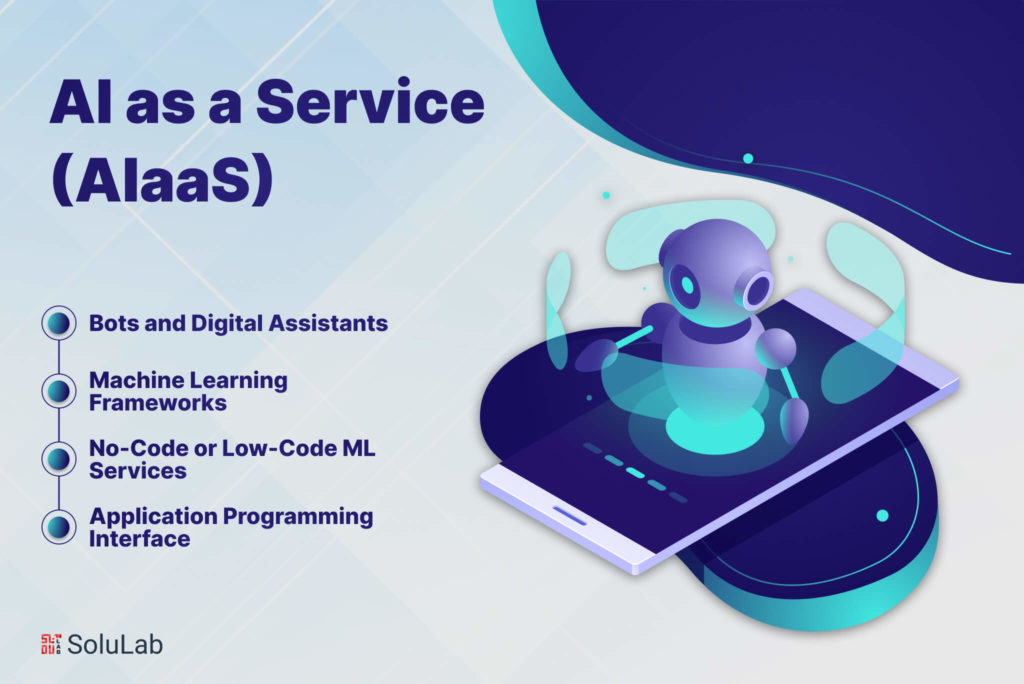
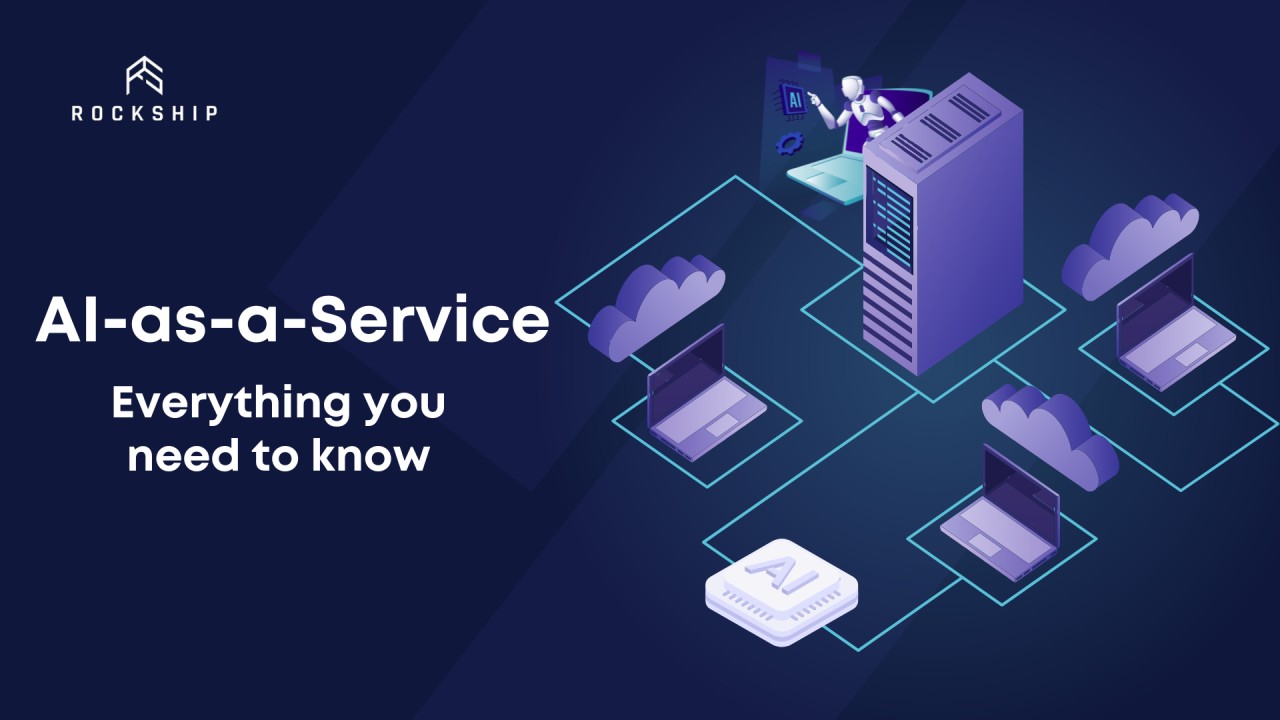
Artificial Intelligence as a Service (AIaaS) is an Everything as a Service (XaaS) concept that allows third-party companies and cloud providers to build AI-powered solutions and outsource them to enterprises.
Businesses can use these AIaaS-based solutions to implement AI technologies and solutions and create advanced applications without manual coding or huge investments.
AIaaS works like any other cloud-based service, offering AI products and services through an “as a service” model. It helps you effectively collect and store as much data as you need. AIaaS is easy to implement and allows businesses and individuals to experiment with different public cloud platforms, machine learning algorithms, and services.
Through intuitive, low-code tools and APIs, users can harness the power of artificial intelligence without any coding knowledge.
AIaaS is a great solution for companies that want to develop, test, and use their own AI systems. This gives you valuable insights and opportunities to scale and grow without making major investments in resources or talent.
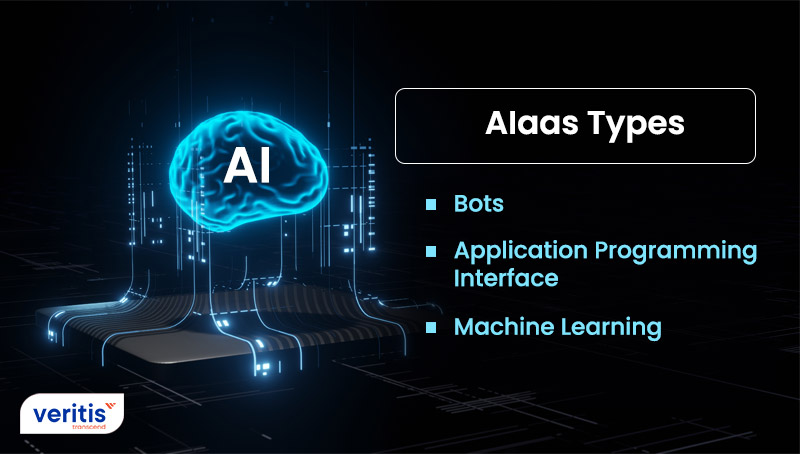
Types of AIaaS solutions
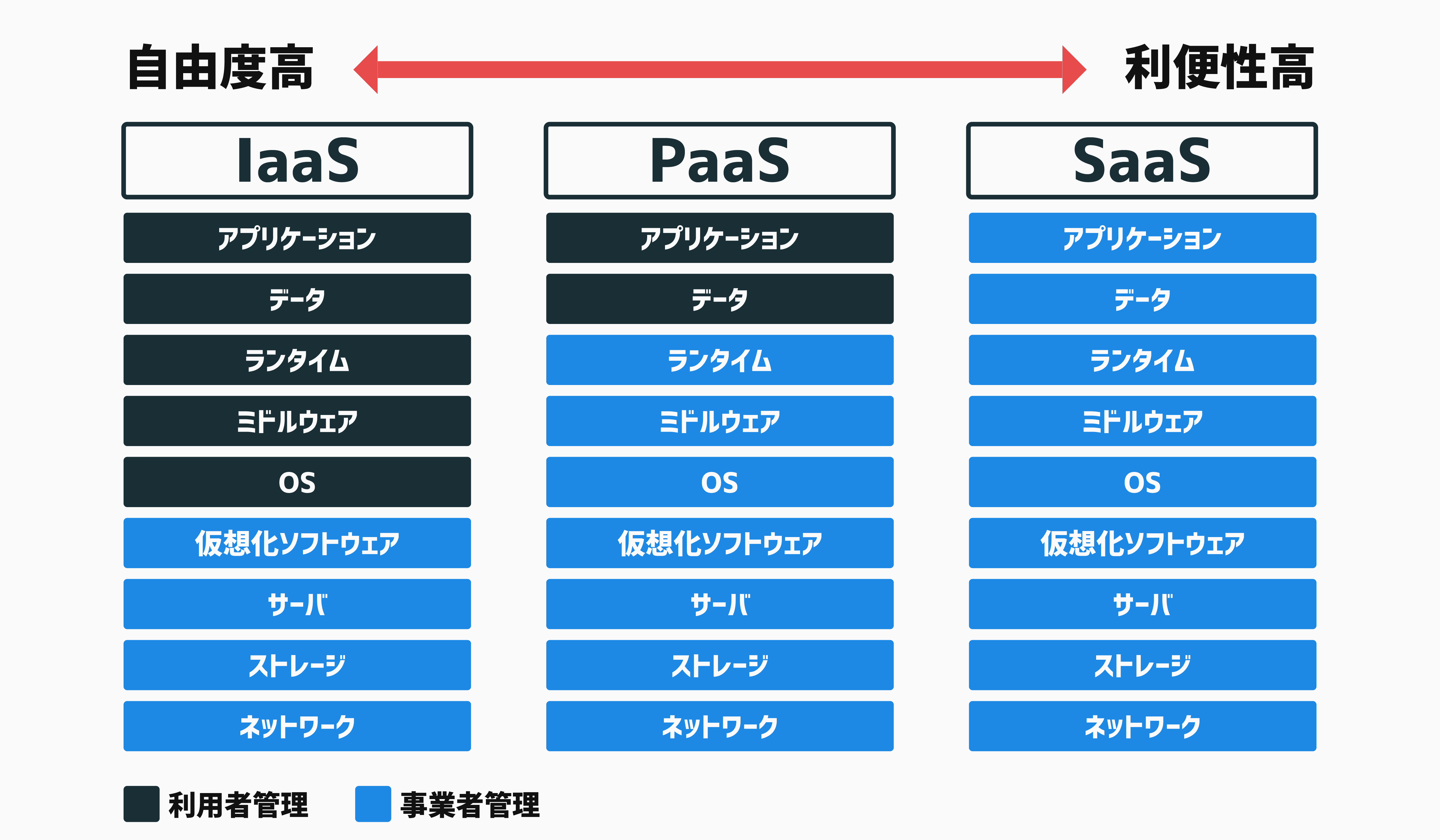
The different types of AI services you can choose from include:
bot
Engaging chatbots can simulate human conversations when powdered by AI algorithms. It works using ML and NLP concepts to help understand user queries and provide appropriate solutions.
Building a successful chatbot requires a lot of effort and advanced coding from developers.
AIaaS solutions help you create powerful chatbots that interact smartly with your customers and provide faster and more effective problem resolution. It also helps reduce response rates and improve customer satisfaction.
Application Programming Interface (API)
AIaaS solutions offer great APIs. By definition, an API is like a bridge or intermediary that allows two applications to interact and share data.
For example, hotel booking websites like Airbnb extract data from various hotel sites and display the best deals and prices in one convenient place.
APIs are currently used in travel applications such as NLP, computer speech, computer vision, knowledge mapping, translation, search, and emotion detection.
So, if you want to build an API, you can take advantage of AIaaS solutions without writing any code. The entire process is automated and easy, allowing you to create applications faster.
machine learning
AI and ML models enable developers to create useful software, find patterns in data, streamline processes, and make predictions.
AIaaS makes it easier for enterprises to adopt ML and AI. You can create pretrained models for general use, or you can create models trained for specific use cases. All of this is possible without ML expertise, which is a huge advantage for many companies.
Labeling data
Data labeling means annotating large amounts of data to organize them effectively. There are multiple use cases, including classifying data by size, ensuring data quality, and training AI.
Data labeling is done with the help of human-involved ML, which allows humans as well as machines to continuously interact with each other. This allows AI to easily evaluate data and improve performance in the future.
Data classification
Data classification is used when different data sets need to be tagged under some categories. This typically includes user-based, context-based, and content-based data classification.

If the outline and criteria for data classification are clear, data classification using AI can be easily performed. AIaaS can help with this.
How does AIaaS work?
Unlike other “as a service” models such as IaaS, PaaS, and SaaS, AIaaS provides AI-based solutions through third-party vendors.
The architecture is very simple and includes advanced hardware, software, and AI systems built to work with machine learning, NLP, computer vision, robotics, and more. This also includes ML models, frameworks, bots, and more.
Additionally, AIaaS runs on a cloud computing platform, allowing businesses to better serve their customers. This allows individuals and businesses to easily access AI capabilities without having to maintain or deploy expensive infrastructure.
There are two main types of AI algorithms.
- ML algorithms including regression and classification
- Deep learning (DL) algorithm employing neural networks
When algorithms are applied to a computer system in a particular way, the computer system behaves like a human, such as determining objects, carrying on conversations, responding to obstacles, and chatting with humans. You can.
Companies can leverage AIaaS models to gain valuable insights from the data collected and analyzed. Therefore, AIaaS offers the following benefits to enterprises:
- Understand your valuable customers
- Find key points in service delivery and production
- Understand why some people buy your product or service while others don’t.
AIaaS components

#1. AI infrastructure
AI infrastructure relies on AI and ML models. Compute and data are the two pillars of both models.
- AI computing: AI computing includes serverless computing, batch processing, and virtual machines (VMs). These methods are used to automate ML tasks and improve parallelism. For example, software XYZ has a real-time data processing engine that includes an ML library. Once you train ML models, you can use them in containers or VMs to perform computations.
- AI data: When large datasets are incorporated into statistical algorithms, it is called a functional ML model. Generally, these models are designed to understand patterns in existing data. The sheer volume of this data determines the exact percentage of predictions. For example, multiple medical reports train the DL network for further use in detecting medical emergencies such as tumors and cancer.
ML relies on input data that can be collected from multiple sources. Data from unstructured data, relational databases, pools of raw data, stored annotations, and more serve as input to AI and ML models.
Advanced machine learning techniques require performing complex calculations that require a combination of CPUs, GPUs, and neural networks. Both CPU and GPU complement each other to enable faster processing.
Cloud providers offer clusters of CPU and GPU combinations based on virtual machines and containers in AIaaS setups. Users can train models using this configuration.
#2. AI service

Public cloud vendors provide available APIs that do not require custom ML models. These services derive benefits from the infrastructure owned by the cloud provider.
- Custom computing: While APIs serve the primary purpose in the common case, cloud providers are moving toward custom computing techniques to enable users to enable cognitive computing through custom datasets. Here, the user uses data to train the cognitive service. This custom approach minimizes the stress of choosing the right algorithm and training a custom model.
- Cognitive computing: This computing includes text analysis, speech analysis, search, and speech translation. These services are used as REST endpoints and integrated with various applications using API calls.
- Conversational AI: Cloud providers can help developers integrate bots across platforms using bot services. This service allows mobile and web developers to easily add digital assistants to their apps.
#3. AI tools
Apart from infrastructure and APIs, cloud vendors provide tools that allow developers and data scientists to efficiently utilize storage, databases, and VMs that are in sync with compute and data platforms.
- Wizards: Data scientists can use wizards to eliminate or minimize training complexity.
- Data preparation tools: The performance of AI tools is highly dependent on the quality of the data. Additionally, to obtain high-quality data and ML models, you need data preparation tools from your cloud provider that can easily transform, load, and extract your data. The output is then forwarded to the ML pipeline for evaluation and training purposes.
- Frameworks: Due to the complexity of setting up and configuring a data science environment, cloud providers can provide ready-made templates with several frameworks such as Apache MXNet, Torch, and TensorFlow.
Features of AIaaS
- Pre-trained models: AIaaS includes a wide range of pre-trained models trained on massive datasets and optimized for the required domain or task.
- Custom model development: AIaaS offers custom model development options that streamline the deployment and integration of AI capabilities.
- Data processing and analysis: AIaaS allows you to store and process data that allows your business to process and analyze large datasets.
- Model deployment and hosting: AIaaS makes it easy to develop and deploy AI and ML models without any coding knowledge.
- API integration: AIaaS easily integrates with your existing systems, workflows, and applications. Service providers offer APIs and SDKs that facilitate integration with popular frameworks and programming languages.
- Computer Vision Services: AIaaS provides computer vision services that help AI analyze videos and images.
- Predictive analytics: Predictive analytics is a critical capability for any business. AIaaS allows AI models to predict future outcomes from large datasets.
- Automated Machine Learning: AIaaS provides automated ML capabilities so that AI models can handle repetitive and time-consuming tasks.
- Model monitoring and management: AIaaS allows you to effectively monitor and manage your AI and ML models. This also allows you to track the performance of these models.
AIaaS and AIPaaS
AIaaS and AIPaaS are cloud-based solutions that can be used while developing and deploying AI-based solutions. However, both differ in scope and functionality.
AI-as-a-Service (AIaaS) is a cloud-based solution that provides pre-built AI applications and models that can be easily integrated into existing business applications and processes.
It provides pre-built models for a variety of operations, including image recognition, predictive analytics, and natural language processing. It is accessible via an API, allowing developers to easily integrate it into their applications.
An AI platform as a service (AIPaaS), on the other hand, is a cloud-based solution that provides data scientists and developers with resources and tools to design, train, analyze, and deploy AI models. This includes software development kits, machine learning frameworks, APIs, and other development tools.
Benefits of AIaaS
- Advanced infrastructure: AI and ML require GPUs and parallel machines to succeed. Without AIaaS, companies may have to make large initial investments. AIaaS helps businesses harness the power of ML at lower cost and risk.
- Ease of use: AIaaS is easy to implement. Create out-of-the-box solutions that harness the power of AI without deep technical skills.
- Little or no coding required: You can use AIaaS even if you don’t have a team of coding experts in your organization. All you need is an in-house no-code infrastructure that requires no coding during setup or use.
- Scalability: AIaaS allows you to start with a simple project, understand and learn if it suits your personal needs. As you get more comfortable with using your own data, you can scale up or down as your project demands change.
- Cost-effective: Deploying AIaaS is cost-effective. You only pay for the features you use, with no upfront or hidden investments.
AIaaS use cases
- Image recognition: Image recognition systems detect images, identify places, objects, and people and draw conclusions. AIaaS makes it easy to build AI-powered image recognition applications.
- Fraud Detection: AI systems detect and prevent fraud.
- Self-driving cars: Self-driving cars improve safety. This technology allows vehicles to see, sense, and understand their surroundings.
- Natural language processing: This system uses computer-generated text and speech. You can interact with your customers and improve their experience in real time.
- Recommendation engine: Suggests relevant items based on customer needs based on preferences and patterns.
- Analytics: AIaaS is very useful for analytics as it helps analyze huge amounts of data, find patterns, make assertions, and predict the future.
AI-as-a-Service provider
#1. Amazon Web Services (AWS) Machine Learning
Get a comprehensive set of AL and ML services using AWS Machine Learning to innovate faster. Gain insights from the data you have while reducing costs. AWS ML supports your ML adoption efforts with implementation and infrastructure resources.
Use AWS ML to solve business problems, leverage generative AI to build new apps, address business problems, improve customer experiences, accelerate innovation, and optimize business processes. You can.
#2. Microsoft Azure Machine Learning
Experience enterprise-grade AI services for your end-to-end ML lifecycle with Microsoft Azure Machine Learning. It helps you confidently build, deploy, and manage your critical business ML models at scale. Accelerate time to value with ML operations, integration tools, and open source interoperability.

This AI learning platform is specifically designed for responsible AI apps in ML. Microsoft Azure ML helps you rapidly deploy, manage, and share ML models in MLOps and cross-workspaces. Built-in security, compliance, and governance. We also offer AI workflow orchestration, world-class performance, flexible frameworks and tools, and a managed end-to-end platform.
#3. Google Cloud Platform (GCP) AI platform
Google Cloud Platform provides innovative AI and ML products, services, and solutions powered by Google technology and research. Efficiently build generative AI apps, generate insights, and discover frameworks and tools.
The GCP AI platform lets you build AI applications responsibly and quickly. Additionally, you can derive insights from your data using a complete suite of data analysis, management, and ML tools. This allows you to understand and interpret ML models.
#4. IBM Watson
Achieve new levels of success and productivity with IBM Watson and incorporate automation and AI into your business workflows. It is an enterprise-ready, next-generation AI platform designed to increase the effectiveness of AI in your business.
It provides:
- watsonx.ai: Helps you easily train, tune, validate, and deploy ML models.
- watsonx.data: Helps you scale AI workloads anywhere for all your data.
- watsonx.governance: This allows you to accelerate AI workflows that are accountable, accountable, and transparent.
conclusion
AIaaS is a rapidly growing technology with many benefits for early adopters. AIaaS optimizes business processes and makes it easy to develop and deploy AI and ML models without prior coding knowledge.
So, if you want to create and deploy a low-cost cloud-based solution, you can use a good AIaaS solution like the ones mentioned above. It helps in designing advanced AI models to perform various tasks and streamline the entire process with increased efficiency and cost-effectiveness.
Also read Security as a Service (SECaaS).


![How to set up a Raspberry Pi web server in 2021 [Guide]](https://i0.wp.com/pcmanabu.com/wp-content/uploads/2019/10/web-server-02-309x198.png?w=1200&resize=1200,0&ssl=1)


