Learn Internet of Things (IoT) architecture and set up IoT structures for business use.
Warehouses, supply chains, manufacturing plants, and logistics hubs of the future will be IoT-enabled. The technology is so complex that only a few IT giants know what’s inside. However, you can also crack it by learning the technology thoroughly.
If you want to make your business smarter or offer IoT solutions as a service, keep reading. This article describes the core IoT architecture that provides automation and convenience, as well as some common use cases.
introduction

IoT includes sensors, devices, and electronic interfaces that collect data, process it, and send it as commands to endpoint machines.
These are all variables or moving parts within an IoT system. The framework that defines how to order these moving parts and create the final IoT structure is the IoT architecture.
IoT architecture describes how to connect and operate a network of devices, cloud software, and sensors in an IoT system. Needless to say, system troubleshooting also happens within the IoT architecture.
The basic framework for this will be three layers of components within an IoT system. These are:
- Sensors, actuators, devices, etc. below the sensory layer
- Create network layers such as LAN, Wi-Fi, 5G, 4G, etc.
- The graphical user interface is the application layer
The IoT architecture ensures visibility into all components in the system, data flows, and end device commands. Therefore, you can effectively protect, support, and control your IoT systems.
Layers of IoT architecture
IoT system architecture has various layers that act as digital media through which sensor data reaches cloud applications. Cloud apps then make decisions based on preconfigured workflows for endpoint devices, such as robotic arms in manufacturing plants.
Finally, these decisions are sent to the endpoint device through the same layer. Understanding these layers will help you create a successful IoT architecture. The IoT architecture layers you need to know are:
sensory/perceptual layer
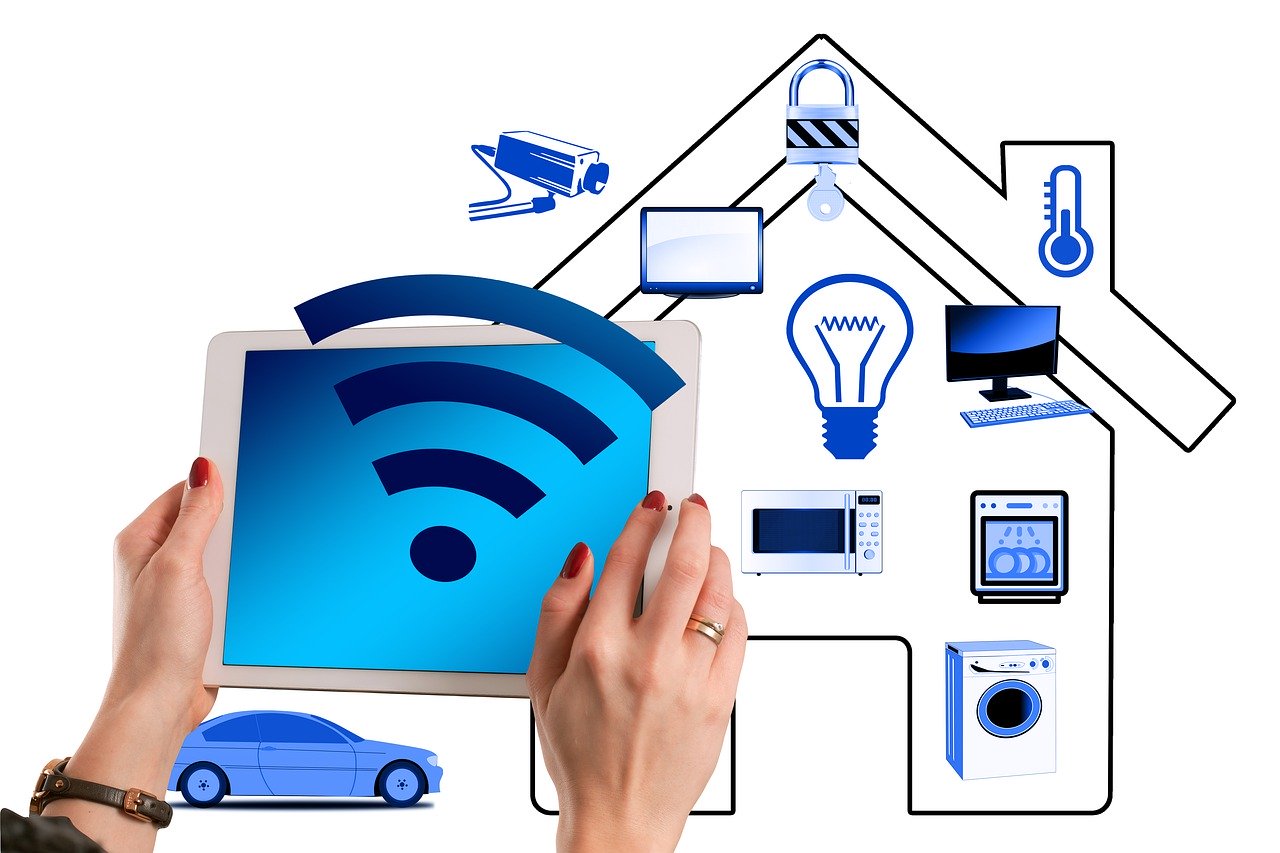
The perception layer consists of endpoint devices that collect data from the physical world. You can then analyze the data collected by your digital application.
IoT experts also refer to this layer as the physical layer because it is constantly communicating with real-world objects. Below are some notable devices that connect to the sensory layer.
- Sensors such as gyrometers, speed sensors, radio frequency identification (RFID) sensors, and chemical sensors.
- actuator and robot arm
- Security cameras, door access systems, etc.
- Thermostats, HVAC, water sprinklers, heating elements, etc.
Most industrial IoT devices collect data at the processing layer. For home-based IoT devices, the perception layer can also be the processing layer. For example, the Nest Learning Thermostat.
Network/data transport layer

The network layer handles data transfer between all layers of the IoT architecture. This layer also defines the web-wide network topology of devices, cloud apps, and databases.
The key parts of this layer are Internet gateways, intranet ports, network gateways, and data acquisition systems (DAS). The network connection protocols listed above can utilize the following physical devices:
- Wifi
- Wide area network (WAN)
- 4G LTE/5G
- low energy bluetooth
- Near Field Communication (NFC)
It is through this layer that various endpoint devices and cloud apps communicate with each other. Sensor data such as temperature, speed, and humidity pass through the network layer to reach other layers.
data processing layer
The processing layer processes the analysis and stores the data before transferring it to the data center. This includes edge computing, artificial intelligence (AI), and machine learning (ML) edge analytics. Important tasks such as decision making also occur in this layer.
The processing layer performs all decision-making tasks. Additionally, ad-hoc decisions can be made at the application layer to override or improve the system. This is a very necessary feature for human control of intelligent machines.
Application layer or GUI layer
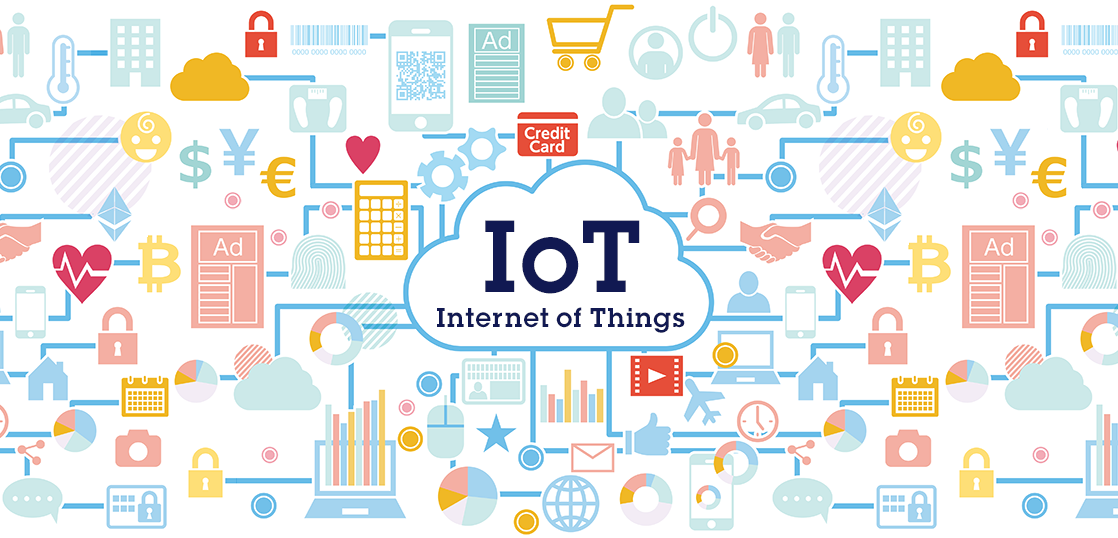
Most IoT systems, such as Google Home and Amazon Alexa, operate without human intervention. However, a graphical user interface is required to add IoT workflows, change parameters, add devices, etc. This is the application layer.
The key requirements for the application layer in an IoT architecture are:
- Avoid voice command-based issues
- Communicate with thousands of sensors and endpoint devices from a small screen
- Add new devices to your existing IoT system without stopping your entire business
- Observe the health of your system and service your device if you see a message similar to the following on your dashboard:
- Create a new rule or workflow for your IoT system
- Create and follow service level agreements (SLAs)
In an industrial setup, a central dashboard on a computer monitor is required to observe all IoT systems. The dashboard allows you to interact with some or all IoT systems by pausing, stopping, and restarting devices.
business layer

The business layer transforms stored data into actionable insights. Such reports can be used by business managers, CTOs, etc. Helps you make decisions to improve productivity.
This layer primarily includes business app integration. Examples include enterprise resource planners (ERP), business intelligence (BI) apps, and data visualization apps.
Here, data analysts can process the data and input it into BI tools like Tableau, Power BI, etc. to understand the overall performance of the IoT system. You can also create forecasts based on current production capacity and future needs of the market.
IoT architecture stages
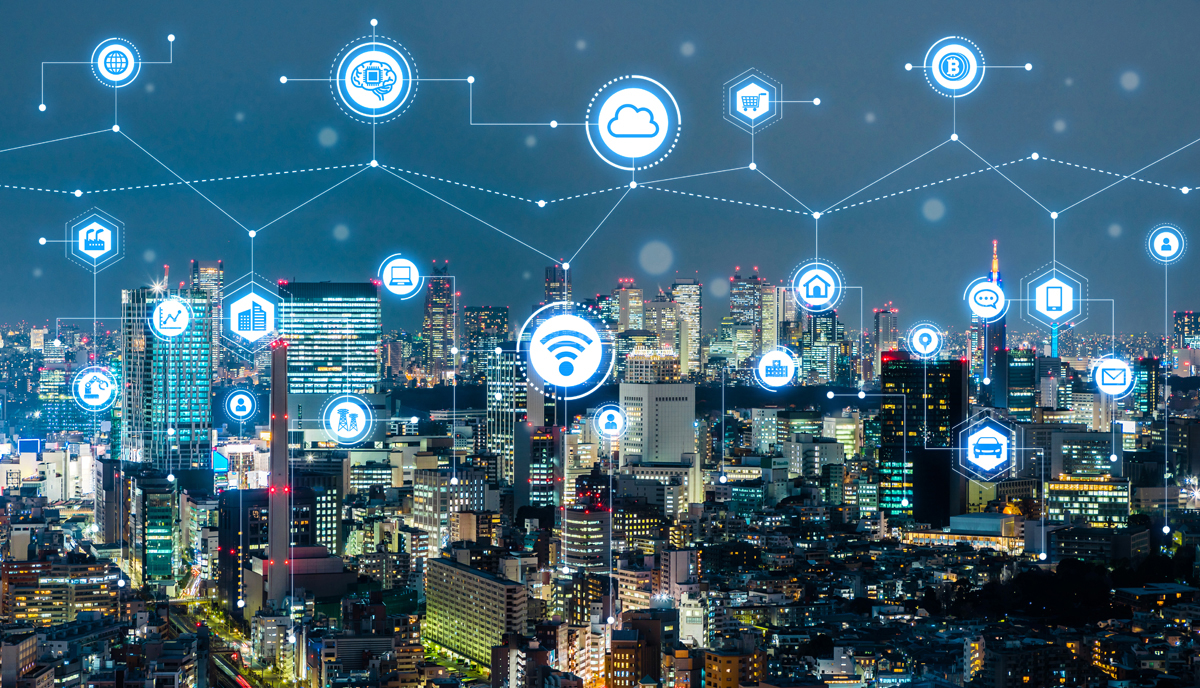
To implement a high-level IoT system architecture, you need to understand the stages of this system.
object
The object phase begins with the implementation of the physical layer. Here you need to connect smart devices, sensors, and actuators to IoT networks and endpoint machines.
Sensors can be wired or wireless. The main purpose is to collect real-world data and convert it into digital data for the processing layer.
gateway
You must set up an intranet or internet gateway. During this phase, modems and routers collect data from sensors and endpoint devices.
These gateway devices then forward the digital data to the processing and application layers. Most IoT architectures use a data collection system at this stage.
IT system
IoT systems collect analog data, and data collection systems convert it into digital data. Therefore, the size of digital data after post-processing becomes enormous. This is where edge IT systems come into play.
At this stage, the collected data is sent to edge IT systems where AI and ML algorithms process the data and keep only actionable data.
Cloud storage/data center
Once edge IT systems have processed and filtered critical data, it must be stored in accessible storage. The application layer of the IoT architecture is connected to the storage stage.
The storage stage is primarily private cloud storage, where IoT data can be stored in a structured database. If you’re looking for an affordable solution, you can also try the public cloud.
non-functional requirements
#1.Safety
To ensure internal security of the architecture, no unauthorized devices must be linked to the architecture. Devices must be registered and able to communicate securely.
Additionally, the architecture must be securely accessible to all users and data. Authorized system users must use security controls to exchange data.
#2.Performance
IoT systems must be compatible with unstructured and structured data. Platform deployments must be compatible with cloud, on-premises, and hybrid cloud.
Acceptable response time to the user, two-way near real-time communication, and detailed timestamping are other important non-functional requirements of this architecture.
#3.Manageability
Your IoT architecture should include notifications and alerts about issues. It should support solution management to quickly identify the cause of problems from a central node.
#4.Maintainability
Devices and IoT systems need to be adaptable. The architecture must be flexible enough to quickly adapt to changes in users, processes, and data. Additionally, maintenance must be performed without delaying service level agreements (SLAs).
#5.Availability
Certain domains and solutions require 24×7 availability of IoT systems. For example, IoT architectures in hospitals and laboratories require systems to be always on.
MongoDB Atlas IoT architecture
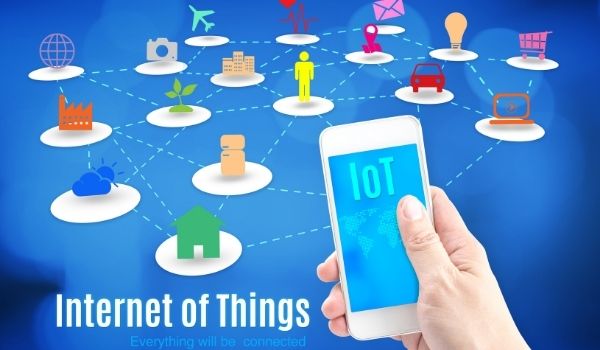
Various layers of the IoT architecture generate terabytes of data. Using an IoT-enabled cloud database is ideal for storing data in an organized manner.
One of the great cloud databases you can use is MongoDB Atlas. Here are some examples of use in IoT architectures.
- MongoDB RealmSDK and MongoDB Server for building databases and interfaces. Mobile apps and devices can use these databases and interfaces.
- At the network layer, you can use MongoDB Atlas to configure and deploy IoT servers .
- Use MongoDB 5.0 Time-Series as storage for continuous IoT measurement data.
- If your IoT system has unstable network connectivity, you can use offline-first sync from Atlas App Services .
- You can use MongoDB Connector for BI and MongoDB Charts at the business layer to extract actionable insights from your IoT data.
Usage example
IoT architecture is becoming more popular every day and its use in various fields is increasing. The most common use cases are:
#1.Health management
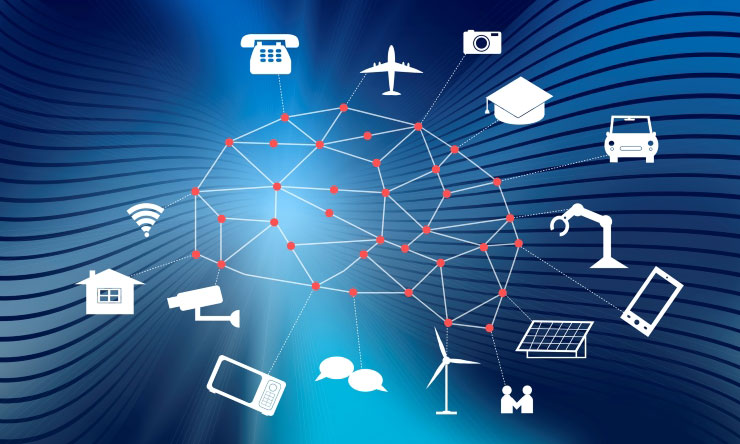
Clinics and hospitals generate terabytes of untapped data. You can use it to improve operational efficiency and patient care.
IoT architecture allows healthcare organizations to leverage isolated patient data. Physicians can quickly gain and use insights and respond quickly to alerts. Gadgets and health monitors linked to IoT infrastructure can provide real-time patient status.
#2.Agriculture
Farmers can use IoT architecture to increase and manage production autonomously.
You can see its usage below as well.
- Soil temperature monitoring
- Find the cause of machine failure
- Adjust humidity and temperature levels in indoor plantations
#3.Manufacturing industry

The manufacturing industry leverages IoT sensors to gain insights into processes. Usually they are not connected to the internet. These short-range sensors can also calculate changes over time.
Other uses of IoT architecture in this area include:
- Demand forecasting with real-time production monitoring
- Understand baseline efficiency through cycle time tracking
#4.Commercial HVAC Solutions
HVAC is a complex system and failure of any element or function is unacceptable. This results in high energy consumption and extra maintenance costs. IoT architecture allows HVAC to operate at lower power levels while still providing satisfactory output.
Ensuring the consistency and quality of commercial solutions is another use case for IoT. The system automatically collects and analyzes data and notifies you of anomalies with minimal user interaction.
#5.Prevention of water damage in commercial apartments
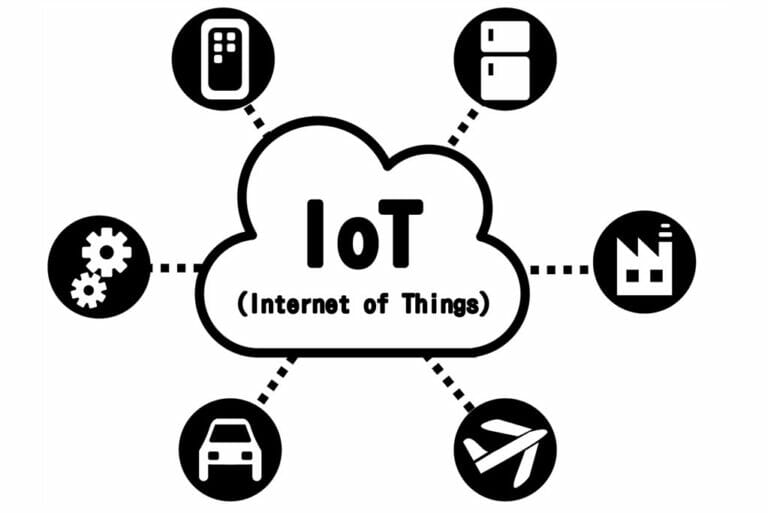
Leaking or bursting water pipes cost homeowners and insurance companies millions of dollars. Water connections are invisible, making it difficult to detect the root cause.
A properly configured IoT architecture can use efficient built-in sensors to alert users to leaks in real time. It also provides contextual location data to stakeholders to improve asset maintenance. Insurance companies also benefit from early detection of this problem.
Additionally, the sensor can also detect minor leaks that could pose a potential threat in the future. Thus, users can schedule an appointment with a plumber.
The future of IoT architecture
Soon, IoT is about to take an evolutionary leap forward with the growth of 5G networks. You will be able to process data faster than ever before. Not to mention, rapid deployment of IoT systems is also possible.
Private 5G allows administrators to launch a personal 5G mobile network and have full control over it.
In enterprise-level operations, the following issues do not occur:
- speed adjustment
- Lack of interoperability
- Additional charges for exceeding data usage
- Bandwidth not available during peak hours
last word
IoT architecture shows how all the components of an IoT system are connected into a cohesive network. Therefore, we have covered all the important technical aspects of this system’s architecture.
In-depth knowledge of IoT architectures helps create business-grade solutions in healthcare, manufacturing, and agriculture. Beyond the use cases described in this article, users can also implement IoT in a variety of areas not yet explored.
Also check out our articles on IoT learning resources and IoT starter kits.


![How to set up a Raspberry Pi web server in 2021 [Guide]](https://i0.wp.com/pcmanabu.com/wp-content/uploads/2019/10/web-server-02-309x198.png?w=1200&resize=1200,0&ssl=1)


