Edge computing aims to optimize web apps and internet devices to minimize bandwidth usage and communication latency. This could be one of the reasons behind its rapid popularity in the digital space.
Businesses, corporations, factories, hospitals, banks, and other established institutions generate excessive amounts of data every day.
Therefore, managing, storing, and processing data efficiently has become more important. For time-sensitive businesses, it is especially important to process data quickly and effectively to minimize safety risks and speed up business operations.
Edge computing can help with this.
But what exactly is it? Isn’t the cloud enough?
Let’s answer these questions with a deeper understanding of edge computing.
What is edge computing?
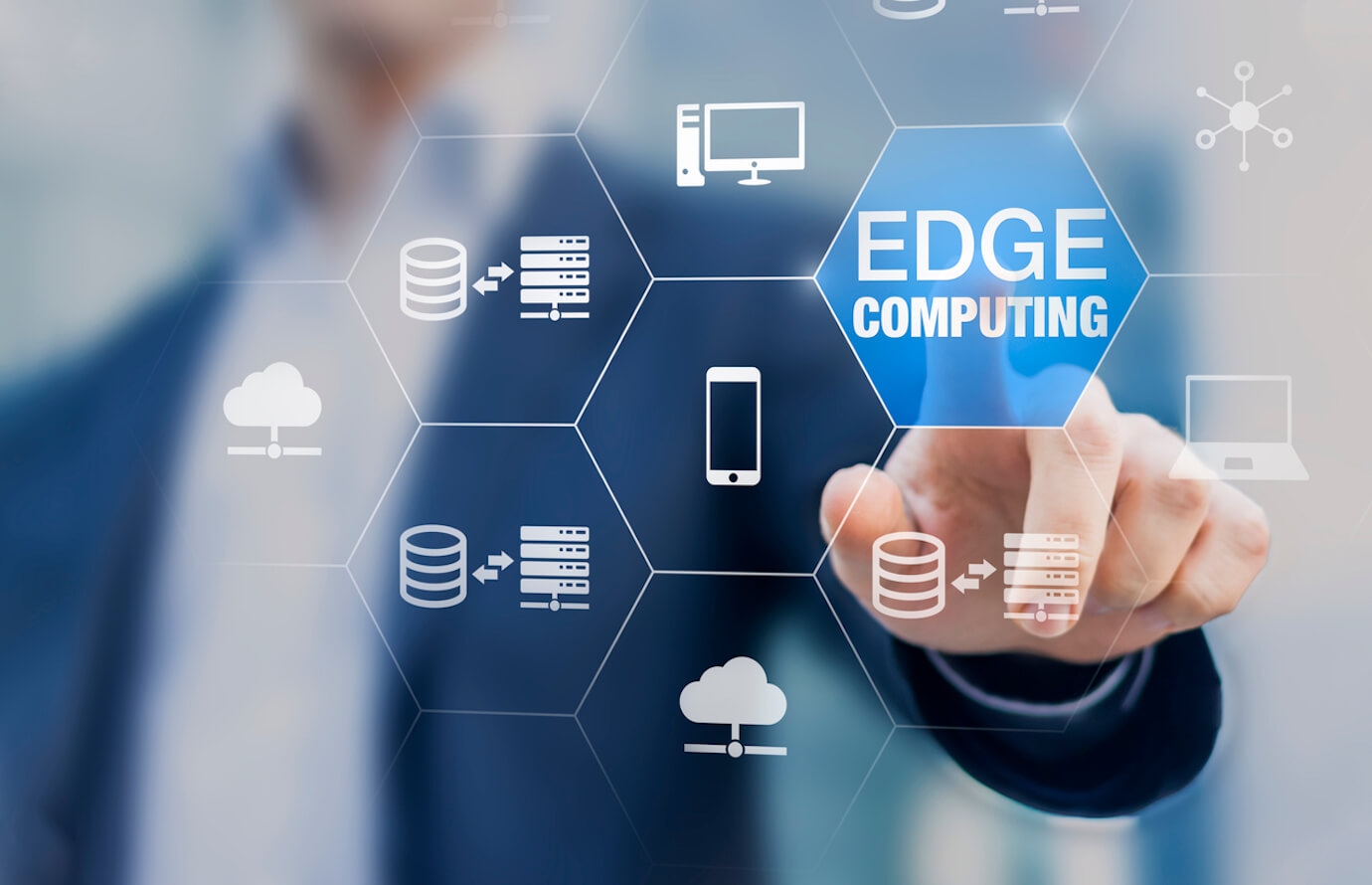
Edge computing is a modern distributed computing architecture that moves data storage and computation closer to the data source. This saves bandwidth and improves response time.
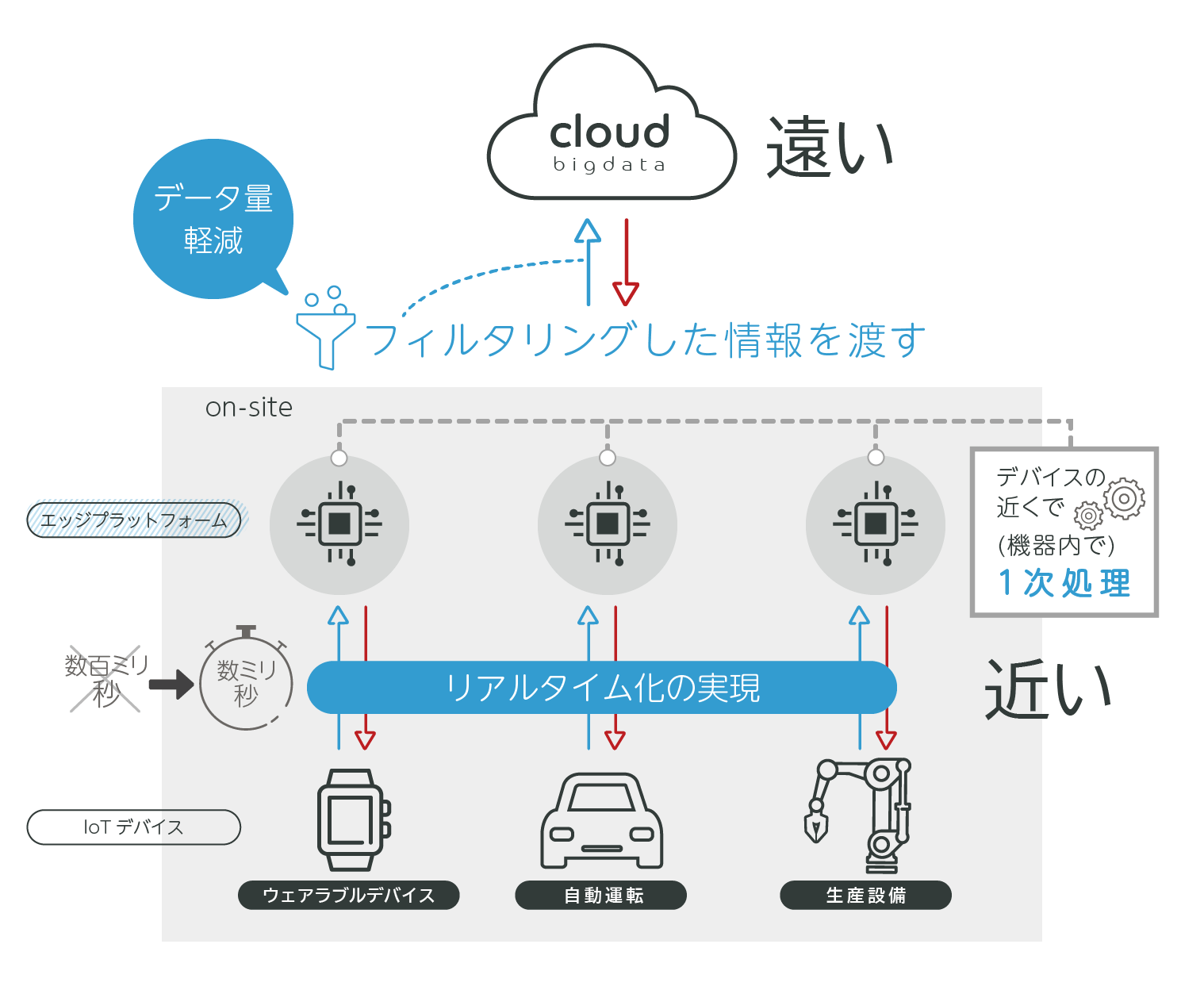
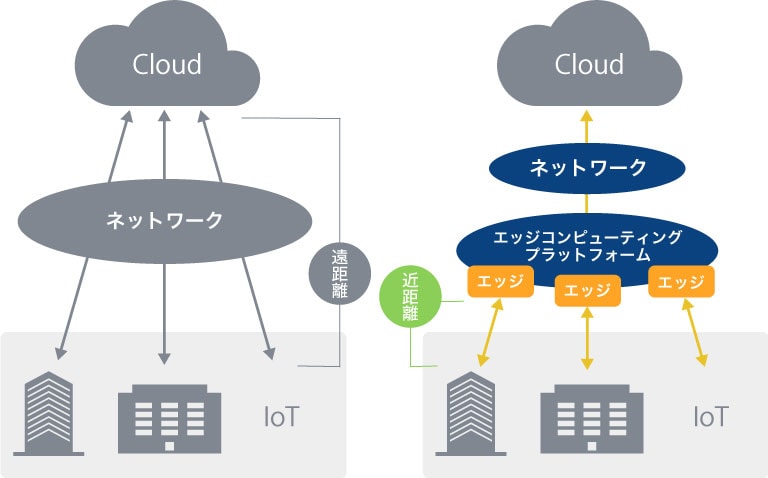
Simply put, edge computing involves fewer processes running in the cloud. It also moves those computing processes to edge devices such as IoT devices, edge servers, and users’ computers. This method of performing computation near the network or at the edge of the network reduces long-distance communication between servers and clients. Therefore, bandwidth usage and latency are reduced.
Edge computing is essentially an architecture, not a technology itself. This is location-specific computing that doesn’t rely on the cloud to perform work. However, that doesn’t mean the cloud doesn’t exist. It just gets closer.
Origins of edge computing
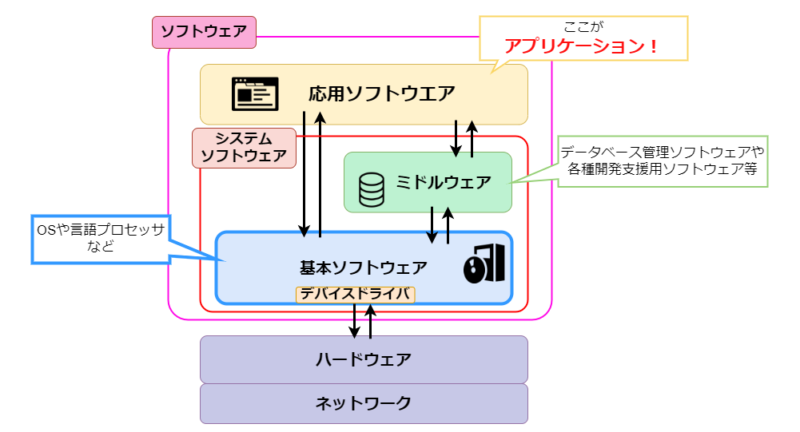
Edge computing originated as a content delivery network (CDN) concept created in the 1990s to deliver video and web content using edge servers located close to users. In the 2000s, these networks evolved to host apps and app components directly on edge servers.
This is how the first uses of edge computing emerged commercially. Eventually, edge computing solutions and services were developed to host apps such as shopping carts, real-time data aggregation, and ad insertion.

edge computing architecture
Computing tasks require appropriate architecture. And there’s no “one size fits all” policy here. Different types of computing tasks require different architectures.
Over the years, edge computing has become an important architecture for supporting distributed computing and deploying storage and computing resources close to the same geographical location as the source.
Edge computing employs a distributed architecture, which can be difficult and requires continuous control and monitoring, but it also offers advantages such as moving large amounts of data in a shorter amount of time than other computing methods. It is still effective for solving advanced network problems.
Edge computing’s unique architecture aims to solve three major network challenges: latency, bandwidth, and network congestion.
latency
This refers to the time it takes for a data packet to travel from one point in the network to another. Reducing latency helps build a better user experience, but the challenge is the distance between the user making the request (client) and the server participating in the request. Longer geographic distances and congested networks can increase latency and slow server response times.
By placing computation closer to the data source, you actually reduce the physical distance between the server and client, which improves response time.
bandwidth
This is the amount of data that a network transmits over time, measured in bits per second. Limited to all networks, especially wireless communications. Therefore, the number of devices that can exchange data within a network is limited. If you want to increase this bandwidth, additional charges may be required. Additionally, it is difficult to control bandwidth usage across networks that connect large numbers of devices.
Edge computing solves this problem. All calculations are done near or at the data source, such as a computer or webcam, so bandwidth is provided only for those uses, reducing waste.
traffic jam
The Internet involves billions of devices exchanging data around the world. This places a heavy load on the network and can cause network congestion and response delays. In addition, network outages may also occur, further increasing congestion and disrupting communication between users.
Edge computing, which deploys servers and data storage at or near where data is generated, allows multiple servers and data storage to be distributed on a more efficient, smaller LAN where the local devices generating the data can use available bandwidth. The device will now be operational. This significantly reduces congestion and delays.
How does edge computing work?
The concept of edge computing is not entirely new. Its origins date back to decades related to remote computing. For example, branch offices and remote workplaces have placed computing resources where they can receive the most benefit, rather than relying on a central location.
In traditional computing, data is generated on the client side (such as a user’s PC), travels over the Internet to a corporate LAN to store the data, and is processed using enterprise apps. The output is then sent back over the internet to reach the client’s device.
Today, modern IT architects are moving away from the concept of centralized data centers and embracing edge infrastructure. Here, computing and storage resources are moved from the data center to the location (or data source) where users generate data.
This means moving the data center closer to the data source, not the other way around. A partial gear rack is required to help operate on a remote LAN and collect and process data locally. You may place your gear in a shielded enclosure to protect it from high temperatures, moisture, moisture, and other climatic conditions.
The edge computing process involves data normalization and analysis to find business intelligence, and only relevant data after analysis is sent to the main data center. Additionally, business intelligence here means:
- retail store video surveillance
- sales data
- Predictive analytics for equipment repair and maintenance
- power generation,
- maintain product quality,
- Check that the device is functioning properly, etc.
Advantages and disadvantages
advantage
The benefits of edge computing include:
#1.Reduced response time
As explained above, deploying computing processes at or near edge devices can help reduce latency.
For example, an employee may want to deliver an urgent message to another employee within the same company. Messages take longer to send because they are routed outside the building, communicate with remote servers located anywhere in the world, and then come back as incoming messages.
With edge computing, routers are responsible for transferring data within the office, significantly reducing latency. It also saves a lot of bandwidth.
#2.Cost efficiency
Edge computing conserves server resources and bandwidth, resulting in cost savings. Deploying cloud resources to support large numbers of devices in offices and homes with smart devices is expensive. However, edge computing can reduce this expense by moving the computational portion of all these devices to the edge.
#3.Data security and privacy
Moving data between internationally located servers involves privacy, security, and other legal issues. If it is hijacked and falls into the wrong hands, it could cause serious concerns.
Edge computing stores data closer to the source within data laws such as HIPAA and GDPR. It helps you process data locally and avoid moving sensitive data to the cloud or data center. Therefore, your data is kept securely in-house.
Furthermore, by implementing edge computing, data sent to the cloud or to distant servers can also be encrypted. This makes your data safer from cyber-attacks.
#4.Easy maintenance
Edge computing requires minimal effort and cost to maintain edge devices and systems. Less power is required for data processing, and less cooling is required to keep the system operating at optimal performance.
Cons
The disadvantages of edge computing are:
#1.Limited range
Edge computing deployments are effective, but limited in purpose and scope. This is one of the reasons people are attracted to the cloud.
#2.Connectivity
Edge computing requires good connectivity to process data effectively. Additionally, if connectivity is lost, a solid disaster plan is required to overcome any issues that may arise.
# 3.Security loophole
As the usage of smart devices increases, the risk vectors for attackers to compromise the devices increases.
Application of edge computing
Edge computing has applications in a variety of industries. It is used to aggregate, process, filter, and analyze data near or at the network edge. Some of the areas where it applies are:
IoT device
It’s a common misconception that edge computing and IoT are the same. In reality, edge computing is an architecture, while IoT is a technology that uses edge computing.
Smart devices such as smartphones, smart thermostats, smart vehicles, smart locks, and smart watches can connect to the internet and benefit from code running on the device itself rather than in the cloud.
Network optimization
Edge computing helps optimize your network by measuring and improving your users’ overall web performance. Finds the lowest latency and most reliable network path for user traffic. Additionally, it can also eliminate traffic congestion for optimal performance.
health care
The healthcare industry generates vast amounts of data. This includes patient data from medical equipment, sensors, and devices.
Therefore, there is an increasing need to manage, process, and store data. Edge computing helps by applying machine learning and automation to data access. It helps identify problematic data that requires immediate attention by clinicians to enable better patient care and eliminate health incidents.
Additionally, medical surveillance systems use edge computing to quickly respond in real-time instead of waiting for cloud servers to operate.
retail
Retail businesses also generate large amounts of data from inventory tracking, sales, monitoring, and other business information. With edge computing, you can collect and analyze this data to find business opportunities such as sales forecasting, vendor order optimization, and running effective campaigns.
manufacturing industry
Edge computing is used in the manufacturing sector to monitor manufacturing processes and apply machine learning and real-time analytics to improve product quality and detect manufacturing errors. It also supports environmental sensors built into manufacturing plants.
Additionally, edge computing provides insight into component inventory and its duration. This helps manufacturers make accurate and fast business decisions regarding their operations and factories.
construction
The construction industry primarily uses edge computing for workplace safety to collect and analyze data from safety equipment, cameras, sensors, and more. This helps companies understand the safety situation in the workplace and ensure that employees are following safety protocols.
transportation
The transportation sector, especially self-driving cars, generates terabytes of data every day. Self-driving cars need to collect and analyze data in real time while driving, which requires large amounts of computing. It also requires data about the vehicle’s condition, speed, location, road and traffic conditions, and nearby vehicles.
To address this, the vehicle itself becomes the edge where the computing takes place. As a result, data is processed at an accelerated rate, increasing the need for data collection and analysis.
agriculture
In agriculture, edge computing is used with sensors to track nutrient density and water usage to optimize harvests. For this purpose, sensors collect data about the environment, temperature and soil conditions. Analyze the impact to improve crop yields and ensure they are harvested under the most favorable environmental conditions.
energy
Edge computing can also help gas and oil companies monitor safety in the energy sector. Sensors continuously monitor humidity and pressure. Additionally, you need to make sure you don’t lose the connection, because if something goes wrong, like an overheated oil pipe that goes undetected, it could lead to disaster. The challenge is that most of these facilities are located in remote areas and have poor connectivity.
Therefore, deploying edge computing on or near these systems provides better connectivity and continuous monitoring capabilities. Edge computing can also determine equipment failure in real time. This sensor monitors the energy produced by all machines, such as electric vehicles and wind power systems, through grid control, helping to reduce costs and produce energy efficiently.
Other edge computing applications include bandwidth-intensive video conferencing, efficient caching with code running on a CDN edge network, and financial services such as banking for security.
far edge and near edge
Edge computing can be confusing because it includes so many terms, such as near edge and far edge. Understand the difference between far edge and near edge.
far edge
This is the infrastructure deployed furthest from the cloud datacenter and closest to the users.
For example, a mobile service agency’s far edge infrastructure may be located near a cell tower base station.
Far edge computing is being deployed in businesses, factories, shopping malls, and more. Apps running on this infrastructure require high throughput, scalability, and low latency, making it ideal for video streaming, AR/VR, video gaming, and more. The app is known as:
- Enterprise Edge to host enterprise apps
- IoT Edge to host IoT apps
near edge
This is the computing infrastructure deployed between cloud data centers and the far edge. Unlike Far Edge, which hosts specific apps, it hosts general-purpose applications and services.
For example, near edge infrastructure can be used for CDN caching, fog computing, etc. Fog computing also places storage and computing resources in or near the data, which may or may not be present in the data. It is the middle ground between distant cloud data centers and the edge at resource-constrained sources.
Edge computing vs. cloud computing (similarities and differences)
Both edge computing and cloud computing involve distributed computing and the deployment of storage and computing resources based on the data being generated. However, they are never the same.
The differences between them are as follows:
- Deployment: Cloud computing deploys highly scalable resources to run processes in a global location. This may involve centralized computing closer to the data source rather than at the edge of the network. Edge computing, on the other hand, deploys resources where data is generated.
- Centralization/decentralization: The cloud uses centralization to provide efficient and scalable resources with security and control. Edge computing is decentralized and is used to address concerns and use cases not served by the centralized approach of cloud computing.
- Architecture: Cloud computing architecture consists of several loosely coupled components. We offer apps and services on a pay-as-you-go model. However, edge computing extends beyond cloud computing and provides a more stable architecture.
- Programming: App development in the cloud is suitable and uses one or more programming languages. Edge computing can require different programming languages to develop apps.
- Response time: Average response time is typically higher for cloud computing compared to edge computing. Therefore, edge computing provides faster computing processes.
- Bandwidth: Cloud computing consumes more bandwidth and power due to the greater distance between clients and servers, whereas edge computing requires relatively less bandwidth and power.
What are the advantages of edge computing over cloud computing?
The process of edge computing is more efficient than cloud computing. This is because cloud computing takes time to retrieve the data requested by the user. Cloud computing can delay the relay of information to the data center, slowing down the decision-making process and introducing delays.
As a result, organizations can suffer losses in terms of cost, bandwidth, data security, and even occupational hazards, especially in manufacturing and construction. Here are some benefits of edge on the cloud.
- The demand for faster, more secure, and more reliable architectures has popularized the growth of edge computing, leading organizations to choose edge computing over cloud computing. Therefore, edge computing works wonders in areas where time-sensitive information is required.
- Edge computing works better when the computing process is performed in a remote location, as there are little or no connections that make a centralized approach possible. It is useful for local storage and acts as a micro data center.
- Edge computing is a great solution to support smart and specialized devices that perform special functions and are different from regular devices.
- Edge computing can effectively address bandwidth usage, high cost, security, and power consumption in most areas compared to cloud computing.
Current Edge Computing Providers
To quickly and easily introduce edge computing to your business or enterprise, you need an edge computing service provider. It helps process and efficiently transmit data, provide a robust IT infrastructure, and manage large amounts of data generated from edge devices.
Here are some edge computing providers to keep an eye on.
#1.Amazon Web Services
AWS provides a consistent experience in the cloud edge model, offering solutions and services for IoT, ML, AI, analytics, robotics, storage, and compute.
#2.Dell
Dell provides edge computing orchestration and management through OpenManage Mobile. We’re perfect for digital cities, retailers, manufacturers, and more.
#3.Clear blade
ClearBlade has released an edge-native intelligent asset application that enables edge administrators to build alert devices and connect them to IoT devices without coding.
Other notable edge computing providers include Cloudflare, StackPath, Intel, and EdgeConnex.
Last words 👩🏫
Edge computing provides an efficient, reliable, and cost-saving option for modern businesses that use digital services and solutions more than ever. This is also a great concept to support remote work culture and facilitate faster data processing and communication.


![How to set up a Raspberry Pi web server in 2021 [Guide]](https://i0.wp.com/pcmanabu.com/wp-content/uploads/2019/10/web-server-02-309x198.png?w=1200&resize=1200,0&ssl=1)


