Get into the inner circle of accountants by understanding the most commonly used accounting terms. If you are a business owner and often talk to your accountant, you should also learn these terms for fruitful communication.
Every industry has its own language. This helps people in the industry know who is an expert and who is not. Accounting is no exception, and some of the accounting industry’s internal terminology can be very difficult to understand, even for businessmen.
If you’re looking to pursue a career in accounting, you’ve come to the right place. It’s also great if you’re a business owner or freelance professional and need to understand the jargon-filled emails your accountant sends you for approval. Read on to learn some of the key accounting terms in plain language.
Importance of accounting for companies
The accounting department is an essential part of any business as it provides the numbers needed to run the business. For example, through accounting you can calculate business expenses, employee payments, raw material purchases, tax payments, and profits.
Here are the top reasons why micro-businesses, small businesses, startups, and large corporations need a robust accounting system or team.
Financial statements as management status
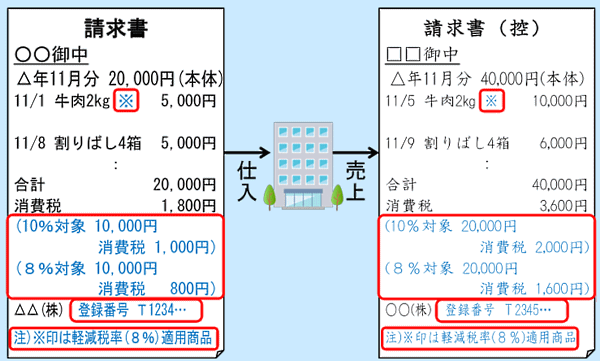
Accounting produces financial records and records that help you understand the overall health of your business.
- Is your company making unnecessary purchases?
- Are you hiring more people than necessary?
- Is your business debt growing out of control?
The answers to all these questions can be found by checking your account statement.
plan your business budget
Any business can fail if it doesn’t have a budget or goes over budget. To create a reasonable business budget, you need your business’s accounting data. For example, past fiscal years’ inventory purchases, sales, employee payments, employee benefit payments, marketing spending, etc. can help you plan for the coming years.
Submission of company financial statements
Countries have established regulatory bodies that require companies to submit financial statements on a quarterly, semi-annual, or annual basis. In addition, organizations listed on stock exchanges are required to submit corporate accounting reports to their respective stock exchanges. You need to provide standardized financial statements that only your accounting team can produce.
Compliance with tax and labor laws

Companies must also submit several other statements to regulators, such as records of tax collection and payment, statements of labor benefit payments, and pension fund management and statements.
Again, you cannot simply write down the amount and send it to the authorities. You need standard format financial statements with audit data that can be prepared by your accounting team.
Without further ado, here are some accounting terms that are important to you.
Accounts payable (AP)
Accounts payable or AP is a transaction account within a company’s general ledger. This account represents the company’s responsibility to repay debts or obligations to suppliers or creditors. Such debt is usually short-term.
The accounts payable balance on a business’s balance sheet shows the total amount owed to vendors.
The accounting industry sometimes uses the term accounts payable (AP) to refer to a business unit. This department is typically responsible for paying creditors, suppliers, and vendors that are owed to the business.
Accounts receivable (AR)

Accounts receivable (AR) is the balance of funds owed to a business for services or goods provided. AR is also money that is held back for goods and services consumed before the customer makes payment.
Accountants typically list accounts receivable as current assets on a company’s balance sheet. The AR balance clearly shows the client’s purchases on credit. Therefore, to avoid running out of funds, it is necessary to curb the growth of AR balances or speed up the collection process.
assets
Assets represent anything that a business owns with monetary value. The accountant lists the assets in order of liquidity, such that the company’s bank account balance is the most liquid and the factory land is the least liquid.
balance sheet

This is an accounting report that calculates liabilities, assets, and equity to ensure that both parts of the accounting equation match. After reconciling both credits and debits, the balance sheet will always be zero.
book value
In the business world, assets constantly lose value. Therefore, accountants calculate the actual value of an asset by subtracting depreciation (loss of value) from the original purchase price or value. This is known as the book value of the asset.
capital
Business capital, or simply capital, is the money or financial assets that a company needs to operate its business. In other words, it hosts the data needed to manufacture a product, provide a service, or provide IT services.
Capital is usually liquid funds obtained from own funds or other sources. When financing a business from other sources, it becomes a debt because there is a line of credit or a loan from a financial institution such as a bank, and the principal must be repaid with interest at a mutually agreed time. .

Capital can include shares in companies listed on the stock market, brand names, scientific patents, and even business ideas.
cash flow
A cash flow statement simply shows how money or cash flows into and out of a business. Therefore, cash flow describes the fluid movement of money throughout a company. Subtracting the ending cash balance from the opening cash balance in the business ledger yields the net cash flow.
However, to obtain actionable data, it is necessary to set a period for such calculations. If you see a negative number, it means you will lose your cash faster. Conversely, if you see a positive number, it means your business has received a significant increase in cash.
credit
Credits are listed in the right column of your business’s balance sheet. In the accounting books, it represents an increase in equity or debt, or a decrease in assets.
In a double-entry accounting system, there is always a debit record accompanying a credit record, resulting in a net balance of zero.
debit
A debit is the opposite of a credit record. This always appears in the left column of the company’s books.
When an equity or liability account decreases, it is a debit transaction. In other words, if an asset or expense account is increasing, it also becomes a debit record.
depreciation expense

Depreciation shows how business assets lose value over time. Only assets with significant purchase costs can have depreciable value. Depreciation is shown as an expense on the income statement, but it is usually a non-cash expense. Assets such as vehicles and factory machinery are subject to depreciation.
expenses
When you pay for something from your business account, it becomes an expense. Expenses can be fixed, like office rent payments. Again, there are variable costs, such as hiring daily wage construction workers, whose payments change over time.
In addition, we may incur operating expenses that are unrelated to the production of our products, such as insurance claims, property taxes, and marketing expenditures.
Fixed costs
Fixed costs are expenses that are scheduled to occur on a regular basis and do not change depending on the company’s profits.
For example, you will have to pay office rent, employee wages, vehicle insurance, and interest on your capital loan, regardless of how many products you sell or services you provide. These are examples of fixed costs.
general ledger

A general ledger is an overall record of all financial transactions over the lifecycle of a business. For ease of understanding, accountants post transactions to separate subledger accounts depending on the company.
gross profit
Gross profit represents the profitability of your business as a percentage. Gross profit amount can be calculated by dividing gross profit by revenue for the same accounting period.
Businesses use this number to show their profits after deducting input costs for goods or services sold to customers.
In a nutshell, if a company tells you that its profitability for the current quarter is 40%, that means that for every dollar of revenue, the company will credit your account with 40 cents and the rest will be input costs. .
gross profit
Gross profit indicates the profitability of your business in dollars. Accountants calculate the amount of gross profit for a period without considering overhead expenses for that period. This value can be calculated by subtracting the cost of products sold from the revenue for the same period.
liabilities
Companies incur certain financial obligations or debts in order to conduct business operations. It is known as a liability on the books of any company. There are two types of liabilities: current liabilities (CL) and long-term liabilities (LTL).
Payments to suppliers or vendors are CL because they must be paid within 12 months. On the contrary, long-term mortgage payments on transportation vehicles, factory machinery, or office buildings are excellent examples of LTL.
liquidity
Liquidity describes how quickly a company can convert materials into cash without depreciating the value of the materials. However, experts in the financial accounting industry believe that a company’s liquidity is positive, and the more liquidity it has, the easier it is for a company to pay its short-term debt, or CL.
net profit
Net income is the amount of money your business earns in profit. Your accountant must calculate this value by subtracting all expenses for a given period from your revenue for that period. Expenses include the cost of goods sold, depreciation, miscellaneous expenses, and taxes paid.
overhead
Businesses don’t always have to pay to produce products or serve customers. Other expenses may be incurred and are recorded in the business ledger as overhead or expenses.
Therefore, expenses that are not related to the products or services a company sells (for example, office rent, office supplies, insurance premiums, administrative staff, etc.) are overhead expenses.
Payroll calculation

In accounting, accountants use payroll accounts to view payments released as employee wages, salaries, deductions, benefits, pension funds, and bonuses/compensation. When payroll payments occur, such as unpaid wages, accrued bonuses, accrued vacation pay, etc., such salary amounts appear on the balance sheet as liability records.
profit
Profit is the financial benefit a company receives from business procedures such as selling products or provisioning services to new customers. However, to record a profit, a business’s revenue must exceed all input costs and expenses that each party must pay.
income statement
The income statement is also called the profit and loss statement. This is a financial statement prepared by an accountant to summarize a company’s performance and financial position. This includes expenses, revenue, and net income over a period of time, such as quarterly or annual.
Return on investment (ROI)
Return on investment (ROI) is a metric for evaluating the performance of an investment by showing the losses incurred or gains made. The ROI of an investment can be calculated by dividing the net income by the cost of the investment.
revenue
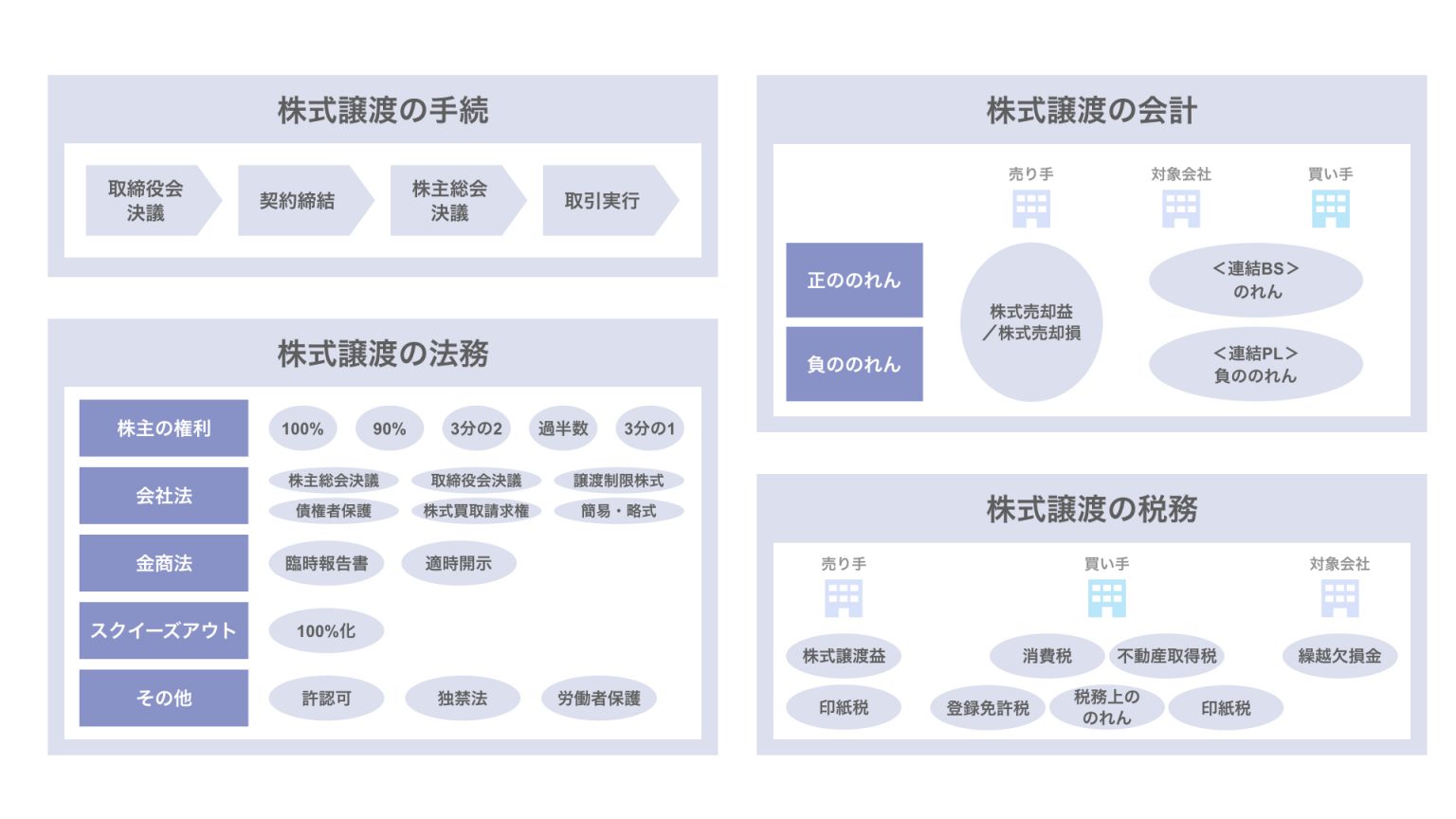
Revenue is the revenue a company receives from its daily operations, such as selling products and provisioning services to new customers. This is the actual money that a company generates at a particular point in time.
However, to find the actual profit, it is helpful to subtract input costs and other expenses from the total revenue for that particular period.
turn over
Revenue is another important accounting concept that shows how fast a company is operating its business. Accounting professionals may also use this term to determine how quickly a company collects cash from credit-based customers. Therefore, turnover can also be seen as the velocity of accounts receivable (AR) operations. Additionally, sales can also represent the pace at which a company sells its inventory.
Last words 💻
You’ve now learned some important accounting terms in plain English. I can now speak confidently to my fellow accountants at the office or at school. If you’re a businessperson, you’ll be able to participate more actively in meetings and calls with your accountant than ever before.
If you are looking for more accounting knowledge to sharpen your skills, you should try one of these online accounting course platforms.
Also, if your business needs advanced accounting tools, be sure to read this article: Cloud-based accounting solutions for small to large businesses.


![How to set up a Raspberry Pi web server in 2021 [Guide]](https://i0.wp.com/pcmanabu.com/wp-content/uploads/2019/10/web-server-02-309x198.png?w=1200&resize=1200,0&ssl=1)


