Machine learning has become extremely popular in recent years and months. Industry analysts predict that machine learning, and more broadly artificial intelligence, will impact humanity as much as the Internet and CPUs.
If you want to learn machine learning, you’ve come to the right place. This article is a guide to the best machine learning books for graduates.
What is machine learning?
Machine learning refers to the development and use of algorithms that enable machines to learn how to perform tasks rather than being explicitly programmed to perform them.
Machine learning is a field that falls under artificial intelligence. Artificial intelligence is more broadly concerned with the development of intelligent behavior in computers. Machine learning focuses solely on learning, which is part of AI.
How is machine learning used?
Computers will always outperform humans in scale. Computers can accurately perform large amounts of work in a short amount of time. However, computers were limited to performing tasks that humans could understand well enough to write code to instruct them. In other words, it became a bottleneck in what computers could do.
With machine learning, computers are no longer limited to what humans can express. This allows students to perform tasks that were previously impossible or difficult to tell them how to do, such as:
- Driving a car (Tesla Autopilot, Waymo)
- Identify objects in photos (SAM)
- Generate artwork (DALL-E)
- Generating text (ChatGPT)
- Translate the text (Google Translate)
- Play the game (MindGo)
Why learn AI from books?
When it comes to learning, books have the advantage of providing much more depth than all other learning resources. Books are written through an extensive writing process, with passages rewritten for clarity.
The result is well-written prose that expresses ideas in as close to the best way possible. My personal biggest reason for preferring text-based resources is that it’s easier to reference and revisit some concepts. This is even more difficult with video-based resources such as tutorials and courses. So let’s explore the best books to learn machine learning.
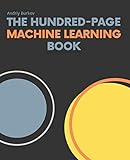
100 page machine learning book
The Hundred-Page Machine Learning Book is exactly that, a book that teaches you machine learning in 100 pages. Due to the 100 page constraint, this book doesn’t get into the weeds too much and only provides an overview of the subject matter.
| preview | product | evaluation | price | |
|---|---|---|---|---|
 | 100 page machine learning book | $28.95 | Buy on Amazon |
Ideal for beginners, as it covers the most important fundamentals of the field, including supervised and unsupervised learning, ensemble methods, support vector machines, and gradient descent.
This book was written by Andriy Burkov, a Ph.D. and natural language processing expert. in the field of artificial intelligence.
Machine learning for absolute beginners
Written by Oliver Theobald, this book is one of the easiest and gentlest introductions to machine learning.
| preview | product | evaluation | price | |
|---|---|---|---|---|
 | Machine Learning for Complete Beginners: An Easy-to-Understand English Introduction (2nd Edition) (AI, Data… | $3.90 | Buy on Amazon |
Although this book is an introduction to machine learning, the author assumes that you have no coding experience. Instead, explanations are provided in plain English and graphical aids to facilitate understanding.
However, you can learn to code. This book includes free downloadable code exercises and supplemental video tutorials. However, reading this book alone will not make you an expert in machine learning. You should learn more using other resources.
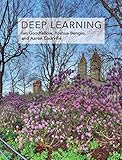
deep learning
This book is probably the most comprehensive book on deep learning. It was also written by a team of experts including research scientist Ian Goodfellow, who also developed Generative Adversarial Networks.
| preview | product | evaluation | price | |
|---|---|---|---|---|
 | Deep Learning (Adaptive Computation and Machine Learning Series) | $35.00 | Buy on Amazon |
Learn the mathematical concepts necessary to understand deep learning, including linear algebra, probability theory, information theory, and numerical computation.
This book describes the different types of networks used in deep learning, including deep feedforward networks, convolutional neural networks, and optimization networks. Additionally, it was endorsed by Elon Musk as the only comprehensive book on the subject.
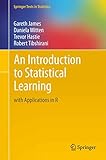
Overview of statistical learning
Overview of Statistical Learning provides an overview of the field of statistical learning. Statistical learning is a subset of machine learning that includes learning methods such as linear regression, classification, and support vector machines.
| preview | product | evaluation | price | |
|---|---|---|---|---|
 | Introduction to Statistical Learning: Using R Applications (Springer Text in Statistics) | $84.51 | Buy on Amazon |
All these techniques are covered in this book. This book uses real-world examples to ensure the concepts covered. It focuses on implementing the concepts learned in R, a popular programming language used in machine learning used for statistical computing.
The book is written by Trevor Hastie, Robert Tibshirami, Daniella Witten, and Gertem James, all professors of statistics. Despite its strong statistical foundation, this book should be suitable for both statisticians and non-statisticians.
Collective intelligence programming
Programming Collective Intelligence is a helpful book that teaches software developers how to build applications that use data mining and machine learning.
| preview | product | evaluation | price | |
|---|---|---|---|---|
 | Programming collective intelligence: Building smart Web 2.0 applications | $26.45 | Buy on Amazon |
We’ll discuss how recommendation systems, clustering, search engines, and optimization algorithms work, among other algorithms. Contains concise code examples and exercises to help you practice.
This book was written by Toby Segaran, who is also the author of Programming the Semantic Web and Beautiful Data.
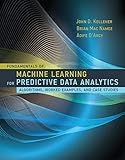
Fundamentals of machine learning for predictive data analysis
This book introduces the core machine learning approaches used in making predictions. This book provides an overview of the theoretical concepts you need to know before actually explaining the approach to machine learning.
| preview | product | evaluation | price | |
|---|---|---|---|---|
 | Fundamentals of Machine Learning for Predictive Data Analysis: Algorithms, Examples, and… | $74.88 | Buy on Amazon |
This book explains how to use machine learning to predict prices, assess risk, predict customer behavior, and classify documents.
Describes four approaches to machine learning: information-based learning, error-based learning, similarity-based learning, and probability-based learning. Written by John D. Kelleher, Brian Mac Namey, and Aoife Darcy.
Understanding machine learning: from theory to algorithms
This book introduces machine learning and the algorithms that make it possible. Provides a theoretical overview of the basics of machine learning and how the mathematics is derived.
| preview | product | evaluation | price | |
|---|---|---|---|---|
 | Understanding Machine Learning: From Theory to Algorithms | $45.97 | Buy on Amazon |
It also shows how these basic principles translate into algorithms and code. These algorithms include stochastic gradient descent, neural networks, and structured output learning.
This book was written by Shai Shalev-Schwartz and Shai Ben-David for graduates and senior undergraduates. Physical copies can be purchased from Amazon. A free online version for download and non-commercial use is available here .
Machine learning for hackers
Machine Learning for Hackers is a book written with experienced programmers in mind. Introduce machine learning in a practical and more hands-on way. Learn concepts from case studies rather than the math-heavy approach taken in other books.
| preview | product | evaluation | price | |
|---|---|---|---|---|
 | Machine learning for hackers: case studies and algorithms to get started | $34.02 | Buy on Amazon |
This book consists of chapters that focus on specific areas of machine learning, such as classification, prediction, optimization, and recommendation.
It focuses on implementing models in the R programming language and includes exciting projects such as a spam email classifier, a website pageview predictor, and single character decoding.
This book was written by Drew Conway and John Miles White, who co-authored another book, Machine Learning for Email.
Practical machine learning with R
Hands-on machine learning teaches you how to implement algorithms such as clustering algorithms, autoencoders, random forests, and deep neural networks. The implementation is done using the R programming language and various packages within its ecosystem.
| preview | product | evaluation | price | |
|---|---|---|---|---|
 | Hands-on Machine Learning with R (Chapman & Hall/CRC The R Series) | $81.25 | Buy on Amazon |
This book itself is not an R language tutorial. Therefore, readers should already be familiar with the language before using this book. The physical version of this book can be purchased from Amazon, and the online version is available for free here .
Python machine learning
This book on Python Machine Learning introduces machine learning and how to implement it in Python. First, we’ll cover the basic and most fundamental libraries used in machine learning, such as NumPy for numerical calculations and Pandas for processing tabular data.
Next, we’ll introduce libraries such as scikit-learn that are used to build machine learning models. This book also covers data visualization using Matplotlib. Describe algorithms such as regression, clustering, and classification. It also describes how to deploy the model.
Overall, this book is a comprehensive introduction to machine learning that allows you to implement your own models and incorporate them into your applications. This book was written by Weng Meng Lee, founder of Developer Learning Solutions.
Interpretable machine learning with Python
Interpretable Machine Learning with Python is a comprehensive guide to machine learning that provides an overview of machine learning models and how to reduce predictive risk and increase interpretability through real-world examples and step-by-step code implementation. I will explain.
By covering the basics of interpretability, different model types, interpretation methods, and tuning techniques, this book provides readers with the interpretation knowledge and skills to effectively improve machine learning models. This book was written by Serg Mathis, a climate and agricultural data scientist.
last word
This list of books is obviously not exhaustive, but these are some of the best books for learning machine learning as a graduate student. Most AI is implemented using code, but you don’t necessarily have to write code. There are many no-code AI tools that make development easier.
Next, check which low-code and no-code machine learning platforms to use.


![How to set up a Raspberry Pi web server in 2021 [Guide]](https://i0.wp.com/pcmanabu.com/wp-content/uploads/2019/10/web-server-02-309x198.png?w=1200&resize=1200,0&ssl=1)


