Simply put, product management is the practice of strategically designing and bringing products to market based on user requirements.
Product management involves a thorough knowledge of the users and the market, preparing a business model, creating a good UX, building the product from a technical point of view and finally presenting the same to the market. I will.
Product manager role
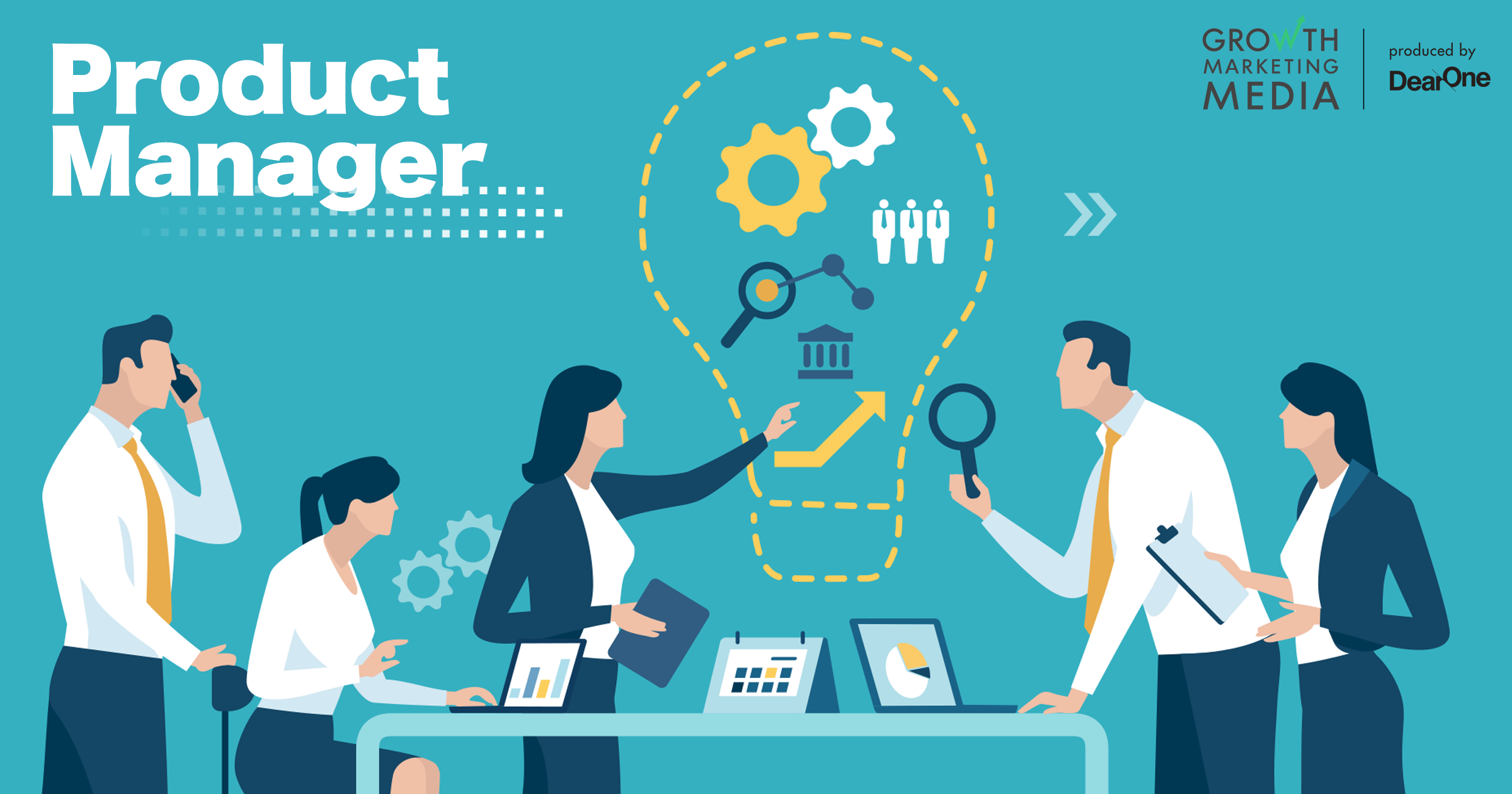
Product Managers, abbreviated as PMs and also known as mini-CEOs, are experts who do everything necessary to ship quality products to users.
A product manager’s primary responsibility is to oversee the progress of a product throughout its lifecycle, from conception to customer delivery. It’s a multifaceted role made up of many smaller parts. Product managers must plan the development of a product, analyze it from various perspectives, test it, market it, and ultimately act as an executive.
Each product manager may have a unique approach to their job. You may need to create a product for your company’s employees or customers. This requires close collaboration between development, forecasting, analytics, marketing, sales, and end-user teams.
Becoming a product manager requires not only technical knowledge but also a considerable amount of soft skills.
Online courses can help you keep your knowledge up to date and in line with the latest developments in the field. If you’re working in a completely different field and want to move into product development, you can upskill by enrolling in an online course.
We can teach you everything from the basics of product management to advanced strategies and techniques. The best part? Learn at your own pace anywhere you have internet access.
With so many online course, program, and certification options, how do you know which one is best for you? Depending on your experience level and what you want to learn, these courses You can choose one.
Udacity Nanodegree Program – Become a Product Manager
The Udacity Nanodegree program is designed to teach you the fundamental skills every product manager must have to lead the development of any product.
Duration: 4 months at 10 hours per week
Prerequisite: No prior experience required
Skill level: Beginner
My own pace: Yes
The program’s syllabus was created in collaboration with AT&T, Lyft, and Google. Here is a summary about the same.
- Product Strategy: Learn about product management, its importance, the PM’s role in an organization, problem identification and solutions, vision and strategy, and more.
- Product Design: Define the problem and identify the market opportunity, then design the solution. The main topics covered here are: Design Overview Sprint, Understand, Define, Sketch, Design, Decide, and Prototype: Phases in which a product prototype is created.
- Product Development: This course covers topics such as defining unauthorized influence, or social capital, explaining its importance in product management, and learning the art of saying “no” in situations of competing priorities. Manage the product development process by creating development methodologies, processes, tools, and finally a proper plan.
- Product Launch: Learn how to plan, identify launch risks, and determine how to mitigate launch impact. We also cover other topics such as process setup, marketing strategy, launch, and post-launch feedback.
This is one of the best courses for beginners who want to start a career in product management and position themselves for success and performance at work.

Product management 101
This Product Management 101 from Udemy will help you become a more strategic product manager who has a greater impact on your services and products. The program covers a range of product management activities ranging from market intelligence, strategy, new product development, and lifecycle management.
Time required: 5 hours 10 minutes
Prerequisite: 0-5 years of experience
Skill level: From beginner to experienced
My own pace: Yes
Syllabus:
The program has a total of six sections and 70 lectures. Here is some quick information about this.
- Introduction of product management
- Marketing intelligence: customer analytics, customer interviews, etc.
- Strategy and lifecycle management: proper plan preparation, positioning and communication, buyer’s buyer journey and content marketing
In addition, we will introduce a wide range of product management, including software, hardware, services, and analytics, along with company examples and practical activities.

Product Management for UMD and USMx
The UMD and USMx Product Management program, offered via edX, will help students understand the keys to successfully managing the roles and responsibilities of a PM and driving change with internal and external collaborators and influencers. Masu.
Duration: 5 months or 2-3 hours per week
Prerequisite: No experience required
Skill level: Beginner
My own pace: Yes
Syllabus:
- Fundamentals of Product Management: This will help you understand the keys to successfully managing your role and responsibilities as a PM driving change with internal and external collaborators and influencers.
- Achieving Product-Market Fit: This lesson teaches you how to know your target customers, their needs, value proposition, and user experience. You will also learn how to integrate that knowledge into product and market requirements and positioning plans.
- Product design, prototyping, and testing: Create wireframes, 3D renderings, prototypes, and minimum viable products (MVPs) to transform product ideas into tangible assets, test hypotheses, and Verify profits.
- Data science and agile systems for product management: Use modern agile, DevOps, and data science to deliver faster, higher quality, and fault-tolerant products, regardless of industry.
- Modern Product Leadership: Lead product teams and organizations to deliver great solutions to customers while driving engagement and innovation across the enterprise.
This will help you identify your target customers, underserved customer needs, value proposition, product feature set, user experience, and learn how to integrate this knowledge into product and market requirements.
Digital Product Management: Modern Foundations
The University of Virginia offers a Digital Product Management course through Coursera. This program will help you gain the knowledge to develop and ultimately sell your product idea and understand the translation of that idea.
Price: Free to view, payment required for certification
Duration: Approximately 11 hours
Prerequisite: No experience required
Skill level: Beginner
My own pace: Yes
Syllabus:
Here is an overview of the lessons and topics covered therein:
- Achieving Concentration and Winning: This includes 20 short 99-minute videos. Learn how you and your team can work together to make your product a success.
- Using Product Management Methods Today: This also includes 20 short videos totaling 113 minutes. This lesson describes how today’s most successful product managers use them and suggests ways to sell products to stakeholders.
- Explore new product ideas: This lesson has 13 73-minute videos. Here you will step through customer discovery, idea testing/validation, initial development, and business model design. The end result is a durable process that you can implement and communicate to your team.
- Expanding existing products: Finally, the last lesson has 19 videos of 105 minutes. Here, you’ll learn how to apply what you’ve learned here to not only make your product a big hit, but to keep it fresh and relevant every week and every sprint. .
All topics are provided in video format, which makes understanding related to PM and its related concepts easier.
Product strategy (discovery, development, management, and sales of products as a business)
In this program from the Kellogg School of Management, you’ll learn that product strategy is the foundation of business growth, learn about the product strategy lifecycle, cradle-to-grave growth strategies, and learn how to think like a product or service CEO.
Duration: 2 months (4-6 hours per week)
Prerequisite: No experience required
Skill level: Beginner
My own pace: Yes
Syllabus:
Below is an overview of the modules and their topics.
- Understand Product Strategy: Learn why having a product strategy is essential and how it differs depending on the type of organization.
- Product Opportunity Analysis: Evaluate new opportunities using a “jobs to be done” framework.
- Discovery and requirements definition: Use the discovery hypothesis framework to create user stories and wireframes to outline opportunities to provide urban mobility solutions to schoolchildren.
- Business model design: Learn which business models are needed in which situations and consider the economics of SaaS pricing models.
- Agile product development: Learn agile development principles and use them to influence teams you don’t have direct authority over, such as engineering teams.
- Bring your product to market: Learn how to define and understand your primary audience and choose the best marketing route.
- Managing your partner ecosystem: Learn how to define the elements of your “whole offer” and how to effectively design and manage your partnerships.
- Manage product evolution and growth: Leverage the strengths of existing strategies and tactics to drive new growth. Learn about product evolution and how decisions impact product lines. Conduct a roadmap exercise for innovative new medical supplies products.
The complete guide to becoming a product manager
The Become a Product Manager course from LinkedIn is a complete guide for beginners to learn about product management and product managers. You will also learn about the various techniques needed to successfully coordinate all aspects of product development.
Duration: Approximately 2 months
Prerequisite: No experience required
Skill level: Beginner
My own pace: Yes
Syllabus:
This course covers the following aspects in video format:
- Introduction to Product Management: What is a PM?; Deciding what type of PM you want to be, etc.
- Product Development Overview: The four important phases of the product lifecycle, details on the product development process, what is Kanban and how does it work?
- Ideas and User Needs: Introduction to Ideas and User Needs, Users and Customers
- Competitive and market analysis: Market research, 5 criteria for understanding your competitors, and more
- Customer development: What is customer development? Build user personas such as interviews
- Designing and running experiments: What is an MVP, its methodology, what are the hypotheses, etc.
Product Manager Certification from Product School
This Product Management online certification course was created and designed by top product experts from YouTube, Google, Facebook, and Slack.
Duration: 2-3 months
Prerequisite: No experience required
Skill level: Beginner
My own pace: Yes
Syllabus:
The following chapters and topics will be covered in this program:
- Define your product strategy: Describe the product development lifecycle, success metrics, and user personas.
- Opportunity identification and customer acquisition: Includes industry disruption models, value chain evaluation, and technology strategy.
- Design Thinking and Development: This chapter consists of: User Flows/Wireframes/Prototypes, Design Sprints, Agile Methodologies: Scrum and Kanban.
- Product Marketing and Strategy: The final lesson covers APIs and integrations, team management, and go-to-market strategy.
This program is perfect for aspiring product managers from all professional backgrounds.
Digital Product Management MicroMasters Program
This edX course is part of Bux’s Digital Product Management program . Learn how to use Lean, Agile, and systems design thinking in all aspects of the digital product lifecycle.
Duration: Approximately 7 weeks (4-8 hours per week)
Prerequisite: Junior high school level mathematics knowledge
Skill level: Advanced
My own pace: Yes
Syllabus:
Candidates can learn:
- The first chapter discusses product line planning and roadmap alternatives.
- In Chapter 2, you will learn about idea generation, assessing customer needs, co-creation, defining and validating a minimum viable product (MVP), and setting up requirements documentation.
- Following completion of the first two chapters, Chapter 3 covers alternative approaches to Lean, Agile, and Waterfall development, including tools for assessing risk (and risk mitigation strategies) for tasks, projects, and businesses. .
- Chapter 4 describes how to launch your product and develop a go-to-market strategy to promote your product.
- And the last part is about performance management. This means taking ownership of product-related profits (or losses) across different lifecycle stages, tracking and optimizing system performance metrics while organizing social media and third-party data for performance optimization. We will explain how to do this.
The program also provides guidance for making important decisions needed at each stage of the product lifecycle. This will ensure that you master the business and organizational logic to make your product successful in the market.
Software Product Management Specialization
The Software Product Management Specialization is offered by the University of Alberta through Coursera and focuses on the importance and role of software product management. It also provides an overview of the specialty, including its goals, structure, and expectations.
Duration: 18 hours per week (1 month). 6 hours a week (3 months), 3 hours a week (6 months)
Prerequisite: No experience required
Skill level: Beginner
My own pace: Yes
Syllabus:
A brief syllabus of the program is shown below.
- Software Product Management: Specialty: This module includes eight videos to help you understand product management software and how to improve its performance. We will guide you through this specialization and prepare you to take on the role of a software product manager.
- Fundamentals of Software Product Management: This module contains nine videos totaling 50 minutes. Learn the philosophy, core values, and principles of agile software development.
This course covers the importance of processes, requirements, planning, and monitoring when developing better software.
Product management certification
280 Group offers the most respected and trusted training courses for Product Managers, Digital Product Managers, Product Marketing Managers, and Product Owners.
Duration: You can proceed at your own pace
Prerequisite: No experience required
Skill level: Beginner
My own pace: Yes
Syllabus:
The following is a general understanding of what each certification requires.
- For certified product managers: Learn about: A standard seven-stage product life cycle is followed worldwide. Understand the strategic and tactical functions of product management and core concepts including key skills, strategies, tactics, and terminology including techniques and tools
- Certified Product Marketing Manager: Includes the same topics as above, but from a marketing perspective.
- For Certified Digital Product Managers: This certification helps you understand: How digital products require different processes in the seven-stage product lifecycle. The core concept of digital product management is based on dual-track agile, which separates the learning loop from the development loop, etc.
- Agile Certified Product Manager and Product Owner: Learn how agile development methodologies complement the seven-stage product lifecycle. Core concepts such as key skills, strategies, tactics, terminology, and agile product management strategies and leadership skills.
These programs can be completed live online, online self-study, in-person training, or private custom training formats.
Postgraduate Diploma in Project Management (E-Learning)
The Graduate Diploma in Project Management (E-Learning) gives product managers the skills they need to successfully plan and manage products over the long term.
Duration: 4-6 hours per week for 6 months
Prerequisite: No experience required
Skill level: Intermediate
My own pace: Yes
Each course section is 6 weeks in duration. The four stages of the program are:
- Launching the project
- project plan
- Running the project
- capstone project
This program includes topics such as business analysis, marketing strategy, and financial analysis.
Pragmatic Product Management Course
To become a certified product manager, Pragmatic Institute offers project management courses. We’ve helped over 200,000 product development professionals at over 9,000 companies around the world strengthen their businesses and products. There are currently two levels of certification available: Beginner and Intermediate. To qualify, you must have at least two years of experience as a product manager.
PDMA Certification Central
The NPD Professional Certificate can help you make important connections in your professional career. Leverage the authority of certification to unlock business and new opportunities. Certification is the only way to establish a connection between your current situation and the direction you want to go.
It was developed, provided, and maintained by the Product Development and Management Association (PDMA). The New Product Development (NPD) Professional Certification is an internationally recognized information system.
When you earn the NPD Professional Certification, companies looking to hire the most skilled professionals will know that you are an expert in management and product development capabilities, with a proven track record of accomplishments and professionalism, and will be more interested in this field. They will appreciate your dedication.
conclusion
There is no doubt that Product Management Course Certification is the future demand for various companies and companies developing consumer-friendly products. And getting certified as a Product Manager early on will only give your career a huge boost. The online courses mentioned above will not only prepare you for the future market but also help you stand out from the crowd.


![How to set up a Raspberry Pi web server in 2021 [Guide]](https://i0.wp.com/pcmanabu.com/wp-content/uploads/2019/10/web-server-02-309x198.png?w=1200&resize=1200,0&ssl=1)


