Common JBoss Application Server (WildFly) administrator interview questions and answers from beginner to expert level.
In a recent survey we conducted, we received many requests for topics to write about, and one of the most frequently asked about topics was preparing for a JBoss interview.
Also check out Interview QA for WAS and Apache.
So, I hear you, please.
Before we move on to QA, let’s talk a little bit about JBoss AS.
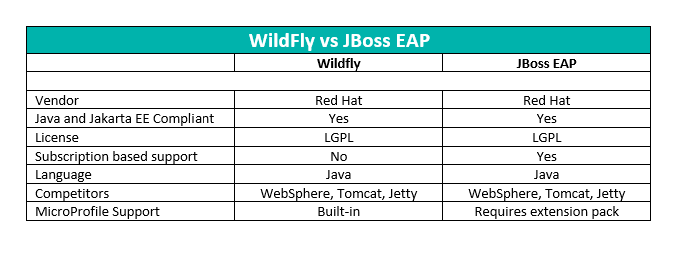
WildFly is the new name for JBoss application servers starting with version 8. Renamed on November 20, 2014. WildFly is a community project and requires Red Hat JBoss Enterprise if you are looking for enterprise support with additional features. Application platform (also known as JBoss EAP).
In One Line – WildFly is the community version and free, but JBoss EAP is not.
Note: If you want to improve your JBoss EAP skills, please refer to this book – JBoss EAP Administration.
I’ll start the Q&A session.
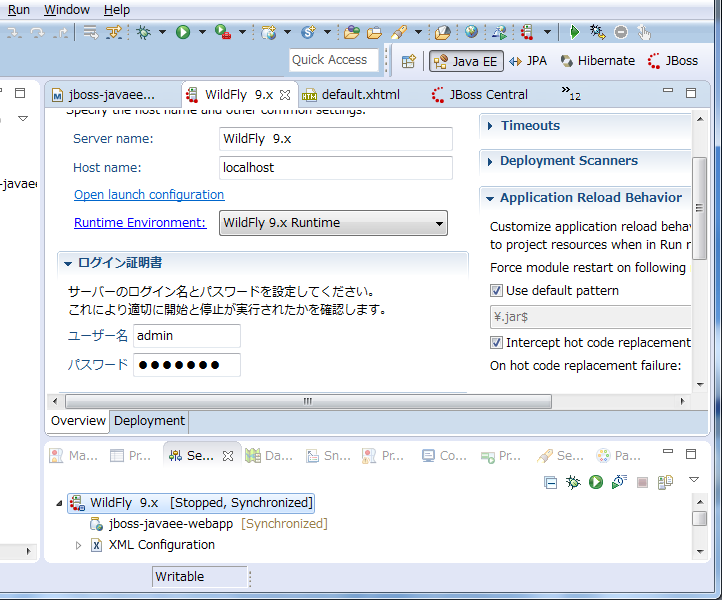
1. What is the directory structure of JBoss?
The following directories are available when you install JBoss:
- module
- bundle
- domain
- standalone
- application client
- storage place
- document
- Welcome content
2. What log levels are available?
There are five possible levels.
- deadly
- error
- caveat
- information
- debug
3. Which component is responsible for handling clustering?
JBoss clustering is built on top of the JGroups toolkit, which helps with creation, deletion, membership discovery, notifications, etc. within a cluster.
4. How do I install JBoss on a Linux server?
Installing JBoss is very easy. You need to download the desired version in zip or gz format from the JBoss official download page.
Once downloaded, simply extract the files to the location you want to install. If you downloaded it in zip format, you can unzip it using the unzip command.
unzip jboss-as-7.1.1.Final.zip 5. What is the default port for accessing the JBoss 7 management console?
9990 is the default port. If it is installed on Server1 , you need to access it like this:
http://server1:9990/admin-console6. What do I need to do to access the management console?
To interact with the console, a user must be created under ‘ManagementRealm’. To create a user, go to the bin folder and run the add-user.sh script.
7. How do I start JBoss in standalone mode?
Navigate to the bin folder where JBoss is installed and run the following command:
./standalone.sh8. How can I increase Java heap memory in JBoss 7?
Heap memory can be increased in the respective conf file. To increase standalone memory;
- Go to bin folder
- Edit the standalone.conf file and look for the “JAVA_OPTS=” argument line.
- The default configuration has a minimum of 64 MB and a maximum of 512 MB. You can increase it to your desired value.
 Xms – specify the minimum heap size
Xmx – specify the maximum heap size
In a similar manner, you can adjust memory for your domain in the domain.conf file.
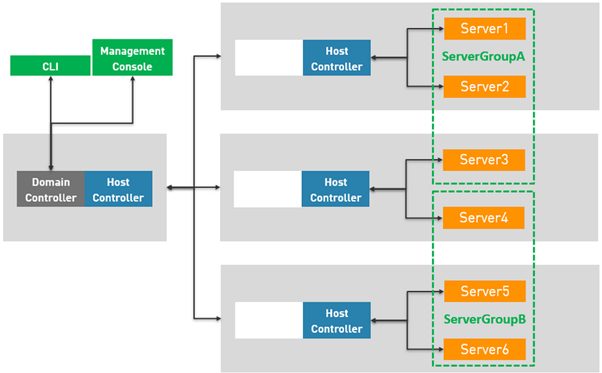
9. What is the difference between standalone mode and domain mode?
In standalone mode, every JBoss server is a single JVM process with its own configuration. Standalone is best if you only need one JVM or development environment.
Domain mode has multiple servers, all configurations are centrally managed, and is often used in production environments.
10. Can I create a cluster in standalone mode?
Yes, clustering is possible in standalone mode. However, the application must be deployed to each server/JVM in standalone mode.
11. What is the difference between <validate-on-match> and <background-validation>?
< validate-on-match > validates the database connection every time and writes a warning to the log if the connection is not valid.
Setting “validate-on-match” can put a slightly higher load on the database as it may create a large number of requests.
<background-validation> Validate the connection periodically based on the frequency set in “background-validation-millis”. The default setting is set to zero, which means it is disabled.
Setting “background-validation” to true creates fewer database connections, and as a side effect, disconnected connections are not detected as quickly.
12. Which modules are required to integrate Apache and JBoss?
There are two modules available for connecting JBoss and Apache.
- mod_proxy
- mod_jk
13. What types of files can I deploy to JBoss?
You can deploy almost any type of Java/J2EE application and supports the following file formats:
- WAR – Web application archive
- SAR – Service Archive
- JAR – Java Archive
- EAR – Enterprise Application Archive
14. How can I deploy my application?
There are three ways to deploy an application to JBoss application server.
- Management Console – You can deploy the required application files through the Management Console.
- Automatic extraction – Utilizes a file system extraction scanner to automatically extract files from the extraction folder.
- Automation – Deploy applications using automation tools/ant/scripts.
15. What marker file types do I need to tell JBoss to deploy?
The .dodeploy file suffix is required by JBoss to deploy or redeploy an application.
Original:
myfirstapplication.war.dpdeploy 16. What are the important types that can be used to deploy marker files?
- .dodeploy – directs deployment
- .deployed – indicates the file has been deployed
- .pending – deployment is still pending
- .undeployed – Verify that the application is undeployed
- .failed – The deployment failed for some reason
- .skipdeploy – Tells JBoss to ignore files for automatic deployment.
17. What does mgmt-user.properties contain?
All management console users and passwords (encrypted) are stored in the mgmt.-user.properties file.
I hope the above gives you an idea of what questions will be asked during the interview. I also wish you good luck .


![How to set up a Raspberry Pi web server in 2021 [Guide]](https://i0.wp.com/pcmanabu.com/wp-content/uploads/2019/10/web-server-02-309x198.png?w=1200&resize=1200,0&ssl=1)


