For both graphic and web designers, a good portfolio is your number one tool for attracting clients and landing your dream job.
This is the best and most valuable tool for promoting your skills and expanding your professional opportunities. However, for a design portfolio to work well, it is essential to create and organize it correctly.
An award-winning portfolio not only showcases your most appealing work as a designer, but also conveys your personality to your target audience. It should interest, move, and surprise your audience, evoke emotions, and make them remember you. A design portfolio can tell clients and future employers how you generate design ideas and organize the entire creative process.
With all the tips for creating a design portfolio available online, it can be easy to get overwhelmed with information and have a hard time choosing the basic principles that are right for your situation. This article provides standard steps for creating a great design portfolio that will work for all designers, regardless of their specialty.
Are you ready?
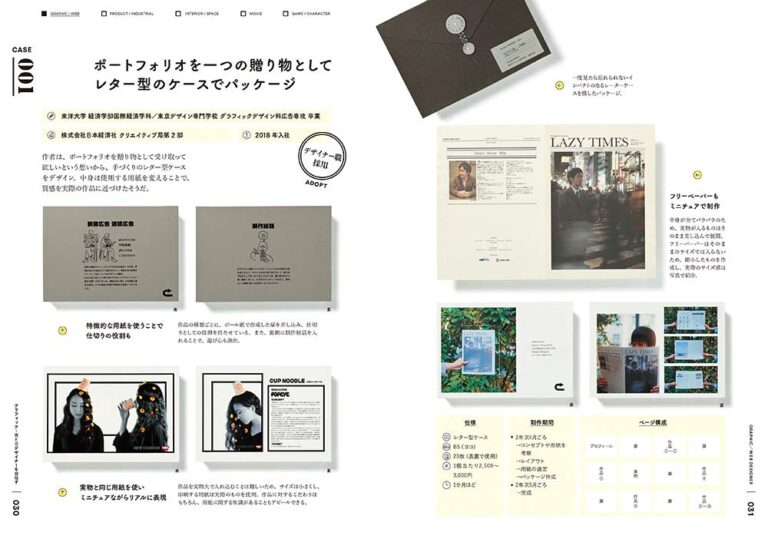
#1.Determine the core purpose and format of your design portfolio
As a designer, you might want to jump on some cool ideas about what your portfolio should look like, what colors to choose, and what latest design trends to use to present your best work. yeah.
Stop! Save it for later use.
First and foremost, you need to specify the core purpose of your design portfolio. what do you want from it ?
- Want the world to see samples of your work to grow your online presence and build an audience?
- Are you a novice designer who wants your audience to see who you are and how you approach problems?
- Want them to read about your design process to attract new clients to your freelance work?
- Want to share your biggest design project with all its parts explained, from research to implementation?
- Or do you need nothing more than to document your knowledge and achievements?
Once you know your purpose, you will know what information to include in your portfolio and what format to choose to best represent it. You’ll know how to express it visually and how to start writing to attract your target audience.

#2. Decide what works to include in your portfolio
By the way, do you know who your target audience is? Are you writing a design portfolio for a future employer, a potential client, a fellow designer, or yourself? Write down the information you want people to read about you.
- What kind of person are you as a designer? What type of work do you do?
- What message do you want your design portfolio to convey? When someone sees it, how can they identify your design expertise (web design, UX, product design, graphic design, etc.)?
Based on that information, decide which project samples to include in your design portfolio. You should sort them by type and when they were created, but you can also put the best or most impressive ones at the top. Quality is more important here than quantity.
You don’t need to list all the work you’ve done as a designer. Focus on the best things that show the diversity of your projects. In other words, don’t publish the 5 web designs you created for your e-commerce website. You might want to add one thing you’ve done for a bank, one thing you’ve done for a pet club, and one thing you’ve done for a non-profit.
A balance of quality and variety in your samples will not only give you exposure to a variety of media, but will also prove your talent and creativity to potential clients.
So here’s a summary of the rules :
- We only feature the best design work in our portfolio.
- Include a variety of samples so others can see the breadth of your design experience.
- Don’t include all your designs unless you’re a new design grad who doesn’t have a ton of samples yet. Avoid works that you are not very proud of. Think of your portfolio as an art exhibit rather than image stock.
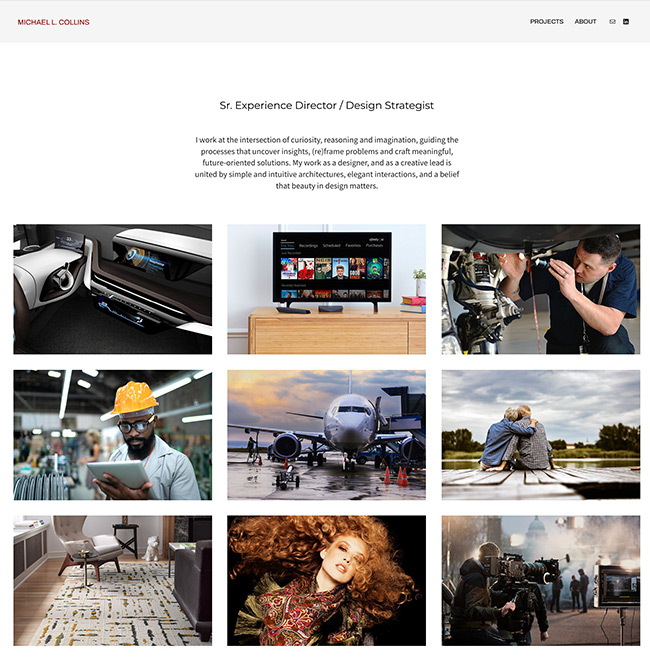
#3.Choose a platform for your design portfolio
The next step is to choose the right platform for your design portfolio. It depends on your technical skills. Some offer formatting that requires knowledge of HTML and CSS, while others are less customizable and therefore more comfortable to use. (However, the latter gives you less freedom to design your portfolio the way you want.)
Naturally, web designers and UX designers may want to choose a platform that requires coding in order to create a unique portfolio that shows their design personality and shows off their coding experience.
Options to consider are:
Hosted portfolio websites , such as Portfoliobox and Dunked . This is the most comfortable option since such sites do not require any coding. Simply choose a template and upload your files to the ready-made layout.
A hosted business website , such as Squarespace or Weebly. You can also choose a template for your portfolio here, but it gives you more control. You can customize it, choose premium options, or leave it as is.
Self-hosted website : Build a custom web design portfolio from scratch. Here you can put all your skills to work creating a personal website, show off your designs, and build your persona brand.

#4.Explain each design task like a boss
You’ve selected a platform and specified the design work you want to add to your design portfolio. But you can’t just post images or screenshots of your work and wait for a client to come and hire you.
Each piece in your portfolio should tell a story and explain what your client’s goal was and how your design achieved it. It should include a summary of each project’s process and results. It doesn’t have to be a long read or a case study with all the details, but make sure your audience understands the content.
This is where descriptive writing skills come in handy. You may want to include the following information:
- What were the problems and goals of this project?
- Was there any hypothesis behind it?
- What was the process like? How did you decide which design to use?
- Are there any conclusions or lessons learned from this project? If you have client feedback, feel free to add it to the description.
The most important information here concerns your role in the project. Did you manage the entire project? Did you work as part of the design team? Or, as a remote worker or freelance specialist, did you design everything yourself? People who look at your portfolio will see the hard work you put into such a groundbreaking product. need to know.
#5. Optimize your design portfolio for your audience
Once you have gathered all the information you want to include in your portfolio, design and organize it with the key principles of usability in mind. User experience is important, so make sure your portfolio is not only visually striking, but also easy for viewers to read.
How do you do it?
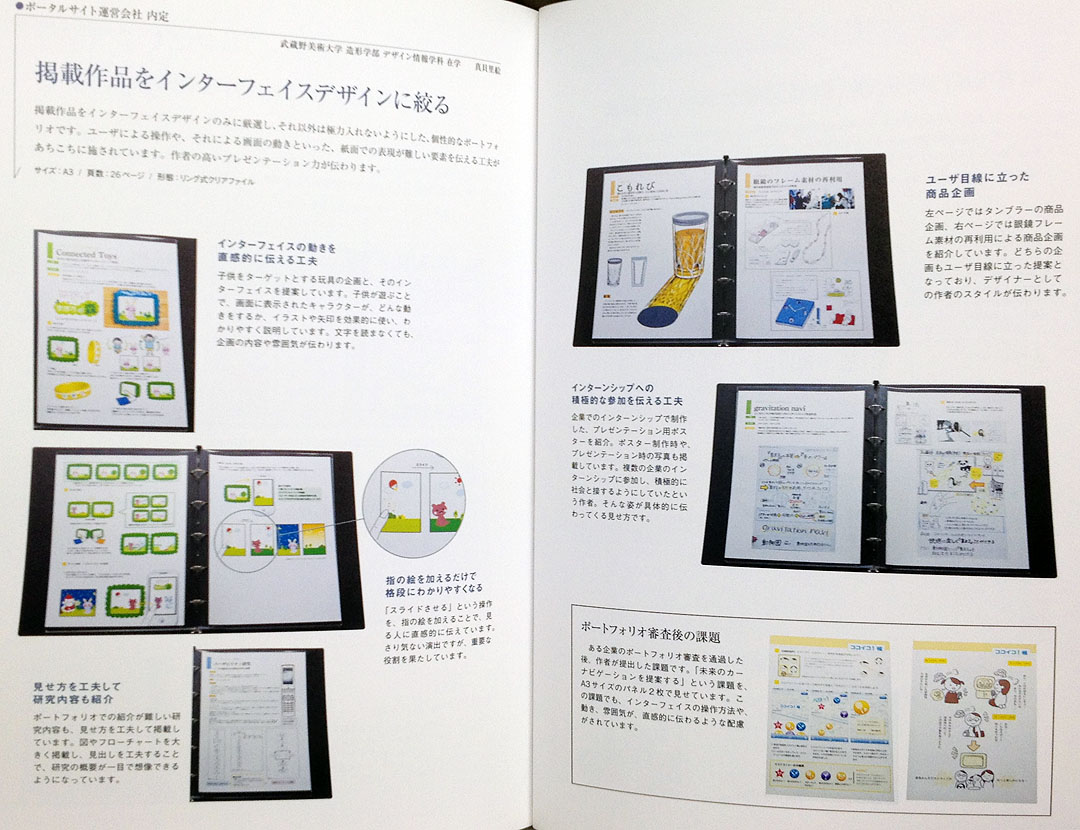
Keep in mind that most users don’t read books, they just scan them online. Therefore, do your best to allow viewers to skim your portfolio so they can see all the important information at once. Break up your text into short paragraphs, use headings and subheadings, include bulleted lists, and add sketches rather than long explanations to illustrate your processes.
It also provides access to navigation. If you create a personal website for your portfolio, think carefully about its menu. Add only core pages: Home, About, Work, Contact. If you want to use a ready-made layout for your portfolio, choose one that also has these options. No matter the platform, your audience needs to know who you are, what you do, and how to contact them.
Don’t overuse colors, fonts, and animations. Sure, it’s tempting to show off all your design talent in one place, but it’s better to focus on basic typography settings that work across browsers and devices. (Be sure to test your design for small screens and consider mobile first.)
Also, keep color psychology and contrast ratio in mind when designing. Your portfolio should be pleasing to the eye, not visually overwhelming.
Simply put, choose design elements for your portfolio that look good, are easy to scan, and at the same time demonstrate your design skills to potential clients and employers. Focus on the story you want to tell and the work you want the world to see. As they say, genius is all about simplicity.
in one word
If you decide to create a great design portfolio, it’s important to specify and remember its purpose and the goals you want to achieve with it. This is a tool to build a professional network, attract future customers and employers and earn money sooner or later.
A well-designed portfolio shows off your professionalism, worldview, and creativity. Organize the best projects to include, focus on description, and optimize your portfolio based on all UX criteria. And don’t forget to promote your work so the world can see it. Join our online design community, share your projects, get feedback from other creators, network, learn, and be inspired by your peers.
The sooner you create a portfolio of great designs, the sooner you’ll start seeing results.


![How to set up a Raspberry Pi web server in 2021 [Guide]](https://i0.wp.com/pcmanabu.com/wp-content/uploads/2019/10/web-server-02-309x198.png?w=1200&resize=1200,0&ssl=1)


