Over the past decade, cryptocurrencies have become a gold mine of vast wealth for investors, traders, and even crypto scammers.
Multiple crypto coins have flooded the cryptocurrency industry in recent years, with Bitcoin still leading the charge.
On November 10, 2021, the price of Bitcoin soared to an all-time high of $69,000.

Still, cryptocurrency fraud still tops the list as one of the significant avenues of cryptocurrency loss. In the middle of last year, the US Federal Trade Commission reported the largest loss ever due to cryptocurrency fraud.
Cryptocurrency losses amounted to $82 million, 10 times more than the previous report. As crypto fraud reaches new highs, it is time for crypto investors and traders to know what they are facing.
Here are some common cryptocurrency scams you are likely to come across.
# 1.Fake website
These are one of the main ways scammers try to steal your cryptocurrencies. They set up fake websites that look very similar to legitimate websites. Brands, domains, almost everything a legitimate website has.
It is almost impossible to tell the difference on such fake websites, only if you pay close attention to the details.

Most of the time, scammers use fake domains to lure you into their sneaky traps. The domain name is very similar to the original website name. But how do you tell the difference between a fake domain and a real one? By taking the time and looking for the devil in the little details.
In most cases, these domain names use characters that resemble numbers in the actual domain, and vice versa. For example, replace the letter “i” with “l” or the number “1”.
#2.Email scam
In 2020, email users reached 4 billion people worldwide. This number is estimated to be more than half of the world’s population. Therefore, it is one of the important ways for scammers to contact potential victims.

Scammers create convincing scam emails as well as websites. The email looks very similar to the original. To avoid falling for such scams, always go the extra mile and check their legitimacy. And how do I do this? Please check the email for anything suspicious or contact the legitimate organization directly to inquire.
#3.Social media scam
With more users joining social media each year, these platforms have become a haven for crypto fraud. If you see a text or post on social media, don’t engage with it. Tweets and texts asking you to send cryptocurrency are just a big scam waiting for you.

It could also be from your favorite celebrities or your closest friends on social media. These accounts may be or could be impersonation bots.
#4.Fake crypto app
Scammers often create fake crypto apps. The crypto app promises to generate incredible crypto profits by using it. Some of these apps can also be found on the Google Play Store and Apple Store.

If you discover these apps, please report them directly to the appropriate parties. Also, before you eagerly download an app from the store, take your time and read the reviews carefully.
#5.Extortion scam
Cryptocurrency scammers often contact you and try to blackmail you with personal information that puts them at risk, such as texts, videos, photos, and personal information obtained from the internet. Also called extortion scam.

If you spot an extortion scam, here are some simple steps you can take right away.
- Scan your device to check for malware attacks or intrusions.
- Is it email? Please report it as spam.
- If your personal information is a password, please change it.
- To report these scams, please contact the relevant authorities.
#6.Gift scam
On most social media platforms, it’s common to see giveaways from celebrities and well-followed social media accounts. Scammers have noticed this trend and are starting to establish it.

Scammers use these perks as bait and end up falling into their trap. As soon as you respond to these offers, you will need to send cryptocurrency to confirm your address. And we promise to provide more after verification. However, after sending the cryptocurrency, you gradually start to realize that you are the victim of a gift scam.
To be safe:
- Always be skeptical about cryptocurrency perks.
- There is no need to send cryptocurrencies for address verification. So please stop.
- If a gift sounds too good to be true, it probably is.
#7. Technical support impersonation scam
These are scams related to scammers posing as technical support agents for crypto investors and traders. They impersonate customer support for your favorite cryptocurrency entity. As with most scams, scammers will try to take advantage of you. But this time, it pretends to provide the best solution to the problem of cryptocurrencies.
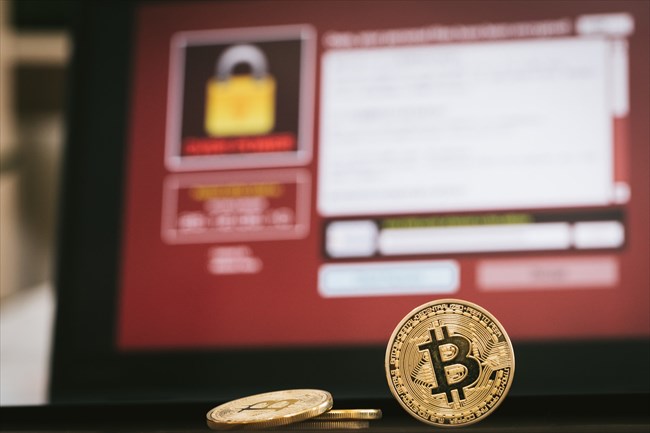
They may also make false claims designed to manipulate you. So, stay awake when dealing with technical support staff.
To avoid tech support scams:
- Do not provide personal information such as usernames and passwords to support staff.
- Do not allow remote access to encrypted accounts or machines.
- If our support team cannot confirm your claim, we will hang up.
#8.Investment scam
As the name suggests, these scams are all about investments. Scammers create fake investment claims that direct you to fake cryptocurrency websites. They will try to sell you a “lucrative opportunity” and encourage you to invest.

There are two main types of investment scams you should be aware of:
- Exit Scam – A company raises funds through an Initial Coin Offering (ICO). But then they steal the funds and exit without creating the product.
- Ragpull Scam – Here a new coin is created and introduced to the exchange list. After people exchange their cryptocurrencies for new cryptocurrencies, the developers will close the project.
Now, you probably know about some of the crypto scams and thefts. But as a cryptocurrency investor or trader, how can you avoid falling victim to such incidents?
Here are some important security measures you can quickly and personally implement to keep your cryptocurrencies safe.
Store cryptocurrencies in cold wallets
A cold wallet is a hardware wallet, a completely offline physical wallet for storing cryptocurrencies. In most cases, these wallets take the form of USB drives.
But why are cold wallets so secure? Unlike hot wallets, cold wallets store your cryptocurrencies completely offline, making them less susceptible to cyberattacks. When choosing a cold wallet, choose one that is encrypted. They keep your cryptos even more secure.

One example where cold wallets proved to be significantly more secure was in 2019. BIT Point, a Japanese exchange organization, reported losses of crypto assets amounting to $32 million from hot wallets. These hot wallets stored Ethereum, Ripple, Bitcoin Cash, Bitcoin, and Litecoin. However, when we examined the cold wallet, we found that the stored cryptocurrencies were still intact.
Store cryptocurrencies in multiple wallets
It’s like the saying, “Don’t put all your eggs in one bucket.” There is no limit to the number of wallets you can create, and you can diversify your portfolio by creating multiple wallets.
With crypto theft on the rise, two or more wallets prove to be more secure. One wallet will be used for daily transactions and the other will protect your cryptocurrency portfolio. If one of your wallets is affected, your other wallets can also be prepared for the impact.
Use multiple strong passwords.
Don’t use a single password for all your accounts. A study conducted in the US found that over 70% of Millennials use a single password for most of their accounts. If one account is compromised, the remaining accounts become vulnerable to attack.

Security experts advise using sound and proven systems to protect your cryptocurrency accounts. Also, to better protect your cryptocurrencies, use unique and strong passwords for each account. If you find having multiple passwords a pain, you can use a reliable password manager.
Use only safe internet.
Did you know that 1 in 3 people experience a cyberattack every day? Are most of these cases targeting devices connected to insecure internet? Yes! That’s how vulnerable your cryptocurrencies are when connected to an unsecured internet connection.

But how can you avoid these attacks? By consistently using a secure internet connection when dealing with cryptocurrencies. Avoid unsecure networks like public Wi-Fi connections completely.
For even more encryption security, you can use a VPN. A VPN allows you to easily change your device’s location and IP address, making your internet experience much safer.
Do not share your private key.
What is a private key? This is a key used to verify that people exchanging cryptocurrencies are the actual owners of a cryptocurrency wallet. To protect your cryptocurrency from scammers, keep your private key secret. said Hoffman, chief information security officer at Netenrich. “The only way to truly protect your private key is to store it in cold storage. Then, erase all digital traces of the key.”

Cold storage can be anything from written paper to printables. All hardware is susceptible to malicious attacks by hackers.
If you want to recover an erased or forgotten private key, you can use a quasi-failsafe tactic. Harness lost or forgotten keys using randomly generated seed words.
Avoid using provider-hosted wallets.
These are provider-hosted wallets. These allow you to store your private key on your provider’s servers. Although it may sound like a hassle-free way to store your private key, it is not the most secure. When you use a hosted wallet, you relinquish control of your private keys.
But why are provider-hosted wallets so dangerous? Hosted wallets store your private keys on the provider’s servers. Storing private keys on these servers exposes you to too many risks. Risks such as cyber attacks, takeover by governments or corporations, and even business failure. The key to avoiding all these risks is to use cold storage for one of your private keys.
Avoid phishing
Phishing is an online scam in the form of a trap that attempts to obtain sensitive data such as credit card numbers or passwords. These online traps are caused by fake emails, malicious websites, or enticing advertisements. Phishing scams top the list as one of the most common scams in the cryptocurrency industry.
To prevent phishing:
- Avoid unknown or suspicious links.
- Don’t be fooled by ads that seem too good to be true.
- Never divulge personal information regarding cryptocurrencies.
Always double-check legitimacy before providing encrypted information to websites, apps, or emails. For example, when using a website, always check for suspicious domain names. Scammers create fake websites using domain names that are nearly identical to the legitimate site. What’s worse, their branding is very similar to that of legitimate websites.
In 2018, the hacking group cryptocore used phishing scams to steal over $200 million worth of cryptocurrencies. Phishing scams took the form of fake domains and emails impersonating legitimate organizations.
Check regularly for intrusions.
Always check your gadgets whether it is your PC or mobile phone for any intrusion. For example, when you install a new operating system on your PC, you can quickly find out the default programs. These default programs run automatically in Task Manager. This way, you can easily know when your PC has been compromised. Additionally, you can do this on other devices as well.
Hackers break into your device and silently wait for you to access your cryptocurrency account. And voila! They instantly obtain your passwords, private keys, and other important cryptographic data.
Have one device for cryptocurrencies
Do you want to increase the security of your cryptocurrencies? One device for your crypto activities can help you do just that. Send, receive, and access cryptocurrencies using a single device (phone or PC).
Why a single device? When you think about it, it’s easier to manage the security of a single device than it is to manage the security of multiple devices.
Trade only with reputable crypto entities
With an impressive reputation comes trust. Therefore, before working with a cryptocurrency entity, make sure that its reputation is the best. But how do you tell which crypto entities have a good reputation? Just by doing a thorough background check. Background research regarding security measures, encryption activities, and past testimonials.
All in all, when you choose to trust a cryptocurrency organization, you are deciding to take a risk. But doing a background check can go some way to mitigating this risk.
This step applies to password managers as well as cryptographic entities. That’s because by entrusting your encrypted passwords to a password administrator, you’re taking on an entirely different set of risks.
Avoid hot advice from friends
Some of your friends will try to include you in their hot tips about cryptocurrencies. There are no tips for topics like Cryptocurrency Multi-Level Marketing (MLM). Multi-level marketing is similar to a pyramid scheme. Promote your encryption service or product to a new level depending on the number of people invited.
These tips may sound romantic. However, this is one method scammers use to steal cryptocurrencies.
So before indulging in any schemes or hot tips from your cryptocurrency friends, pay attention to the details to avoid getting scammed. And if that tip sounds too good to be true, it’s better to stay away and save your crypto.
Don’t be fooled by the money-back guarantee.
Guaranteed returns apply when you participate in cryptocurrency trading with a high winnings in mind, or full compensation if you lose. There is no such thing as a guaranteed return when it comes to cryptocurrencies. The cryptocurrency industry is unpredictable and nothing is certain.
Cryptocurrency scammers come up with AI bots. An AI bot that guarantees high results by finding winning trades. And if you fall for these romantic deals, you will end up losing your cryptocurrencies. And there is no chance of compensation. Legitimate cryptocurrency operations often remind you that cryptocurrencies are a risk before you decide to get involved.
Please contact me when in doubt
Do you suspect a cryptocurrency app, site, email, or even an ad? If so, contact a knowledgeable and experienced person or organization.
If you are a cryptocurrency investor or trader, you need a few knowledgeable and experienced cryptocurrency friends. Additionally, you may have a friend who can guide you on your journey and help you avoid falling for crypto scams. Then you can join forums of like-minded people.
By reaching out, you can take a big step toward avoiding becoming a victim of cryptocurrency fraud. You can lose all your cryptocurrencies in this scam.
Ensuring blockchain accessibility
If you are a cryptocurrency enthusiast, you probably already know that operating cryptocurrencies requires a blockchain network.
Scammers will try to convince you otherwise, claiming that blockchain has not yet been released or is in development. Legitimate crypto projects run on publicly accessible blockchains. A legitimate blockchain network must have a website that allows transactions to be scanned or explored.
Last words💰
In short, the cryptocurrency industry continues to evolve and new security measures become more sophisticated. Therefore, to be more secure, stay regularly updated on the latest crypto security measures. Also, go one step further and ensure you implement the simple basic security measures outlined above. As Hoffman says, “The security of cryptocurrencies depends almost entirely on you, the user.”
You may also be interested in crypto platforms for buying Bitcoin.
Want to accept Bitcoin or other cryptocurrencies as payment on your website? Here are some ways to do it.


![How to set up a Raspberry Pi web server in 2021 [Guide]](https://i0.wp.com/pcmanabu.com/wp-content/uploads/2019/10/web-server-02-309x198.png?w=1200&resize=1200,0&ssl=1)


