Blockchain technology is still a mystery to the majority of people. Some find it exciting, some find it scary, and some don’t know about it at all 😊
That’s understandable since it’s still in the early stages of development and there’s a lot to learn and implement.
This article aims to introduce the basics, mechanism, and applications of blockchain technology.
First, imagine how much easier your life would be if you could send money to family thousands of miles away in minutes without paying expensive bank fees.
Next, consider giving yourself complete control over your money without needing permission from your bank to view or transfer money. You can also store your money digitally in your wallet without being controlled by a bank.
All these are not dreams. That is possible with blockchain, which offers many features and benefits. This is why people are interested in learning blockchain and leveraging it. It is also estimated that corporate investment in blockchain will reach USD 12.4 billion by 2022.
But what exactly is blockchain?
Let’s check it out!
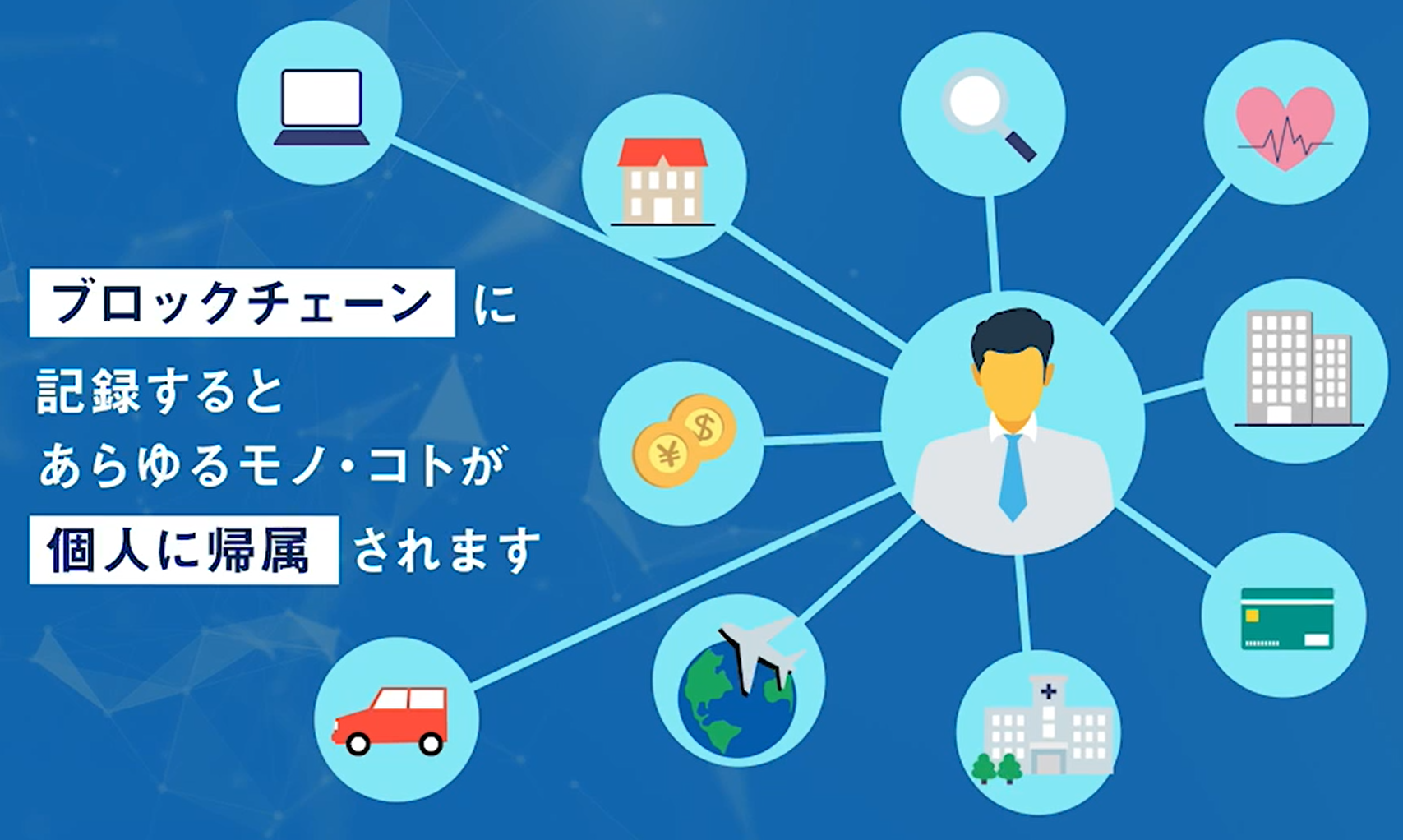
What is blockchain technology?
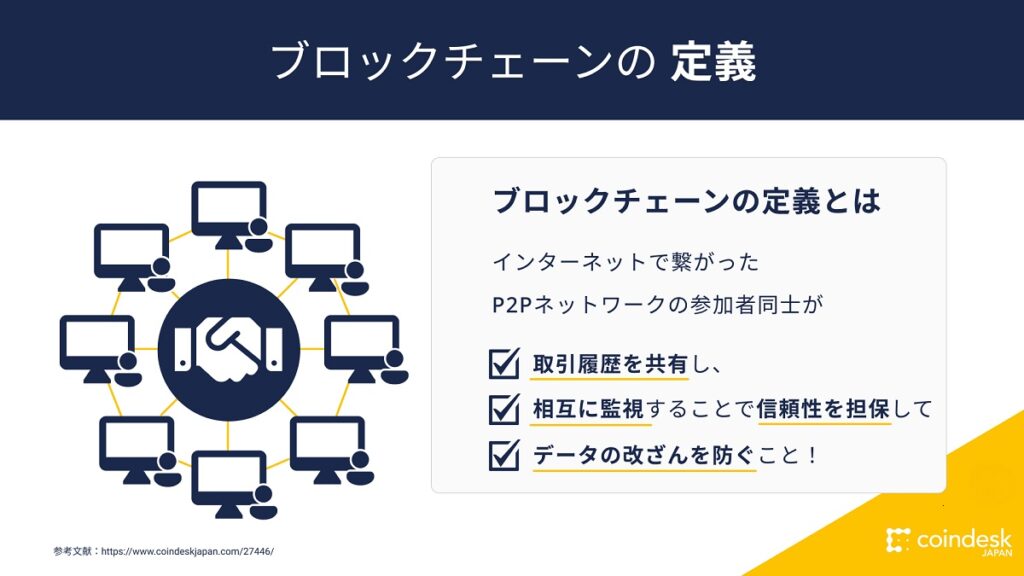
A blockchain is an immutable (unchangeable) shared digital ledger that stores records and transactions in multiple locations on a network of computers. Here, each verified transaction is added to a space called a block, which uses cryptography to link with other subsequent blocks to form a chain.
If this definition has you scratching your head, let’s understand blockchain technology in simpler terms.
Blockchain is a type of database that stores data (records) electronically on a computer.
Block = space containing records
chain = link that connects records
Therefore, a chain of linked blocks containing records is called a blockchain.
All blockchains are databases, but not all databases are blockchains. The difference between a database and a blockchain is how data is stored.
blockchain and database
Databases collect vast amounts of information and organize it in tabular format, allowing users to modify data easily and simultaneously. Larger databases also use servers with powerful computers to store large amounts of data and perform calculations. Typically, a company or individual owns the database. Therefore, they control and manage that access.
Blockchain, on the other hand, collects data into groups or blocks with specific storage capacity. When a block is full, it joins to another block to form a chain. All new records following subsequent newly added blocks are compiled into new blocks.
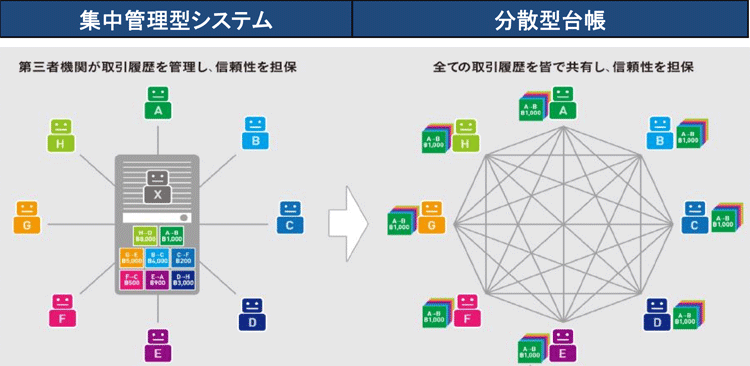
Unlike traditional databases, blockchains do not have a single owner. Instead, anyone with permission can access it. It is also called a decentralized system because there is no central hub that controls the blockchain. Similarly, blockchain technology is called distributed ledger technology (DLT) . It is a distributed ledger of record that allows users to share data and perform transactions peer-to-peer without a central authority.
Blockchain technology was invented by an unknown entity, Satoshi Nakamoto (by an individual or group of individuals in 2008) as a public Bitcoin transaction ledger. The purpose is to time stamp digital documents so that no one can tamper with them. It helps resolve issues related to double recording and perform secure transactions of assets without involving third-party intermediaries such as governments or banks.
This technology runs on the Internet and consists of different parts, such as databases, connected computers or nodes, and software applications.
For example : Businesses can leverage blockchain technology for bookkeeping to record all transactions. Bookkeeping involves double-entry accounting of transactions, which can be confusing and make records difficult to verify by other parties. These records are also easy to tamper with, such as editing, deleting, and adding new records. Therefore, it may not be accurate.
This is where blockchain helps by securing transactions with the help of encryption. This provides a tamper-proof method of storing transactions in blocks.

What are the components of blockchain?
Blockchain architecture consists of various layers such as infrastructure or hardware, data, networks such as nodes, validation, information distribution, and applications. Let’s understand some of its components.
block
As explained above, blockchain refers to a chain of different blocks containing data or records. And the data within each block is based on the blockchain type. For example, a bank’s blockchain contains blocks containing information such as account number, account holder name, and branch name.
The first block of the blockchain is known as the Genesis block, and every block contains valid encoded and hashed records. Each block has its own cryptographic hash and the cryptographic hash of the previous block in the same blockchain, which are linked together to form a chain. This iterative process verifies the integrity of the previous block’s digital signature.
Hashing
A hash is like a unique fingerprint for every block. This is code created using mathematical functions that convert digital data into long strings of letters and numbers. This 64-digit hexadecimal number identifies each block and its contents, and once the block is created, any changes made within the block will change the hash. Blockchain technology uses Secure Hash Algorithm (SHA) 256 hashing, which is very useful in detecting changes made in transactions. It is also secure because every block contains the hash of the previous block.
So when an attacker changes the data in a block, its hash changes, but the next block still has the old hash of the compromised block. Therefore, all subsequent blocks are invalidated and can be easily tracked.
assets
Assets can be tangible or intangible. Tangible assets are physical items such as land, houses, and equipment, while intangible assets are non-physical items such as intellectual property contracts, copyrights, and patents. Interestingly, money can be both tangible and intangible.
Decentralized peer-to-peer (P2P) network
All transactions within the blockchain operate on a decentralized peer-to-peer (P2P) network with no central authority controlling the data. This allows anyone (with access) to participate in the blockchain, and every computer added to the network becomes a node.
Therefore, when a user creates a new block, that block is sent to each user on the network, and each node must validate this new block to ensure that no one has modified it. Once validation is complete, each node begins adding new blocks directly to the blockchain.
All nodes present in the network form a consensus to verify the legitimacy of blocks and reject tampered blocks.
Types of blockchain
There are different types of blockchain, and users leverage this technology for different use cases depending on the type. Therefore, the different types of blockchain are:
public blockchain
Blockchain facilitates a decentralized open network of multiple computers that anyone can access to request transactions and verify the accuracy of transactions. This allows users to create new blocks, access all blocks in the blockchain, and verify data.
Because they are open and require good security, they use concepts such as proof of stake and proof of work. Blockminers who validate transactions are financially rewarded. Public blockchains are primarily used for mining and exchanging cryptocurrencies.
Examples : Bitcoin, Litecoin, Ethereum blockchains.
private blockchain
Private blockchains are centralized and controlled by individuals or organizations who decide who can access the blockchain, who can add them as nodes, and who can verify records. Unlike public blockchains, private blockchains are not open and have restricted access. If you want to participate in a private blockchain, you need to get permission from the administrator.
Example : B2B crypto exchanges like Hyperledger.
consortium blockchain
These permissioned blockchains are controlled by a group of companies or organizations rather than a single individual. It is more decentralized and has more security than private blockchains. This restricts access and the current node decides the consensus process.
Additionally, it configures validator nodes to initiate, receive, and validate transactions, while member nodes have the authority to initiate or accept transactions. Here, users can transfer digital assets from one blockchain to another with increased efficiency and scalability.
For example : Consortium blockchains are used for payments and banking, such as Quorum and Corda.
hybrid blockchain
Hybrid blockchains combine the attributes of private and public blockchains. These can be centralized or decentralized, and organizations can set up permission-based private blockchains along with public blockchains. Therefore, organizations can control data access within the blockchain and which data is publicly accessible.
Examples : Used in the real estate and retail industries, such as IBM Food Trust.
How do blockchain transactions work?
Here’s how a typical transaction occurs within a blockchain:
Step 1: Trade request
First, individuals request transactions involving real estate, banking, cryptocurrencies, records, contracts, etc.
Step 2: Distribution
Requested transactions are broadcast to a peer-to-peer network through nodes located around the world.
Step 3: Validation
Nodes in the network use algorithms to solve complex equations and validate transactions. If the transaction is determined to be valid, the record is entered into the block.
Step 4: Add blocks to the blockchain
Once the transaction is complete, the newly created block is chained with the previous block using encryption and cryptography. It has a hash code and contains the hash code of the previous block. Once this block fills the allocated space, the next block starts filling and connects to the previous one. Thus, a long trading chain is formed. This is immutable and transparent to everyone in the blockchain.
How does blockchain ensure transaction security?
Blockchain has various techniques to ensure the security of transactions, such as encryption, hashing, and proof of work. Some of the security techniques are:
Immutability
Blockchain immutability means that no one can manipulate the data entered into the blockchain. That’s because every block has a unique hash code and another hash code that references the previous block. Cryptographic hash codes cannot be reverse engineered. If there are errors in your transaction data, you can correct them by entering a new record. In this case, both records will be displayed. Therefore, there is no possibility of mistakes or double entries.
Time series structure
All blocks in the blockchain are stored in chronological and linear order. That is, it is always connected at the end of the blockchain. And each block has a hash and a hash of the previous block. This method is applied across blockchains that may contain thousands of blocks. Therefore, it is difficult to go all the way back to beat the record.
Even if someone were able to change a block, they would have to make the changes to every other block, which would take considerable effort, resources, computing power, and time. This gives users time to verify the block and see if it has been compromised. The cost of such hacks can be prohibitive and almost always yields no results.
Proof of Work (PoW)
Hashing is a great way to mitigate tampering, but an attacker could use a powerful computer to hack the blockchain, modify blocks, recalculate subsequent blocks, and potentially invalidate the entire blockchain. There is.
To combat this, blockchains use Proof of Work, a mechanism that slows down the creation of new blocks. This is a complex calculation and requires some effort to solve. It also takes more time to resolve the issue than to verify the results. Therefore, calculating proof of work and adding a new block will be much more difficult than modifying the block and subsequent remaining blocks. In this way, proof of work increases the security of the blockchain.
People often confuse PoW and PoS, so it’s easy to understand.
Proof of Stake (PoS)
Proof of Stake uses cryptographic algorithms to verify transactions. For example, in mining, verification is done by selected validators depending on the number of coins you occupy, called stake.
Users do not technically mine or earn rewards, but forge blocks. Participants in this process earn coins, and those with more stake receive more mining power. This increases your chances of being selected as a validator.
Advantages and limitations of blockchain
Advantages 👍
The advantages of blockchain are:
accuracy
Every transaction is verified by thousands of nodes on the blockchain network. This is powerful enough to eliminate errors and provide higher data accuracy. Even if you make a mistake, other computers can easily spot it. And if this error becomes widespread, at least 51% of all computers in the network will make the same mistake, especially when large blockchains like Bitcoin are involved. is almost impossible.
decentralization
There is no central hub that controls or manages the blockchain. Instead, it is decentralized. This means that networks of thousands of computers can be accessed without managing a single person or organization. Changes in the blockchain are instantly reflected to each node in the network that has permission.
cost efficiency
With blockchain, no third party approves transactions along with processing costs. For example, banks and payment processors charge a small fee for processing transactions. Therefore, businesses that use blockchain technology such as Bitcoin to perform payment transactions can save significant costs.
speed
Traditional banking systems take a lot of time to process payments, from the time they are initiated until the amount is posted to your account. Additionally, financial institutions can only operate during designated business hours and days. Therefore, it may take several days for the amount to finally appear in your bank. On the other hand, blockchain is unstoppable. It is active 24/7 and transactions may take several minutes to complete. It is also very advantageous for international payments.
Immutability
Reliable cryptographic mechanisms, cryptographic hashes, and chronological chains of blocks make all records immutable or unchangeable on the blockchain. Therefore, the data cannot be modified or deleted.
safety
When a transaction is added to the blockchain, thousands of powerful computers verify the authenticity of the record before adding it to the block. Blockchain technology uses complex calculations and algorithms for verification and assigns each block a unique hash for identification.
Also, if an attacker changes something, that change is immediately visible to all nodes, allowing them to identify the error and disable the block and subsequent blocks. Therefore, a high level of security is provided.
transparency
Like public blockchains, most blockchains are open source software because there is no central authority. This allows everyone to access the code and allows auditors to review security. Anyone in the network can propose an upgrade or change, and if a majority of users agree, it will be accepted. In this way, blockchain provides greater transparency than traditional systems. Additionally, you can remain anonymous to protect your privacy.
Limitations 👎
illegal act
Despite providing security and privacy to users, blockchain gives rise to many illegal activities and transactions. There are numerous cases of theft and breaches related to blockchain-based currencies and services.
environmental concerns
Blockchain networks such as Bitcoin consume large amounts of electricity to mine and verify transactions, impacting the environment.
Scalability issues
Although blockchain is faster than traditional financial institutions, scalability remains an issue. Scaling globally is difficult and can cause inefficiencies. However, recently new developments have surfaced to improve scalability, such as Ethereum’s innovative Layer 2 (L2).
However, many still argue that blockchain’s advantages are overshadowed by its disadvantages, which is why blockchain is seeing increasing adoption globally in various applications and industries.
blockchain and bitcoin
There is a lot of confusion and misunderstanding when it comes to blockchain. Many people confuse blockchain and Bitcoin, thinking they are the same thing.
Well, they are definitely not the same!
Blockchain is a technology, and Bitcoin is an application of blockchain. Blockchain allows data to be recorded and distributed, but not edited, making it safe for Bitcoin and other FinTech services.
Bitcoin is a digital currency (cryptocurrency) based on blockchain technology. It is a peer-to-peer system with no third party or governing body, and uses blockchain to store a ledger of transactions (or payments). Currently, Bitcoin mining and transaction management are performed centrally within the network.
Bitcoin (BTC), the world’s largest cryptocurrency, has a public, open-source ledger. You can send and receive Bitcoins without bank involvement or paying bank fees.
Blockchain uses
Blockchain is now pervasive in various industries to offer benefits such as security, transparency, and privacy. Major companies that have already adopted blockchain include IBM, Siemens, and Walmart.
Let’s look at some uses of blockchain.
cryptocurrency
Bitcoin is not the only cryptocurrency in existence. Cryptocurrency is a digital currency that uses strong encryption to securely store transaction records on a ledger (blockchain). No central authority issues it and its management is decentralized.
Besides Bitcoin, there are many other cryptocurrencies such as Ethereum (ETH), Litecoin (LTC), Namecoin (NME), Dogecoin (DOGE), Ripple (XRP), and Tron (TRX).
smart contract
A smart contract is a digital blockchain-based proposed agreement. These can be enforced or executed without human intervention. This eliminates the need for an intermediary between the two contracting parties. Blockchain will take care of that. The result is transaction automation and reduced friction between parties.
Banking/Finance
Some banks, such as UBS, are interested in implementing blockchain because of faster transaction speeds and lower costs. Additionally, various stocks are being tokenized, and new financial services such as Initial Coin Offerings (ICO) and Security Token Offerings (STO) are emerging. These services help tokenize tangible assets such as real estate.
supply chain
Blockchain is being implemented in supply chain areas such as food supply, furniture, software development, and mining of valuables such as diamonds.
health care
According to the Wall Street Journal, Ernst & Young was using blockchain to help governments, airlines, employers and others track people who are immune to the coronavirus or who have been tested for antibodies. That’s what it means. China has also used blockchain to accelerate health insurance transactions.
Other uses : Blockchain is also used in video games such as CryptoKitties, P2P energy trading, domain names, documents, shipments, and product verification.
Blockchain history
Although blockchain is a new technology, some elements of the concept have been around for a long time. Certain notable events led to the foundation of blockchain technology. Let’s take a look at a brief chronology of such important events.

2008
- Bitcoin, a peer-to-peer electronic cash system, was published by Satoshi Nakamoto.
2009
- The first successful Bitcoin (BTC) transaction was made between Satoshi Nakamoto and computer scientist Hal Finney.
2010
- Laszlo Hanises, a Florida-based programmer, completed his first official purchase using Bitcoin. He transferred 10,000 BTC, worth $60 at the time, to purchase two Papa John’s pizzas. Currently, they are worth $438 million.
- Currently, Bitcoin’s official market capitalization is $830 billion.
2011
- WikiLeaks, the Electronic Frontier Foundation, and many other organizations began accepting Bitcoin as donations.
2012
- Bitcoin developer Vitalik Buterin founded Bitcoin Magazine.
- Blockchain and cryptocurrencies were first mentioned on the popular TV show “The Good Wife.” So this was the first introduction of blockchain into pop culture.
2013
- Bitcoin’s market capitalization has exceeded $1 billion.
- BTC price exceeds $100 for the first time.
- Vitalik Buterin published a paper titled “The Ethereum Project” in which he suggested that there may be several applications of blockchain beyond Bitcoin.
2014
- Companies such as Overstock.com, The D Las Vegas Hotel, and well-known gaming company Zynga have started accepting Bitcoin payments.
- PayPal has announced the integration of Bitcoin with its systems.
- A group of more than 200 blockchain companies gathered as a group named R3 to find a new method of implementing blockchain in various fields.
- Buterin’s Etherneum project has succeeded in acquiring crowdfunding through Initial Coin Offering (ICO) and raising more than 18 million dollars. This was the most important event in the history of blockchain, which opened a new path of blockchain technology.
2015
- Over 100,000 sellers who accept BTC payments.
- Nasdaq and San Francisco blockchain companies gather to test the technology to trade shares from private companies.
2016
- IBM, a technology giant, has announced a blockchain strategy to achieve better cloud -based business solutions.
- Blockchain and virtual currency are legalized in Japan.
2017
- The price of BTC exceeded $ 1000 for the first time.
- The market capitalization of cryptocurrencies exceeds $ 150 billion.
- The Dubai government has announced that it will use blockchain by 2020.
- The BTC price has reached the highest ever in $ 19,783.21.
- Jamie Dimon of JP Morgan CEO said he believed in the future of blockchain technology. As a result, the blockchain system has received a confidence vote from the entire Wall Street.
2018
- Giant banks such as Berkraise and City have registered on the blockchain -based bank platform developed by IBM.
- Facebook committed to launching a blockchain group, suggesting that Facebook’s unique cryptocurrency could appear in the future.
2019
- The establishment of Bakkt, a digital wallet company for cryptocurrency trading, was announced by the New York Stock Exchange (NYSE).
- China’s President Jinpei has publicly accepted blockchain technology, and China’s Central Bank has announced that it is working on creating its own cryptocurrency.
- Twitter and Square CEO Jack Dorsey announced that it will hire blockchain engineers on Square to work on future plans in the cryptocurrency industry.
2020
- It is now possible to buy and sell cryptocurrencies on PayPal.
- “Sanda Dollar” became the world’s first central bank digital currency published by Bahama.
- By the end of 2020, Bitcoin was able to rise to $ 30,000.
- Blockchain technology has become the most important for storing patient information and research data during the new colon virus infection scenario.
The blockchain is not just for bitcoin. There was a bitcoin behind the huge popularity of the early blockchain, but now there is more. Currently, many blockchain technology is applied in various fields.
Conclusion👩🏫
The blockchain is an advanced technology with advanced security and transparency. As the awareness of blockchain increases, the number of organizations that adopt blockchain in the entire industry is increasing. Therefore, this technology is more likely to survive, and you will find more use in the future.
Please read this: Cryptocurrency mining for beginners.


![How to set up a Raspberry Pi web server in 2021 [Guide]](https://i0.wp.com/pcmanabu.com/wp-content/uploads/2019/10/web-server-02-309x198.png?w=1200&resize=1200,0&ssl=1)


