Cloud robotics allows developers of robotic hardware and software solutions to create affordable robots for business or home applications.
Cloud computing has become the next big thing in the field of IT technology. All those grumpy-looking desktop software are now available on the cloud with a better look and user experience.
Similarly, robot designers and developers have also decided to move some of their robotics processes to the cloud in order to save production costs in various ways.
If you are interested in robotics, cloud computing, and the Internet of Things (IoT), you must read this article to the end to learn the basics of cloud robotics.
Cloud computing and robotics
The race for superior cloud computing technology infrastructure began in 1963 when the National Science Foundation (NSF) and the Defense Advanced Research Projects Agency (DARPA) funded Project MAC at MIT, Massachusetts. Ta.
This project was supposed to lay the foundation for a computer competition that would allow multiple people to use a computer at the same time.
Then, with the development and publication of ARPANET in 1969, the sharing of resources and data between computers over wide area networks helped drive the development of modern cloud computing technology.
Officially, modern cloud computing services began in 1999 with the release of Salesforce software on the cloud. Since then, this technology niche has rapidly developed with the advent of cloud solutions such as Microsoft Azure, Google Cloud, and Amazon AWS.
The history and development of robotics dates back to 1954, decades before cloud computing was first conceived. Robotics began with the Unimate robot, which Unimation, the world’s first robotics company, sold to General Motors.
The Unimate was a hydraulic mechanical arm that could lift and move heavy objects that were impossible for factory workers. Since then, robotics has come a long way to today. Today, there are service robots manufactured by advanced robotics companies such as Robotnik, KUKA Robotics, and Triowin.
These service robots can be fully or partially automated and can perform a variety of tasks faster and without errors.
There is no doubt that cloud computing is widely contributing to the growth of the robotics industry. And now, robotics and cloud experts are looking to use cloud robotics to make robots easily available for any need.
What is cloud robotics?
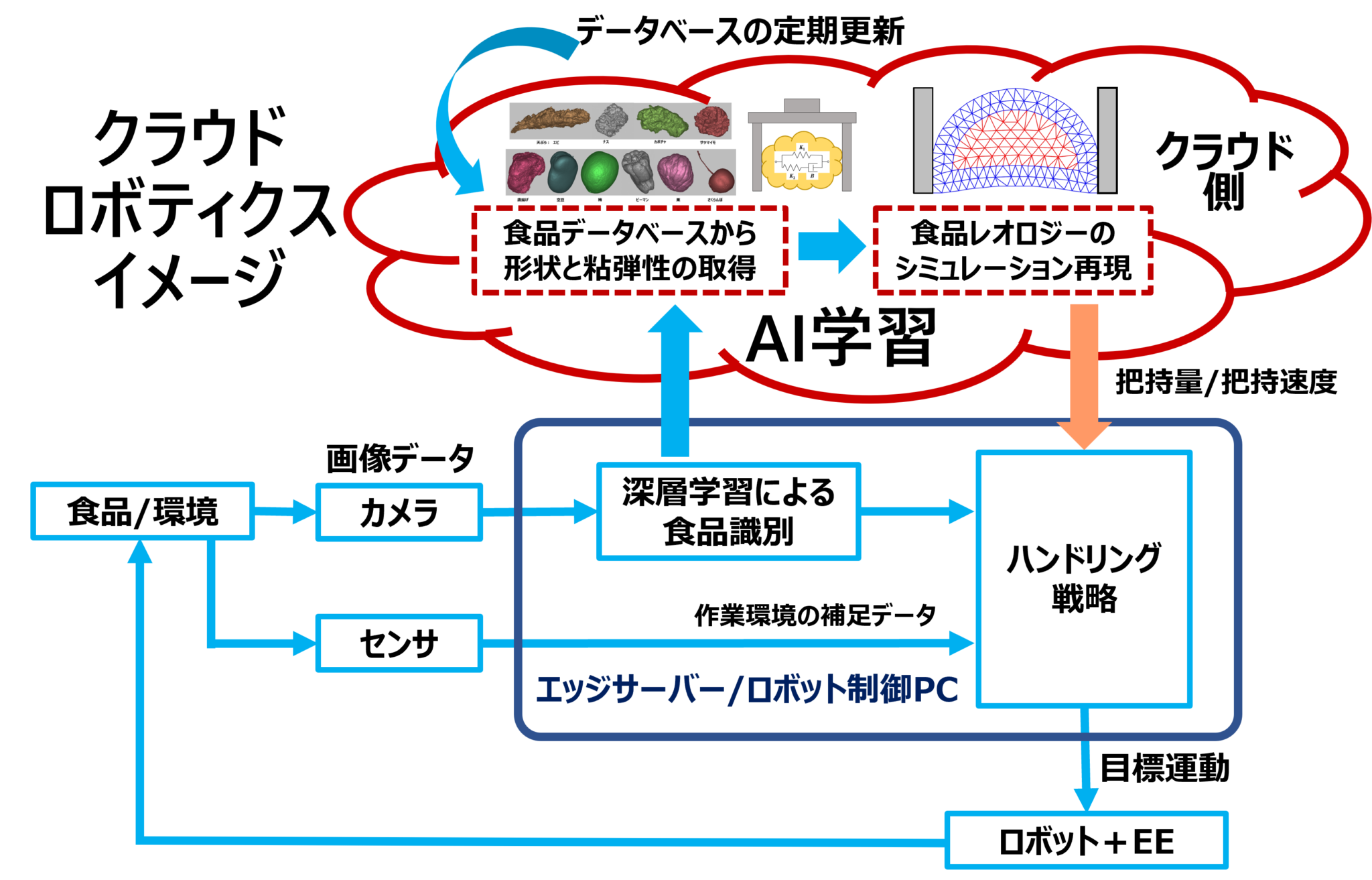
Cloud robotics is a powerful and successful fusion of cloud and robotics technologies. Here, robots can use cloud computing infrastructure to perform their regular tasks using computational resources such as data processing, data insights, virtual operating systems, IoT, and online data storage.
With the introduction of cloud robotics, hardware and software developers in the robotics industry no longer need to rely on onboard capabilities of the robots they are developing.
The robotics industry will be able to use fewer semiconductor chips and electrical and electronic components when manufacturing robots for commercial or domestic use. These robots will be smaller, lighter and more agile.
The main idea of cloud robotics is very similar to using Adobe Express, Canva, Salesforce, Procreate, YouTube, Business CRM, ERP, etc. on the cloud using only a web browser. Similarly, robots can access data from the internet, intranets, and IoT devices to perform tasks.
You don’t need a heavy onboard computer or memory to perform calculations. Borrow intelligence from cloud-based artificial intelligence (AI) and machine learning (ML) solutions.
Cloud robotics features
#1. Outsource computationally intensive processes
Robot developers can focus on design, mechanics, functionality, agility, and reliability while outsourcing processing functions to a cloud robot platform. This will allow more companies to enter the robot development business.
#2. Rapid introduction of service robots
Cloud robotics allows a single robot to be reused for multiple tasks, allowing businesses to quickly bring robots to the front lines.
#3. Online troubleshooting
This feature of cloud robotics solutions eliminates the need for companies to hire an in-house team of roboticists.
Manufacturers can use cloud solutions to troubleshoot robots. This also allows the robot to be used in difficult-to-reach locations where the Internet is available. If the robot fails for any reason other than physical destruction of onboard hardware/firmware, the manufacturer’s technicians can repair the robot online.
The importance of cloud robotics
Cloud robotics is the need of the hour for the following reasons:
First, there is a shortage of raw materials to make semiconductor chips and other delicate electronic components. If cloud robotics can reduce the out-of-the-box hardware requirements of robots, it will become an essential technology for the robotics industry.
Second, autonomous robots are expensive to manufacture. However, this does not add any value to the global supply chain for industrial robots. Companies need large numbers of affordable robots to manage large-scale warehousing, packaging, manufacturing, and more. No freestanding system required. It requires agility and the ability to control thousands of robots from a single computer using a cloud network.
Finally, cloud robotics solution providers take care of the programming, machine learning, and robot intelligence, allowing robot manufacturers to focus on improving designs and adding functionality.
Cloud robotics components
Below are standard components for building an effective cloud robotics solution.
- Physical and software networks for establishing machine-to-machine or M2M and machine-to-cloud or M2C connections. M2M and M2C help cloud robotics solution operators control individual robots and all robots in a group.
- A global database of machine-understandable digital content, including images, text, numbers, formulas, binary data, video, coordinates, navigation data, knowledgebases, and more.
- A gigantic supercomputer that can process multiple incoming connection requests and provide statistical data, operating instructions, scheduling, task instructions, and coordination.
- A neural engine program inside the robot makes it machine learning capable.
- Open source and proprietary software or code for cloud robotics solutions.
- A GUI console for technicians to monitor cloud robots and intervene remotely if necessary.
Now let’s look at the difference between automation and cloud robotics.
Automation vs. Cloud Robotics
Although automation and cloud robotics may seem similar, there are some fundamental differences. A summary of these is shown in the table below.
| Features | automation | cloud robotics |
| meaning | Automation is the replacement of humans with machines to efficiently solve repetitive manual tasks | Cloud robotics is a framework that links robots and the cloud and provides these machines with data insights and instructions from the cloud. |
| range | Automation is possible anywhere, in the virtual world or in the real world | Cloud robotics is mostly real world |
| the purpose | Automation simply organizes and streamlines boring, repetitive tasks. | While robots efficiently solve repetitive tasks, they can also help handle delicate tasks or tasks that require great force. |
| Hardware requirements | Automation may or may not require hardware. For example, automation performed using Zapier, IFTTT, and Power Automate automates digital tasks. | Cloud robotics specifically refers to physical service robots, which always require hardware. |
Advantages of cloud robotics
Here are some practical benefits of cloud robotics:
#1. joint development

Several software developers and hardware manufacturers in the robotics industry can conveniently form a consortium for the rapid development and deployment of service robots.
Hardware manufacturers can work on the physical items, and software developers can work on the cloud part of the robot.
Different parties can build their own revenue systems and earn commensurate profits while securing access to collaboratively build robots.
#2. Solution development and outsourcing
Companies that excel at designing, molding, and manufacturing hardware can enter the robotics industry without going deep into software and firmware development.
They can obtain the necessary cloud infrastructure from an outsourcing agency, install tools on their robots, and connect them to the internet for data intelligence during frontline operations.
#3. Making robots cheap and easy to obtain
If a robot can access the data and instructions it needs from a cloud computer, there is no need to equip it with sophisticated computing resources.
A minimal computer that can analyze cloud data and instruct onboard actuators and sensors to perform tasks is sufficient. Therefore, the robot contains less hardware and is cheaper.
#4. robot agility
Early robots looked awfully huge. Because it was necessary to accommodate many machines in the chassis. Cloud robotics is now making robots smaller, more agile, and more attractive.
#5. recycling
Companies do not need to purchase specialized robots for different purposes. They can obtain multipurpose service robots that can be modified using cloud solutions to suit specific automation process requirements.
Of course, the production line must also be designed accordingly. If your robot needs new hardware, using cloud infrastructure alone won’t serve your purpose of recycling your robot. Technicians must access the robot and modify its physical components.
Cloud robotics challenges
Cloud robotics is still in its early stages of development, so it’s clear that this niche will struggle with challenges and obstacles.
Here are some common cloud robotics problems you can solve to create and sell novel solutions with the potential to make big bucks.
#1. Network accessibility

An inherent problem with Internet networks is the lack of bandwidth when many devices try to access the same resources on the cloud.
Therefore, network infrastructure failures during maintenance or planned downtime can render cloud robotics-enabled service robots inoperable.
#2. edge analysis
Cloud robotics preachers have discovered a failsafe for cloud-based robots with the development of edge analytics. Edge computing systems are believed to be able to provide robots with the localized data insights they need to function when cloud networks are unavailable.
However, this again increases dependence on more hardware. Cloud robotics was introduced to reduce the use of local hardware and increase the use of networked intelligence delivered over intranets and the Internet.
#3. cloud security
The most concerning issue in cloud security is network security. It is understood that anything on a network can be hacked. Cloud robotics solutions are therefore exposed to significant targets such as phishing, hacking, and social engineering.
If hackers can’t break into the cloud consoles that control thousands of robots, the entire network could become a target for a denial of service attack (DoS attack).
#4. robot speed
Cloud-based robots may have different agility under different conditions even on the same device. For example, if the cloud network is congested, the robot’s response may be slower than expected. Conversely, the same robot can provide optimal speed and accuracy when the cloud network is less congested.
Therefore, manufacturing plants need to adjust their automation processes depending on the current level of latency in the robot’s response during operation.
learning resources
Cloud Robotics: The Complete Guide
This book on cloud robotics will help you become an expert solution developer for cloud-based robotic processes.
| preview | product | evaluation | price | |
|---|---|---|---|---|
 | The Complete Guide to Cloud Robotics – 2020 Edition | $81.30 | Buy on Amazon |
You can also understand how to modernize your existing robot development processes to align with their cloud computing counterparts.
Introducing cloud robotics
The Cloud Robotics Implementation book describes current obstacles to full-service cloud robotics implementation and how to overcome these common challenges.
| preview | product | evaluation | price | |
|---|---|---|---|---|
 | Implementing cloud robotics for practical applications: from human-robot interaction to autonomous… | $109.99 | Buy on Amazon |
We also propose a methodology to develop functional service robots by using off-the-shelf robots and modifying their firmware using proprietary or open-source cloud robotics solutions.
summary
By now, you should have developed some basic and semi-advanced ideas about cloud robotics. In short, this is a growing technology in process automation.
Therefore, IT giants such as Microsoft, Amazon Robotics, IBM Corporation, C2RO Cloud Robotics, Hit Robot Group, V3 Smart Technologies, Intel, Google, Omron Adept Technologies, Fetch Robotics are already expanding their influence in the cloud robotics market. Masu.
According to a recent report from Research and Markets , the cloud robotics industry was a $7.52 billion industry. However, by 2026, it will grow into a market with a revenue of $23.59 billion.
Therefore, niche markets will create more jobs and business opportunities.
If you’re a job seeker, a solo developer, or a company looking to make big bucks by leveraging cloud robotics to your advantage, you need to get ready now.
Next, check out Robotic Process Automation (RPA).


![How to set up a Raspberry Pi web server in 2021 [Guide]](https://i0.wp.com/pcmanabu.com/wp-content/uploads/2019/10/web-server-02-309x198.png?w=1200&resize=1200,0&ssl=1)


