Cloud technology adoption rates are on the rise, with businesses of all sizes hosting their data in the cloud. With this increased adoption, it is essential to focus on aspects such as security and data protection on the cloud to avoid potential breaches and theft.
We are all connected to the cloud and most of our data is hosted there. Therefore, companies must prioritize the privacy and security of their users’ data.
What is cloud data protection?
Cloud data protection is a strategy for securing data stored in the cloud. Not only to protect your data from incidents such as theft, but also to ensure that your data can be backed up and recovered in the event of a system failure, and to avoid exposing sensitive information to unauthorized personnel. We also focus on ensuring that system-level permissions are properly granted.
Why is cloud protection important?
Businesses around the world are gradually moving to cloud computing because it is scalable, flexible, and allows work to be done with fewer resources and fewer workforces.

An important factor to note is that cloud computing is a service that allows users/enterprises to access a vast number of shared resources managed by a cloud provider, and is similar to SaaS (Software as a Service) or IaaS (Infrastructure We emphasize the term shared services, including Structure as a Service. service), PaaS (platform as a service).
Cloud service providers take security measures to ensure the safety and stability of their systems and services. Today’s systems are built to integrate with multiple third-party applications, so any business that accesses cloud storage or hosting can ensure that their data is not exposed to these third-party services or malicious actors. must be securely protected.
How to ensure your cloud data is protected
To ensure your cloud data is protected and secure, you can implement the following best practices:
#1. encryption
Encryption is the process of converting original information or data (plaintext) into ciphertext, making it unreadable by unauthorized parties. Only the intended reader can decipher the information. It’s a best practice to ensure that your data is encrypted in use, in transit, and at rest. This makes it difficult for unauthorized individuals to understand your data.
#2. access control
Identity and access management (IAM) helps enterprises address overall network security by not only assigning roles and responsibilities to users within a system, but also by ensuring that users only have access to parts of the system and the data they need. Helps build a layer of security. Data breach.
Strong credential policies and permissions should be applied at all corporate system levels. These make it difficult for attackers to gain access to your company’s systems.
#3. Data loss prevention (DLP)
Data loss prevention is the process of detecting and preventing potential data breaches and filtering leaks by monitoring, detecting, and blocking sensitive data. Some data loss prevention software helps protect different categories of data, including data in use, data in transit, and data at rest.
#4. Backup and disaster recovery
A great way to protect your cloud data is to regularly copy and save your files to a specific location so that they can be recovered in the event of a disaster. This can be accomplished by leveraging a 3-2-1 data backup strategy. This strategy maintains at least three copies of your data backups, with two copies stored in separate locations and one copy stored in an offsite location, with the following rules:
This rule helps businesses ensure that they always have a backup of their data in case a disaster occurs.
#5. data masking
Data masking is the process of changing data so that it looks like the original data to remove sensitive parts so that it remains available to authorized personnel but cannot be used by unauthorized persons. This could include a process of tokenization that helps link back sensitive data when accessed by authorized persons.
#6. Auditing and logging
Performing regular system audits can help mitigate lapses that may have occurred over a period of time. It also requires logging activity on the system so that system administrators can always see what problems may have occurred and what privileges led to a data breach. This helps businesses plan ahead when they become aware of expirations.
#7. Data residency and sovereignty
Data location refers to the location or country where your company’s data resides. At the same time, data sovereignty refers not only to the site where the data is stored, but also to the laws that bind the access and storage of user data in a particular location.
This is important for businesses because data may be at rest, in motion, or in use. The location of your data determines the travel time it takes to reach your storage. Note that data in transit is typically vulnerable to attacks if it is not adequately protected.
#8. cloud security service
Cloud security services include all the protocols, tools, and best practices provided by cloud providers to help protect your data, including IAM, data security, governance, and regulatory compliance. Although cloud providers provide security and tools with their services, it is still a best practice for businesses to take additional steps to avoid data breaches and loss.
#9. Secure data transfer
Data transfers that use secure protocols and encryption to ensure the safety of the data being sent are called secure data transfers. HTTPS over HTTP provides additional layers of security to your web services, such as encryption, authentication, and data integrity. Secure data transfer allows you to monitor who accesses what data and revoke or grant permissions as needed.
#10. Security monitoring and threat detection
Real-time security and threat detection mechanisms should be implemented to provide early detection of data access anomalies and attempts to compromise corporate systems.
These enable businesses to act quickly when they occur, minimize data breaches, address security vulnerabilities before they can be exploited, reduce downtime due to data breaches and losses, and ensure that businesses stay up to date with regulations and standards. can be made complied with.
Benefits of cloud data protection
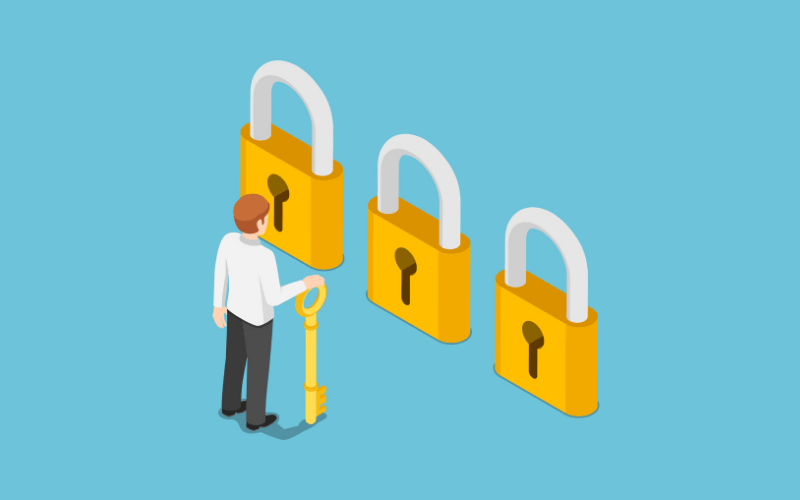
availability
Data must be available for enterprise services to run smoothly. Interruptions in data communication can lead to potential harm to businesses, loss of revenue, and loss of trust from users.
Businesses must take steps to protect against data theft or loss that could cause service interruptions to customers. Situations where this data is not restored on time or is lost without backup can lead to a loss of customer trust in the service provider.
sincerity
Data integrity means ensuring that a company’s data is accurate, authentic, and protected by policies that ensure that nothing has been tampered with and that the data is adequately protected from transmission to storage and retrieval. and to ensure that it is reliable.
Companies handle confidential user information. You must avoid leakage when transferring this data to and from storage. Interrupted transmissions can expose users’ sensitive information to malicious parties, potentially leading to lawsuits and financial loss to businesses.
Confidentiality
Consider a case where a customer enters and immediately enters credit card information on a company’s website to pay for a subscription service. They found that fraudulent transactions were occurring on their accounts due to lack of proper encryption. This can spell disaster for an organization.
Businesses need to ensure that customer data is only accessible to authorized people. Access rules and role-based permissions should be implemented to ensure that users’ sensitive data cannot be accessed by unauthorized persons. This can lead to serious security issues and damage to your business.
compliance
Various countries have developed policies to ensure that their citizens’ data is kept secure and treated appropriately.
Companies also need to comply with the Health Insurance Portability and Accountability Act (HIPAA), the EU’s General Data Protection Regulation (GDPR), the Payment Card Industry Data Security Standard (PCI DSS), the California Consumer Privacy Act (CCPA), and more. You must ensure that you comply with various standards. ), the Federal Information Security Management Act (FISMA), and the Sarbanes-Oxley Act (SOX).
Challenges in data protection

It is worth noting that while the adoption of cloud services is increasing significantly, threats to cloud data are also rapidly increasing. Here are some challenges that businesses operating in the cloud may encounter.
Increase in security threats
Since then, cloud databases have seen an increase in attacks by malicious actors over the years. Cloud service providers are increasing efficiency and reducing enterprise costs, but they are also becoming ideal targets for malicious actors.
Businesses need to ensure end-to-end security and protection of their systems. Appropriate tools and measures must be implemented in terms of data transfer and storage to detect leaks and prevent such attacks before they occur.
Data confidentiality issues
A company’s cloud data can be compromised if the provider’s identity and access management (IAM) is inadequate. Companies must implement confidentiality levels that restrict public data access on their servers.
A simple rule of thumb is that “User A” should only have access to what “User A” needs and nothing else. This reduces the exposure of sensitive data to unauthorized persons.
shared responsibility
Cloud services are generally managed and provided by cloud providers such as Google, Amazon, and Azure. These companies maintain the physical infrastructure on which the cloud runs. Unlike traditional systems where each company owns the physical infrastructure, the cloud computing era has removed that burden.
Sharing responsibility between cloud infrastructure providers and customers means knowing who handles what and when. If not handled correctly, this approach can also create gaps in data security and protection. Therefore, businesses (customers) need to know which aspects of data security they are responsible for.
corporate compliance
With increasing threats to data security and how companies handle user data, strict measures are being taken by regulators to ensure user data is protected. Businesses must ensure that the providers they use comply with regulations where the services are provided.
For example, if company X deploys services in country Y and uses provider Z’s cloud services, company Not.
This creates additional responsibility for businesses to either manage two platforms or find a solution to the problem.
Cloud data protection trends and technologies

certification
Enterprises are taking authentication and IAM seriously. The increasing adoption of two-factor authentication and biometrics ensures that all users have the necessary permissions, not just providing a username and password, before accessing their data.
Introduction of AI
More and more companies are using AI to detect threats and identify potential attackers. This allows for faster response times and better provision of 24-hour real-time monitoring, which is difficult to achieve with human resources alone.
Improved encryption method
More data is being encrypted than previously, when encryption was used only for specific classes of data. This ensures that all possible backdoors are blocked from unauthorized individuals. Additionally, by eliminating outdated encryption ciphers and using the longest possible encryption keys, organizations can make it more difficult for malicious attackers to decrypt the ciphertext.
Increased partnerships and collaboration
Enterprises are no longer primarily dependent on the cloud provider’s security measures. They partner with other security vendors to provide an additional layer of security to your data. They are also responsible for distributing data across different locations so that it can be easily restored in the event of a breach.
summary
As more services move to cloud computing services, protecting cloud data must be a priority to ensure business longevity.
Cloud data protection methodologies are not one-size-fits-all. All security and protection technologies must be customized to your business use case.
Finally, before choosing a cloud provider, research the vendor’s solutions broadly, including security, SLA, user experience, and customer satisfaction ratings. This information can help you decide whether a cloud provider is the best fit for your particular use case.


![How to set up a Raspberry Pi web server in 2021 [Guide]](https://i0.wp.com/pcmanabu.com/wp-content/uploads/2019/10/web-server-02-309x198.png?w=1200&resize=1200,0&ssl=1)


