Digitalizing your business isn’t complete until you bridge siled business data into a single data fabric that allows you to process data efficiently while adhering to risk, governance, and privacy policies.
Organizations with different teams and departments collect and manage data. Data governance and privacy constraints also stop the merging of various public and private data.
So what is a solution for truly centralized and digital data processing? This is where data structure comes into play. Keep reading to learn from the inside out. This will help you make the right decision when purchasing data fabric tools.
What is a data fabric?
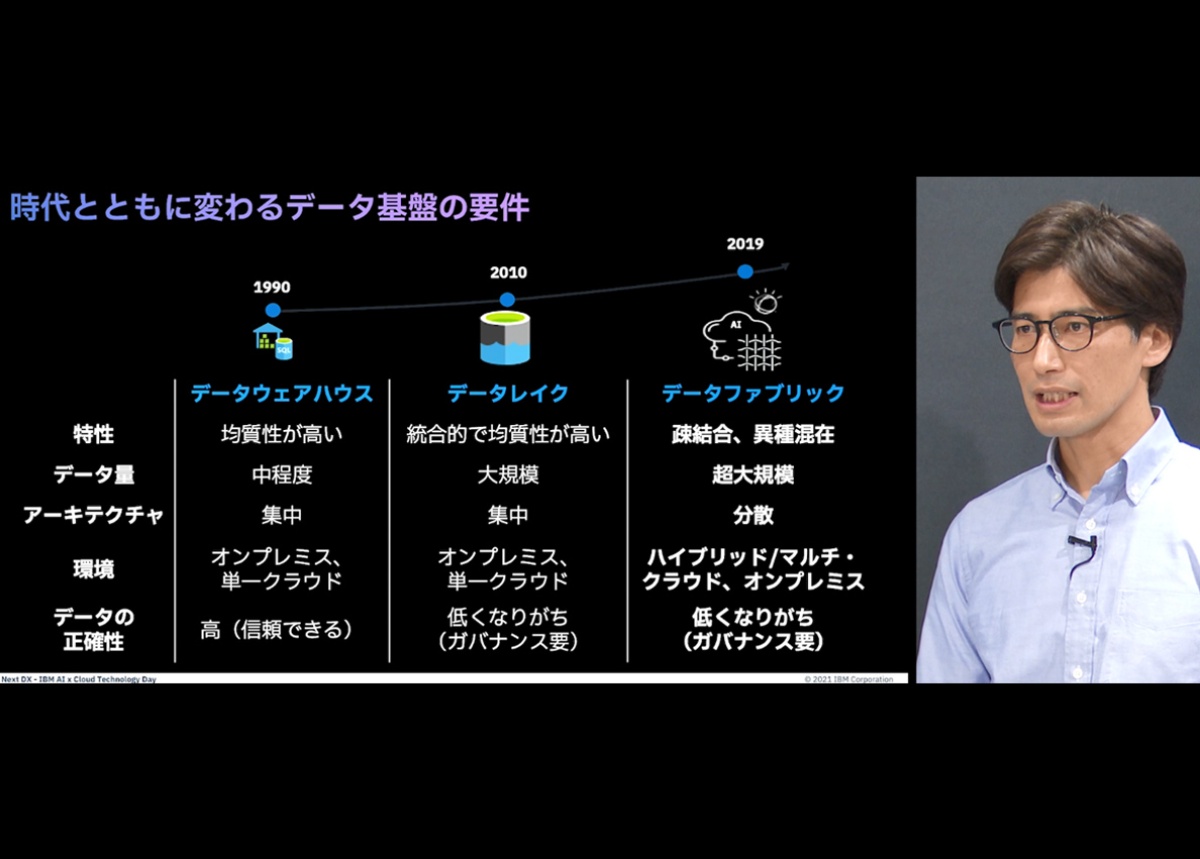
According to a report by Gartner , mesh data networks or data fabrics are one of the top 10 technology trends of 2019. Experts in the analytics and data technology field declare it to be a future-proof data management tool for technology startups, small businesses, and large enterprises.
It is considered an information technology environment with a uniform architecture that connects various data sources to business apps. On the backend, there is a powerful artificial intelligence (AI) agent. AI securely analyzes data and presents sales reps, customer support agents, or business managers with only the data they need to know.
From a bird’s-eye view, a mesh data network looks like a virtual fabric where various data storage and computing systems connect and share information.
Purpose of the data fabric

Hurdles such as various business apps, time, space, data storage, data retrieval methods, and data security protocols are the macro bottlenecks that hold companies back. These checks and balances also help protect a company’s sensitive data. Therefore, you cannot delete them or leave them alone.
A mesh data network is required here. A highway that paves the way for data from a variety of facilities, business apps, field offices, stores, servers, and more. Also, these data can be structured data, semi-structured data, and raw data. Needless to say, different data requires different levels of security policies.
However, end users such as customers, sales representatives, support executives, and managers don’t need to understand all of this. You just need secure access to your data to complete your tasks. Data Fabric enables this through automation, AI, and machine learning (ML).
Other notable objectives include:
- Connect to all your business data sources through containers and connectors
- Provides data integration and ingestion functionality within storage, apps, etc.
- Functions as a high-speed data foundation for big data analysis
- Unify data consumers and sources into one mesh network
- Provides hybrid data operations between private cloud, public cloud, multicloud, on-premises, and bare metal workstations.
Remedy tools to solve data management challenges
Companies spend more time deciding and approving data than processing it. Employees go through hundreds of email threads before getting approval to process their data.
This is a serious threat to the productivity of future-ready businesses. However, a data fabric can save your organization in the following ways:
- A single-window platform to access, transmit, store, and analyze all types of data.
- Everyone within the company has access to the data up to a certain level, but all data governance and regulatory policies are maintained.
- By allowing AI to process data before humans access it, the data becomes more trustworthy and easier to understand.
- Enable machine-to-machine or Internet of Things (IoT) communications to reduce human intervention for sensitive data.
- Easily respond to increases and decreases in applications, customer requests, internal data access tickets, and sudden inflows of large amounts of marketing data.
- Reduces business needs and dependencies on hosting traditional infrastructure, reducing costs.
- Get the most out of cloud technology by connecting all types of digital data sources in one place, protected by rigorous AI algorithms.
Ultimately, frontline agents will be able to retrieve data on the CRM faster and process customer requests faster. This increases customer trust and satisfaction with your business.
Data Fabric Benefits

Power your agile DevOps model
Agile software or product development projects can be significantly impacted by intermittent data processing issues. Onboarding a mesh data network tool can virtually eliminate all data downtime.
Compliance with data governance
The underlying AI and ML helps enforce data privacy and governance policies. Meanwhile, the same AI algorithm processes the requested data and presents it to the employee according to company guidelines.
Scalability
Managed service providers (MSPs) can instantly scale up or down your data processing needs.
Metadata management
A data analytics catalog hosts data sources, assets, and metadata. By checking metadata, AI can retrieve requested data faster.
error detection
AI can detect data corruption, integrity issues, and errors before your business suffers revenue loss.
Role-based access
Employees can request processed data depending on the security permissions within their organization.
Eliminate data silos
Data silos no longer threaten your business when your data fabric carries all your data on an encrypted data highway. Your team can access authorized data from any department without any hassle.
data integration
Data Fabric and its underlying AI enable instant data integration with real-time software such as CRM, ERP, customer apps, and frontline agent apps.
high quality data
Intelligent algorithms in mesh data network tools constantly analyze all data sources. Therefore, employees can trust the input data without verification from their superiors.
Data fabric architecture

Mesh data networks must improve data accessibility without compromising quality and security. Therefore, a standard data fabric architecture requires the following components:
data catalog
A data catalog is an organized format for all your business data. Users can access such catalogs to find the information they need to complete their tasks. The data catalog has meta data and knowledge graph subcomponents.
AI and ML-based automation
Multiple AIs need to be placed at the center of the data fabric, handling all query resolution, data quality control, security checks, and more.
Data integration and transfer
A data mesh integrates data from all sources, including on-site servers, cloud storage, and employee laptops. Moving data through the data fabric requires data connectors that link the information to distant computers or transporters.
How to implement a data fabric
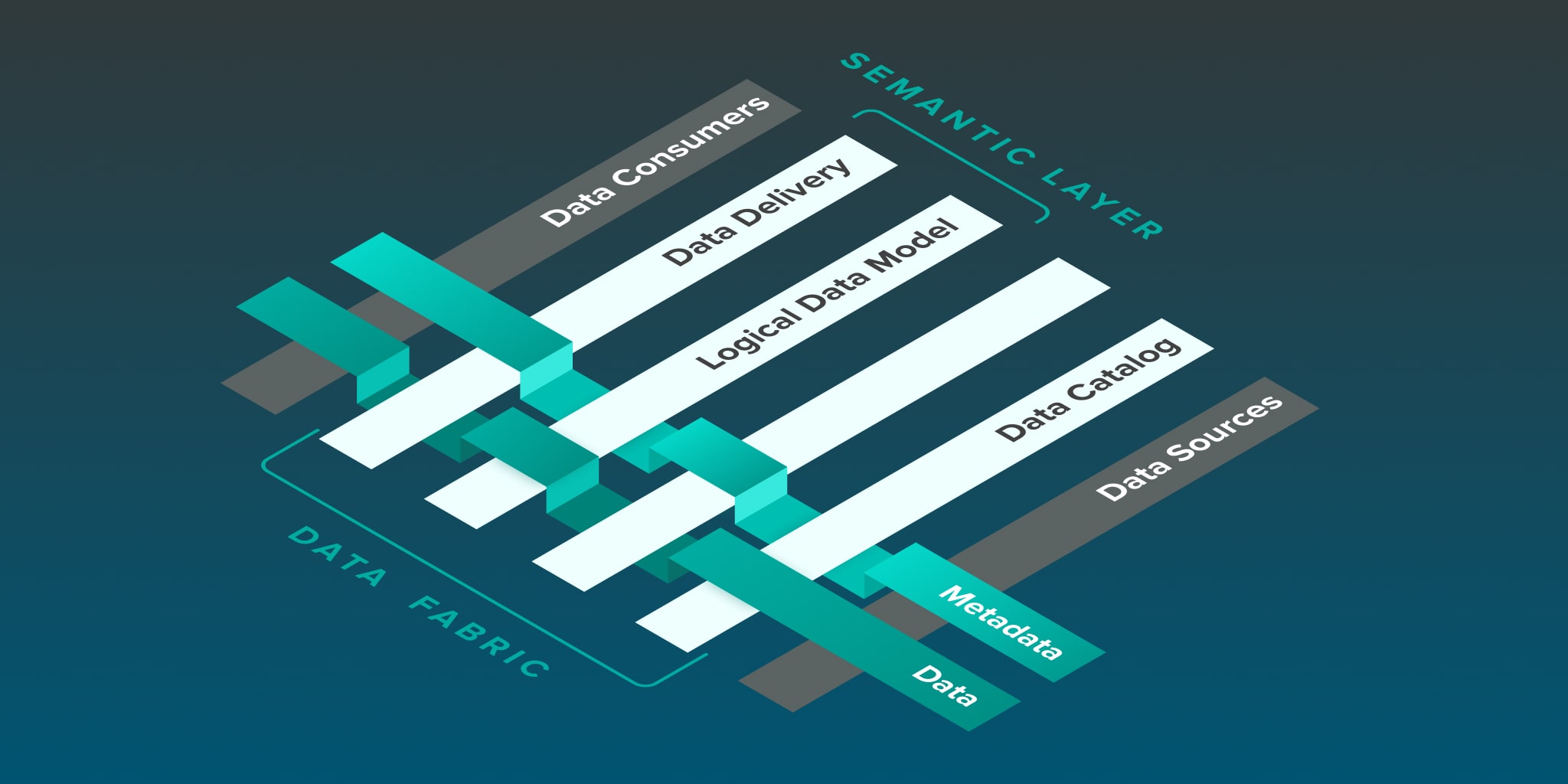
It depends on the type and needs of your organization. Because business requirements vary, there is no one-size-fits-all solution to implementing a mesh data network. However, data fabric architectures have some common features or layers.
Data management: This layer works for data security and governance.
Data ingestion: This layer begins stitching together all your cloud data, identifying how structured and unstructured data are connected.
Data processing: Ensures that relevant data is available during data extraction.
Data placement: This layer involves performing tasks such as collecting siled data, structuring the data, cleansing the data, integrating it, and transforming it to create usable data.
Data discovery: You can integrate various sources to collect data. It is very important for customer satisfaction.
Data Access: This layer is dedicated to data consumption. At the same time, this layer helps access relevant data through data visualization tools and application dashboards.
Data fabric principles
The concept of a mesh data network is to unify the distributed and diverse data assets of companies across all industries. Additionally, it combines end-to-end data management processes into a unified data management platform.
Data Fabric achieves these goals by leveraging the following data management principles:
- data discovery
- data curation
- Data structure
- data modeling
- quality check
- Siled data orchestration
- data integration
- data governance
Data fabric features
Solving endless data queries
Mesh data networks leverage high-speed internet, solid-state drives, and supercomputers to continuously retrieve requested data without downtime.
Endless data integration, discovery, and cataloging
The primary AI responsible for data management within the fabric must work around the clock to accept new raw data, analyze it, catalog it, and integrate it into business apps.
Passive and active metadata
Active metadata is information such as data quality, data usage, and current editor. Passive metadata, on the other hand, is static data promoted by the author. Data Fabric AI constantly changes these, reducing the effort of manual data exploration and preparation.
flexibility
The structure of the data is very flexible and accepts changes whenever the business requires it.
Popular data fabric tools
Intelligent software makes it easy to implement a data mesh network. There are quite a few, but here are some that are suitable for small businesses:
Atlan
Atlan is a powerful and simple active metadata platform and data workspace that allows you to easily access data from any source. It serves as a modern data catalog for your data fabric needs. The platform provides a full range of data solutions including cataloging, profiling, discovery, quality, governance, exploration, and integration.
It comes with an interface similar to the Google Search UI and a rich glossary of business terms that you can search to understand your data. Businesses can leverage gestures such as fine-grained governance and access controls to manage data usage across their ecosystem.
Additionally, Atlan supports integration with applications such as Big Query, Amazon Redshift, Snowflake, MYSQL, Looker, and Tableau.
K2View
If you are looking for a platform with end-to-end data fabric capabilities, we recommend K2View . This data product application supports all stages of mesh data networks, including data integration, preparation, data orchestration, and pipelining.
With its help, enterprises can achieve the most sophisticated data fabric architectures in cloud, on-premises, and hybrid environments. The result is easier data fabric deployment and reduced human data management. You can integrate data from multiple sources and pipeline them to a data integrity target system.
K2View allows you to instantly create data lakes and data warehouses that are ready for analysis. Control the movement and transformation of data from source to target without any coding experience.
Businesses can also control data access, synchronization, and security using the platform’s configurable rules. Additionally, it is suitable for automating data services with an easy-to-use framework.
Teilund
Talend is a data fabric platform that helps you drive business value while ensuring healthy access to your data. Every business needs to manage complete, uncompromised data while ensuring ease of use, integrity, availability and security. This application allows organizations to reduce risk and keep their data in good condition.
Talend is a unified platform for trusted, accessible data that provides governance, integration, and integrity. With the help of our service infrastructure and partner ecosystem, we can provide you with healthy data. Here you can find the data you need through documentation and classification.
It automatically cleans up your data in real-time, so there’s no chance of bad data entering your system. Businesses can increase productivity and save money with this tool that ensures regulatory compliance and reduces risk.
You can use application and API integration to provide a better experience for your customers. These also ensure self-service capabilities for sharing trusted data internally and externally.
incorta
Incorta is a self-service data analytics platform that allows businesses to make the most of their data, reduce costs and gain insights. This solution provides a more agile data experience, allowing you to make timely and informed decisions.
Achieve unprecedented speed and scalability in data storage and management with in-memory analytics and direct data mapping capabilities. Even if you want to analyze data from multiple resources, Incorta enables true business agility with flexible data pipelines.
Additionally, it helps in data collection, processing, analysis, and presentation of business application data. You can also display business data in full fidelity using native visualization capabilities.
conclusion
Data Fabric is the next generation data storage, processing, storage, and management architecture. This is a forward-looking IT application, and many digital companies are already using data fabric tools to prepare their employees for the future.
Needless to say, small ventures, midsize companies, and startups can benefit the most from this technology as they cannot afford to have their workflows delayed by approvals or scrutiny. Visit any or all of the tools listed above to see what they offer and how their features can add value to your business.
RevOps business models can greatly benefit from a data fabric. Learn more about Revenue Operations (RevOps) tools.


![How to set up a Raspberry Pi web server in 2021 [Guide]](https://i0.wp.com/pcmanabu.com/wp-content/uploads/2019/10/web-server-02-309x198.png?w=1200&resize=1200,0&ssl=1)


