Get ready to learn all about the next generation of databases: serverless databases.
Any database that adheres to the core principles of serverless computing is a serverless database. Serverless databases were created for workloads that can be unpredictable and rapidly changing.
Serverless doesn’t mean you don’t need a server. This means you don’t have to manage, provision, or pay for any underlying servers.
You pay for the resources you use based on the amount and activity of your CPU and RAM.
How serverless databases work
Serverless database models rely on the separation of processing and storage. You need to create an endpoint and set the minimum and maximum capacity.
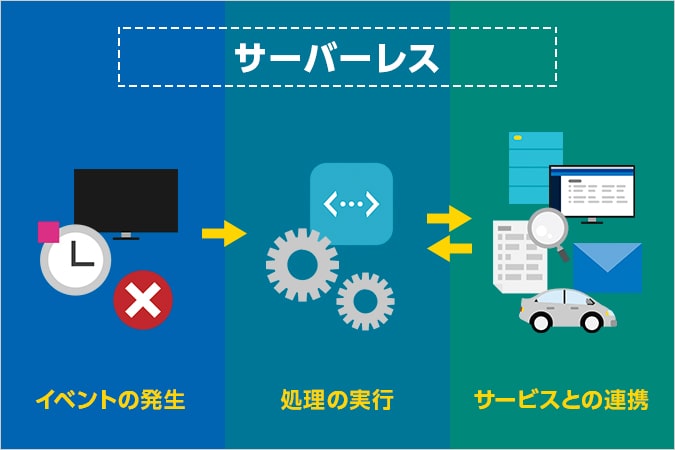
You can then query the endpoint. This proxy acts as a link to a number of database resources. This ensures that the connection remains intact even if the scaling operation occurs in the background.
Separating storage from processing has another benefit. You can even scale down your processing to zero, and you only need to pay for storage. Depending on your application, scaling can be done in as little as 5 seconds. You also have access to a pool of “warm” resources that can help meet your needs.
Serverless database: benefits
cost efficiency
A fixed number of servers costs more and takes longer to purchase than a serverless database. It is less expensive than setting up autoscaling groups, and is also cost-effective because bin packing of machine resources improves efficiency.
This includes licensing, installation, maintenance, support, and patching. You only pay for the time and memory used to run your code.
automated scalability
Developers do not need to configure or set up autoscaling policies or systems to achieve serverless scaling based on their workloads. This all falls on the shoulders of the cloud provider, who must meet real-world demands with adequate performance capabilities.
Rapid deployment and updates
Serverless infrastructure eliminates the need to upload code to a server or configure backend settings to create a working application. It’s easy for developers to upload a small piece of code and release a new product. Developers can upload both codes at once and upload one function at a time.
This makes it easy to update, patch, fix, or add new features to your app. Developers can make small changes to their applications instead of updating the entire application.
Improved productivity
Get more out of your serverless systems by spending less time with them, reducing effort in areas that require interaction, and hiring an optimally sized team of experts to achieve better results. You can get it.
Serverless database: disadvantages
Cold start problem
Handling cold starts is one of the most important and difficult aspects in this field. Serverless databases that are not in use are idle to conserve resources and prevent unnecessary performance.
It takes a while for the system to “wake up” and restart all processes. If you are touching the system for the first time during a cold start, you may experience delays and poor response times.
Difficult to test and debug applications
Serverless models present other challenges. It is difficult to replicate a serverless environment to test and monitor the performance of your code before it goes live. This is partly due to developers not having access to the cloud provider’s backend services.
To debug complex systems in detail and efficiently, you cannot use profilers or debuggers. You also have the option to try third-party tools that are available in the market.
Further monitoring
Serverless solutions should focus on monitoring and pointing out performance issues and resource overuse. This is primarily due to the fact that cloud solutions are rarely open source.
vendor lock-in
If you move to another provider, choosing a serverless model can cause problems. This is because each provider has different workflows and capabilities.
Characteristics of serverless database
Serverless databases offer some of the most attractive features, including:
#1.Multi -tenant architecture
Serverless databases have the advantage of having a single pool of resources that can be used for multiple projects within your organization. This is a big advantage for developers, as they don’t have to create application-specific siled data sources.
Multi-tenant architecture makes this possible. Developers can set up, configure, and deploy multiple applications within a single database cluster.

#2.Regional distribution
Most businesses operate on a global basis, so having data available around the world is essential. Proximity to data centers enhances the real-time experience. Points of failure are also eliminated, making outages much less likely.
Serverless databases allow you to replicate multiple data sets around the world without additional tools or custom development.
#3.Little to no manual server management
Serverless is a misnomer. It is a collection of servers that has been abstracted and automated for ease of management. All manual tasks such as provisioning, capacity planning, scaling, maintenance, and updates continue to run in the background. It is very easy to use and requires little or no manual intervention.
#4.Pay -as-you-go system
Serverless databases are the most cost-effective because you pay based on usage. No storage required. You only pay for what you use. If you want to avoid going over budget, you can set spending limits.
Relational and non-relational serverless databases

Data in the digital age can be categorized into operational data and analytical data. Let’s take a look at some of the different database options available to developers and see how they compare.
Most companies require OLTP (operational) and OLAP (analytical) systems to store data. You can use relational or non-relational databases to support your business needs.
relational serverless database
A relational database is a database type that organizes and collects data according to predefined relationships between key data points. Organizing data allows multiple users to search and sort data without changing the logical data classification.
Eliminate data duplication in storage processes. Structured Query Language is an application program interface (API) for relational databanks.
This system displays data in tabular format. This table represents entities such as products and mobile apps. Each row is an actual value, and each row has a unique identifier that is an instance of an entity of this type. That’s why it’s called a record.
Columns, on the other hand, hold attributes of data. These are the actual values of the entity. Data can be accessed without reorganizing database tables.
NoSQL (non-relational) serverless database
Non-relational databases (NoSQL) are more likely to be distributed than SQL databases. Can be used with many databases. Businesses need to build cloud-native applications using modern features such as NoSQL databases.
NoSQL serverless databases are used in real-time web apps. It has a simple design and can scale horizontally to quickly process large amounts of data. This is ideal when the schema is unclear and high ingestion rates are required.
NoSQL serverless databases are extremely popular because they store large amounts of data in a variety of formats, including graphs, documents, key-value pairs, and column-oriented data structures. This allows developers to easily modify data structures.
Why should you use a serverless database?
Serverless databases are a great option for small teams that don’t have enough staff to manage and scale traditional databases. Serverless databases require little infrastructure or maintenance. This means your team spends less time maintaining the system. It’s also easy to create new tables and test new features using a serverless database.
Finally, there’s cost. Serverless databases allow you to pay only for what you use, without having to configure and fine-tune costs like traditional databases. Serverless databases are ideal for developers and teams that need to release new features quickly.
Examples of using serverless databases

#1.New application
Use for a few minutes throughout the week or day. If you have a blog with low traffic and only want to pay for the time a user spends on your site, this is an option for you. Pay per second for the database resources you use.
#2.Flexible resizing for live video broadcasts
Live video broadcasting is made possible by serverless architecture. Multiple audience members can interact in live video broadcast scenarios. The host can connect to multiple microphones at the same time. Hosts can connect multiple audience members or friends to their screens, composite the images into a single scenario, and present it to a live stream audience.
#3.Infrequently used applications
If you have an app that you’re confident in, but aren’t sure how it will be received and don’t want it to fail, this method is for you. Simply create an endpoint, and your serverless database automatically scales to meet your application’s needs.
# 4.Internet of Things (IoT)
IoT can be described as a term that describes the devices in today’s homes that can connect to the Internet and perform various functions. FaaS is increasingly being used to perform tasks on these devices. Send and receive data only when an event triggers it.
Businesses save money because they don’t have to pay extra for computing power they aren’t using. FaaS allows you to scale quickly and automatically, so developers don’t have to worry about unpredictable usage patterns.
conclusion
These scenarios demonstrate that serverless architecture has many benefits for developers and enterprises. Serverless databases can improve the speed and resiliency of computing while reducing the time and cost of scaling and resources. There are many different types of serverless databases, both relational and non-relational. However, they all have the same goal. It simply scales on demand and reduces costs without adding any administrative burden.


![How to set up a Raspberry Pi web server in 2021 [Guide]](https://i0.wp.com/pcmanabu.com/wp-content/uploads/2019/10/web-server-02-309x198.png?w=1200&resize=1200,0&ssl=1)


