Bring the Internet of Things (IoT) to your business with digital intelligence from smart devices, sensors, and ambient computing.
All technology aims to make humanity’s daily life easier. You’re already experiencing the convenience of smart devices like Amazon Echo, Google Nest, and more at work, home, and shopping.
But Silicon Valley isn’t going to stop there. IoT developers around the world are trying to make these devices more accessible, easier to use, and more invisible. This is where ambient computing comes into play. There’s a web of computing devices all around you, interacting with you and delivering content, but you don’t feel surrounded by machines.
If you are in the IT field, you need to know about ambient intelligence to develop solutions and apply it to your business and life. Read this article to learn context-aware computing before your competitors.
What is ambient computing?
Ambient computing is an application of pervasive computing that introduces smartness into business and living environments. This technology will make the computing devices around you in your home, office, manufacturing facility, and more smarter.
There’s no need to manage different devices from different apps or hardware interfaces. Smart devices will become more adaptable, sensitive, autonomous, and actively interact with users.
In other words, ambient computing is the ultimate personalization of computing for human needs.
Alternative industry names are:
- Ambient Intelligence (AmI)
- Context-aware computing
- ubiquitous computing
- invisible computing
At its core, some smart sensors and actuators can understand your preferences and presence. Sensors notify a series of smart devices to perform tasks, such as automatically adjusting the room temperature when you enter your home.
In a business environment, the ERP system automatically starts updating inventory as soon as supply trucks arrive at the warehouse and begin unloading.
Ambient intelligence eliminates the need to constantly interact with a keyboard, mouse, or vertical monitor.
Just walk around your home or office environment and do what you do best. Smart devices ensure you have access to the apps, content, computing devices, cloud storage, and more you need. This eliminates friction between the computer and the user.
How does ambient computing work?

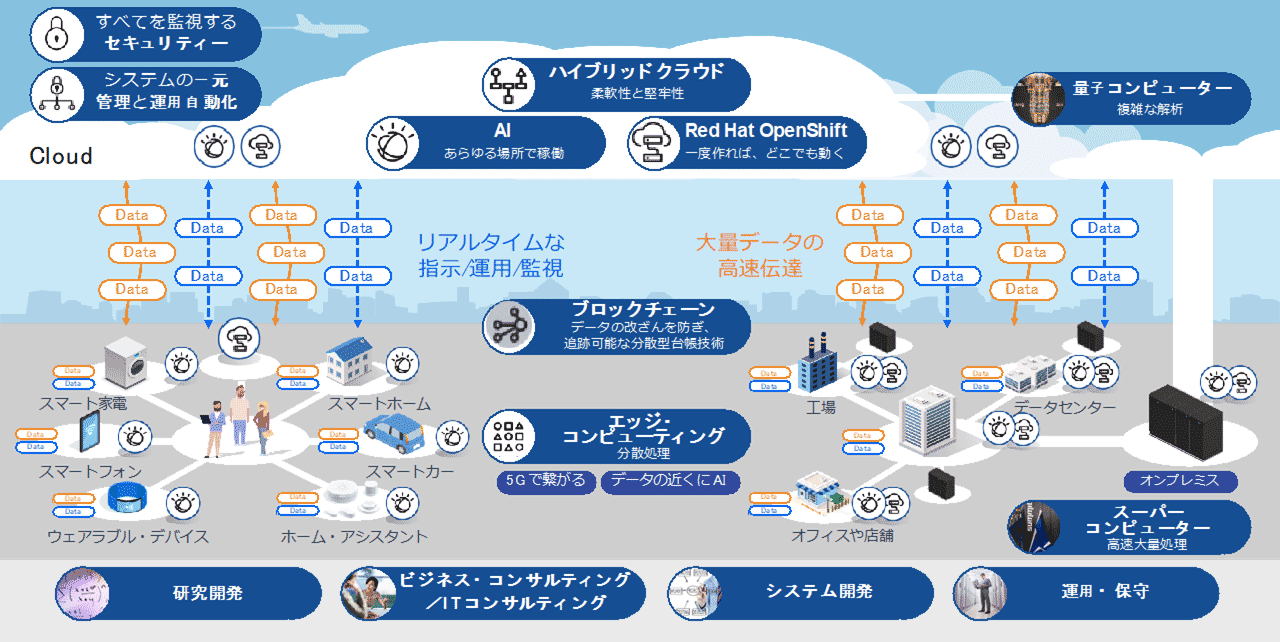
Ambient computing is a clever combination of software, databases, high-speed internet networks, smart devices, and human or machine users. It operates all around us through near-field and long-range communication between sensors, actuators, and task-executing machines.
Invisible computing is the highest level of computing where motion, wave, radar, thermal, biometric, speed, and other sensors constantly collect user data. The collected data is then analyzed through edge analytics to perform the tasks you want these smart devices to perform.
For example, when you enter a smart conference room, an AI conferencing app automatically authenticates you to the conferencing app by scanning your retina or face. The AI will also start delivering relevant content depending on the meeting topic.
The components of ambient intelligence that perform all invisible tasks are:
#1.Machine learning (ML)
AmI systems require robust ML algorithms so that smart devices can learn from users’ behaviors, preferences, choices, and more. With ML, you don’t need to program your system or connected devices.
#2.Artificial intelligence (AI)
AI algorithms give AmI systems the power they need to analyze data, read documents, detect images, understand patterns, and more.
#3.Edge computing
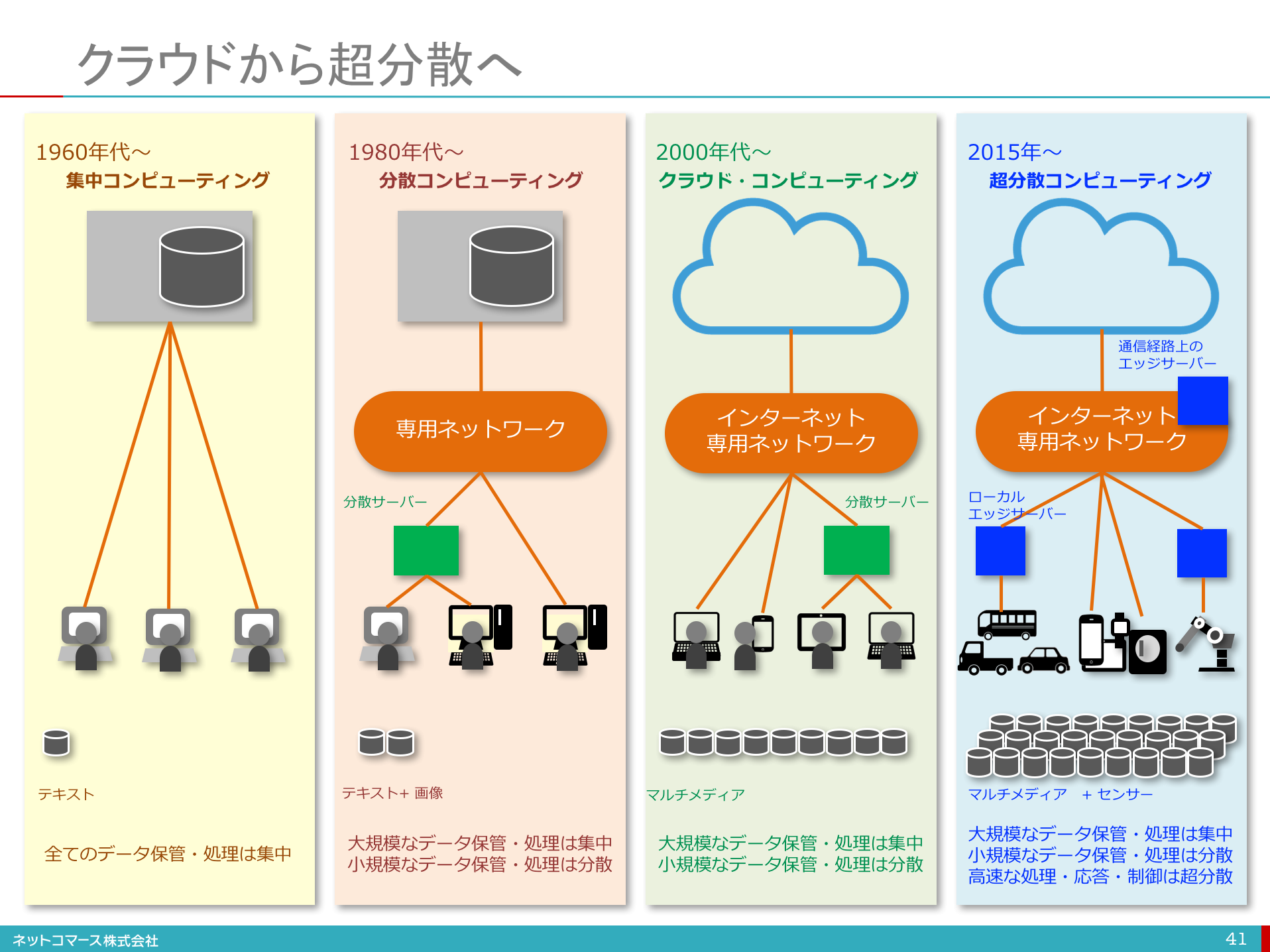
Edge computing and analytics move processing capabilities closer to devices that collect data from central cloud servers and perform tasks.
#4.Natural Language Processing (NLP)
NLP helps ambient computing systems listen to the user’s language, understand their needs, and respond by turning on a light bulb or delivering content.
#5.Wireless mesh network
Mesh networks allow all smart devices, sensors, and users to have continuous internet access within different rooms of your office or home. 5G mobile communications can replace mesh networks in public places.
Characteristics of ambient computing

The main feature of ambient computing is the ability to seamlessly compute at work, home, and public places without the hassle of manual input. When you speak, touch, or wave, your smart device knows what to do. Other notable features include:
inclusivity
Ambient computing systems integrate all digital devices, networks, and applications. For example, customer support agents can get all the information they need within chat and calling apps without using a knowledge base or CRM.
can’t see
Ubiquitous computing is about minimizing the presence of computer gadgets, routers, and wires. For example, a home thermostat or an AI conferencing device at work silently performs its tasks. If you don’t look for it, you probably won’t find it.
embedded
Ambient computing is about combining intelligence, data connectivity, conditional programming, and machine learning into one small app or gadget. Amazon Echo can control various smart devices and apps in your home through its built-in features.
data driven
Context-aware computing relies on continuous data access from multiple cloud servers. Connected IoT devices always share data between themselves.
easy to use
Control the computing systems around you with just a touch, a gesture, or a speech. Keyboards, mice, screens, etc. become obsolete.
Minimal user interface (UI)
Ambient intelligence has no UI. Various sensors recognize your presence and gesture commands.
context aware
Ambient computing systems are highly intelligent and can change their behavior depending on the environment and context. For example, an AI meeting app can take notes as soon as the meeting starts.
adaptive
Ambient computing IoT devices and apps can automatically adapt to changing conditions.
anticipatory
Ubiquitous computing’s AI/ML capabilities learn from user responses. If you want to set your room temperature to 70 degrees F after November, your smart thermostat will do it automatically. No need to manually change HVAC temperatures.
personalized
Context-aware computing provides personalized content and suggestions. It recognizes whether you have guests in your home and starts displaying public content on your smart TV accordingly.
Ambient computing example
automated business meetings
The Cisco Webex app can detect ultrasound from conference room hardware using your phone, tablet, or laptop’s speakers. So, once the meeting starts, everyone can sync their devices with the meeting room screen for presentation purposes.
smart office equipment

Companies reduce their carbon footprint by using AmI systems to control HVAC, interior lighting, conference room equipment, kitchen appliances, water heaters, and more.
An efficient AmI can sense occupancy levels in office rooms and the entire building and adjust equipment to minimize utility costs.
AI workplace assistant
Smart AI-based work assistant apps help you take notes, transcribe meetings, create agendas, schedule work, and more. Some advanced assistants can even plan entire projects by analyzing and learning from old projects and templates.
smart chatbot
A smart customer care chat app can significantly reduce live agent overhead costs. One chatbot can serve many customers, resolve tickets, accept tickets, upsell products, and more.
automatic service scheduling
Smart sensors in production facilities can detect wear and tear on equipment and moving parts. Depending on performance fluctuations, such sensors can send commands to a central app for maintenance scheduling.
smart utility control
Ambient computing can efficiently control electricity, gas, and water supplies throughout a city without human intervention. It can learn from usage statistics and move resources from one location to another to balance the load accordingly.
Ambient computing: The current state of affairs
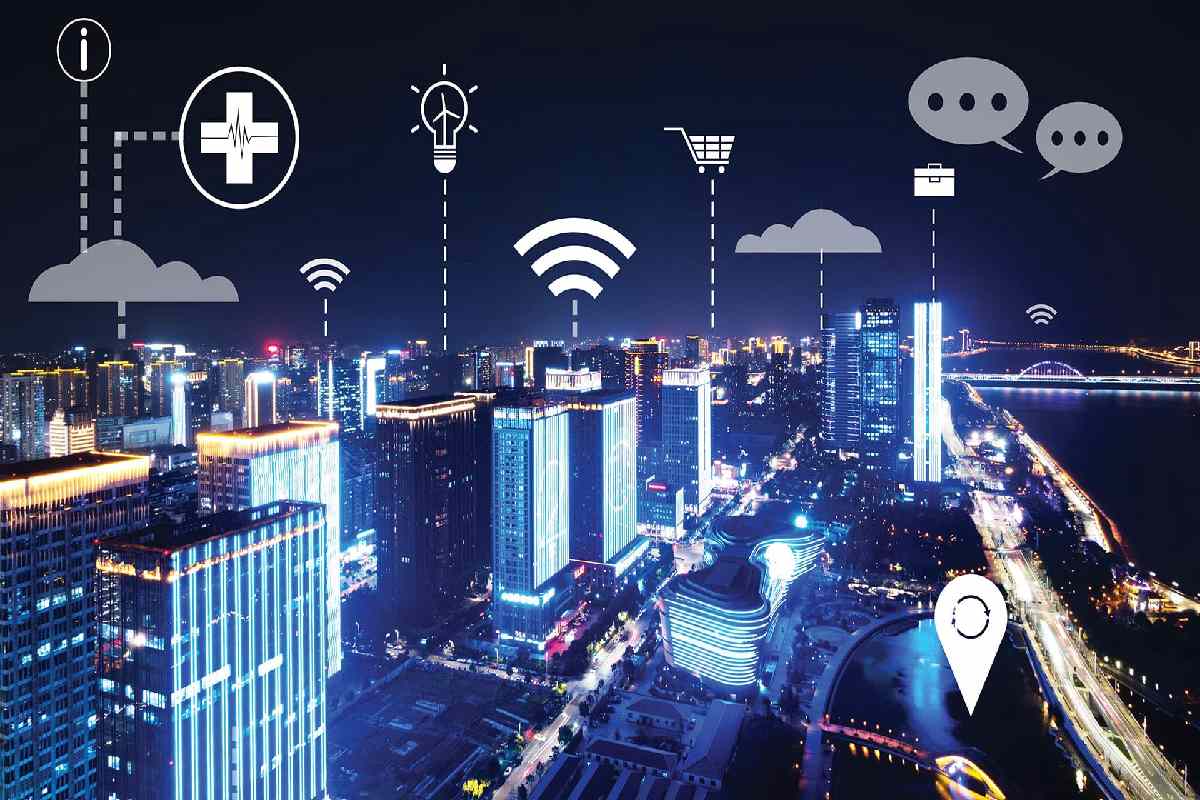
Context-aware computing researchers and developers are currently working to create more affordable and energy-efficient smart gadgets to support smart homes and offices.
Essentially, smart speakers, AI assistants, smart but small home appliances, and smart cars are key elements that interact with human users.
On an experimental level, the healthcare industry is also using ambient intelligence systems to transform its service and research and development departments.
Ambient computing trends
Today’s AmI systems are specialized for smart homes, automobiles, and workplaces. For example, Amazon Echo Show and Google Nest Hub can control a variety of home-based smart devices. These IoT gadgets include thermostats, smart lights, smart door locks, smart security cameras, smart outdoor lighting, smart blinds, smart kitchen appliances, and more.
In the workplace, Alexa for business, Cisco Webex, etc. primarily control workplace equipment and business meetings.
With iOS Handoff, you can start using business apps like email clients, CRM, project management, payroll, and more on one of your work devices. When you move between seats or attend a business meeting, you can use iOS Handoff to wirelessly display apps on an ultrawide monitor.
But ubiquitous computing has yet to enter areas where it can create more value, such as manufacturing, supply chains, banking, finance, and trade.
Ambient computing: learning resources
So far, you have learned the basic and intermediate concepts of ambient intelligence. To be able to develop AmI solutions, you need to explore further technical knowledge.
Browse the online courses and books below to find what you need to become an AmI expert.
# 1.Ambient Computing: Udemy
Ambient Computing on Udemy is a modern, affordable online course to learn Ambient Intelligence. Coursework includes self-paced content that you can study online anytime, anywhere.
If you understand the basics of cloud computing, IoT, and computing, you’re eligible to sign up. Coursework covers fundamentals, applications, user experience, market dynamics, AmI design and architecture, and more.
If you’re a developer, network engineer, business professional, or business decision maker, you should check out our Udemy courses.
#2. A guide to ambient intelligence in IoT environments
The Ambient Intelligence Guide describes the AmI elements of IoT. We also discuss related frameworks, principles, and technologies. Not to mention, you’ll also learn about the challenges and benefits of ubiquitous computing.
| preview | product | evaluation | price | |
|---|---|---|---|---|
 | A Guide to Ambient Intelligence in IoT Environments: Principles, Technologies, Applications… | $27.09 | Buy on Amazon |
Most sections cover pervasive computing, device connectivity, and context modeling. Context modeling includes many technical topics for IoT development, such as security, communication, scalability, interoperability, and adaptability.
If you’re looking for the latest trends, case studies, and research in ambient intelligence, try this book in Kindle or hardcover.
#3.Recent advances in environmental intelligence
Want to specialize in context-aware computing and ambient intelligence? Check out recent advances in ambient intelligence on Amazon. This book is available in three versions: digital, paperback, and hardcover.
| preview | product | evaluation | price | |
|---|---|---|---|---|
 | Recent advances in ambient intelligence and context-aware computing | $132.05 | Buy on Amazon |
This book is suitable for network developers, network researchers, graduate students, business professionals, or IT engineers.
Intelligent algorithms in ambient and biomedical computing
Philips held a symposium on AI algorithms in Eindhoven. This book brings together all the applications of intelligent algorithms discussed at the symposium.
| preview | product | evaluation | price | |
|---|---|---|---|---|
 | Intelligent Algorithms in Ambient and Biomedical Computing (Philips Research Book Series 7) | $95.47 | Buy on Amazon |
This book touches on concepts related to ambient computing, such as database design, video summarization, machine consciousness, semantic reasoning, tracking and localization, and machine-to-machine communication.
Ambient Intelligence and the Internet of Things
Ambient Intelligence and IoT is a comprehensive book for learning AmI from detailed to advanced levels.
You must read this book to learn the basic structure of innovative IoT technology and AmI concepts. In addition to theoretical knowledge, you will also learn practical applications and AmI projects that are relevant today.
| preview | product | evaluation | price | |
|---|---|---|---|---|
 | Ambient Intelligence and the Internet of Things: Convergent Technologies | $180.00 | Buy on Amazon |
You can access the e-book version on Kindle. However, if you prefer hardcover books, you can get the original version.
summary
Now you know what ambient computing is. We also know about its features, working methods, use cases and current trends.
Context-aware computing can help you make the most of IoT to improve your business’s bottom line and the comfort level of your home life. It promises to make intelligent computing interactive, responsive, and clean. No need to jump between many apps, devices, lines, and subscription dates to remember.
Interested in developing a solution based on this concept? Try the resources presented in this article to learn the basics of ambient intelligence and become a pioneer in this niche.
Next is the AI API platform and the AI platform that develops smart solutions for ubiquitous computing.


![How to set up a Raspberry Pi web server in 2021 [Guide]](https://i0.wp.com/pcmanabu.com/wp-content/uploads/2019/10/web-server-02-309x198.png?w=1200&resize=1200,0&ssl=1)


