Understanding the difference between goals and objectives can be of great help in your professional life. You must be able to distinguish between objectives and goals, especially if you are in a supervisory or leadership position.
Goals and objectives help you achieve growth and development. At this point, people tend to confuse the two. In this article, we will clearly compare goals and objectives to understand the difference from the basic level.

What is a goal?
Goals are steps you take to achieve a goal in your personal or professional life. Goals should always be measurable tasks. If you can’t evaluate your goals, you won’t know if you’ll achieve them.
Companies set the goal of having readily available data for reporting and presentations. For example, let’s say you set the following goals for your sales and marketing teams:
- Increase lead conversion rate to 10%
- Generated 5% more leads compared to September 2022
- 10% of users are directed to shopping cart, rising to over 5% from September 2022
The above tasks involve a lot of business data. You can easily include these in your business reports to impress managers, clients, and more.
Examples of goals: personal and business
personal goals
#1.Improve productivity
- Use your commute time to listen to an hour of Spanish lessons.
- Write 500 words in an hour instead of the usual 300.
#2.Manage your time efficiently
- Minimize your daily entertainment content consumption by one hour.
- Limit your social media activity to 30 minutes.
#3.Improve communication
- Practice online writing challenges for 30 minutes every day.
- Speak in a foreign language at home for one hour a week.
#4.Skill improvement
- I take a 2 hour coding class a week on Udemy.
- Take a 5-hour GRE prep course per week.
business goals
#1.Business revenue
- Revenue increased 15% compared to the previous quarter.
- Profit after tax (PAT) for the current financial year remains at $10 million.
#2.Sales and Marketing
- Increase your brand’s market share by 3% this year.
- Connect with 10 local communities and discover product promotion opportunities.
- Boost your email marketing campaign by 20% over last year.
#3.Human resources
- Reduce churn by 10%.
- Increase overall employee productivity by 20%.
- Enroll at least 25% of your sales and marketing employees in upskilling programs.
#4.Strengthening technology
- Implement CRM and ERP usage for 50% of employees by next quarter.
- Upgrade 25% of manufacturing units with robotic process automation by next year.
#5.Research and development
- Invest 25% of your R&D budget into improving your product or service.
- R&D builds five new apps or services every quarter.
#6.Accounting and finance
- Reduce accounting and financial errors by 5%.
- Deploy automated accounting tools to 100% of employees in the accounting section.
Goal setting guidelines
#1.Objective classification
You should categorize your goals into four categories:
- Basics: Goals that help you run your business on a regular basis.
- Excellent: These tasks require additional team effort.
- Derived: Goals that affect teams, departments, or individual employees.
- Major: These are organizational goals that help grow your business.
#2.Select an area
You should also categorize your business into departments such as marketing, sales, human resources, accounting, production, and customer service. Next, you need to set derived goals for these sections according to your primary goal.
Don’t forget to involve experts from each department when setting goals.
#3.Coordination with each department
Achieving key goals across the organization requires all business units to achieve their goals. However, it turns out that the objectives of some derivatives are interrelated.
Two or more sections must work together to achieve an objective. Therefore, key people for collaboration should be selected from all departments.
#4.Choose only realistic goals
You can’t just set a goal that will stress out your team members and cause the entire project to fail. You need to set realistic tasks that your employees can accomplish. Before setting business goals, consider the skills and productivity levels of your team members.
# 5.Leave room for adjustment
A goal is a number that you expect to achieve in the future. Any changes to your team, such as someone leaving the company or hiring a trainee, will delay the achievement of your goals.
Therefore, if your goal is longer than one month, adjust the parameters according to your department’s situation.
What is a goal?
Goals are objectives that individuals set in their lives and strive to achieve in the future. Similarly, companies and teams set goals to transform themselves or become more competitive in future markets.
Goals are long-term, at least 3-5 years. To achieve the goals you have set for your business, you will need to complete several tasks within this period.
Businesses view objectives as targets, outcomes, or endpoints that an organization must achieve in order to survive in the market. On the other hand, some companies set the goal of expanding their activities globally and locally and becoming business leaders.
Organizations reflect their business objectives through mission statements. This statement primarily explains the reason for the company’s existence and its purpose, both of which ultimately lead to one or more goals. In some cases, a vision statement can also clarify your company’s goals.
Examples of goals: personal and business
personal goals
#1.Educational goals
- Pass the SAT exam and get admitted to top schools.
- Prepare for the MCAT exam, pass it and become a medical student.
#2.Career goal
- Securing an internship as a programmer trainee at Google.
- Once you pass the CSPO certification, you will become a Senior Product Manager.
#3.Financial goals
- Invest $XX million in secured bonds and earn stable income.
- Save $XX million for retirement by age 55.
business goals
#1.Business growth
- You may want to set a goal for an overseas manufacturing facility by the end of 2025.
- You run a social media app platform and are currently setting a goal to get into the OTT video content business by 2025.
- Establish a Google advertising service provision division by 2024.
#2.Finance
- It will be listed on the New York Stock Exchange by 2026.
- Obtain $1 billion in Series A funding by the end of 2024.
- Raise $5 billion in Series B funding by 2027.
#3.Business process
- Implement advanced software development processes such as Agile, Scrum, and DevOps.
- Transform your customer service team with automated chatbots and ticketing apps.
#4.Human resources
- Develop at least five managers and leaders for succession planning.
- Upskill, the programming team, plans to have at least 10 full-stack developers by next year.
#5.Time based
- Short-term goals include increasing website subscribers by 25% in two months.
- Long-term goals, such as converting 50% of your website traffic into newsletter subscribers by the next three years.
#6.Corporate social responsibility
- Make your production factory carbon neutral.
- Increase workforce diversity.
- Reduce greenhouse gas emissions by 50% over the next 10 years.
Goal setting guidelines
#1. Clearly define your goals
You need to clearly articulate your business goals in a paper, Word, or Google Doc. Once drafted, approve the goals in a business meeting so all parties know what needs to be accomplished.
The goals document should also be shared with all responsible parties.
#2.Don’t set goals that are too complex
Goals should not be too complex. If achieving a goal seems too complicated, break it into multiple goals. The ultimate goal is to set goals that everyone involved understands.
#3.Set achievable goals
You can set ambitious goals, but you must do so within limits. Goals must be achievable according to current market conditions.
#4.Set responsibilities
As a business leader, if you manage multiple business goals, delegate some of the goals to subordinate managers.
#5.The goal must be teamwork
Business objectives may require the involvement of all or some departments. Don’t set goals that only affect one department.
#6. Set SMART goals
Because goal setting is essential to business growth, professional business managers developed the SMART goal theory. This concept requires that goals have the following characteristics:
- specific
- measurable
- achievable
- related
- There is a time limit
objective vs. objective

#1.Order
Goals are at a higher level than objectives.
#2.Alignment
An organization’s goals define its vision and mission in the industry. On the contrary, goals exist to achieve goals.
#3.Quantification
Goals are usually abstract. It may not always be possible to quantify your goals. However, you need to set goals that are measurable and quantifiable.
#4.Range
Business objectives are broader in scope than business objectives. Goals exist across the business, but different departments have goals to achieve this overarching goal.
#5.Summary of specific responsibilities
Goals are simply a statement of a company’s intentions. You don’t always specify the underlying task. Conversely, goals are always descriptive and task-specific.
#6.Tangible or intangible?
Goals may be intangible. For example, get your app to market faster. On the contrary, the goal is clear. For example, reduce your app’s time to market by 10 days.
#7. Period until completion
Goals are a long-term concept. For example, goals for 2 years, goals for 3 years, etc. Goals, on the other hand, are short-term, such as days, weeks, or months.
#8.Language of goals and objective descriptions
You need to explain your business goals with conceptual thinking. On the contrary, companies describe their goals in creative, technical, and problem-solving language.
Below is a simple table of goals and objectives.
| Comparison function | the goal | the purpose |
| meaning | A short statement that describes your long-term business or personal goals. | A task completed to achieve a business or personal goal. |
| order | The goal is the highest | goals come after goals |
| range | The scope of the goal is broader. | Goal scope narrows |
| period | The goal is 2-3 years or more | Goals last days, weeks, months |
| person in charge | business leaders and owners | Team leaders and department managers |
| basics | conceptual | fact |
| Initiatives to achieve this goal | it depends on the purpose | independent of goals |
| Quantification | Usually not quantifiable | always quantifiable |
| material | abstract | materialistic |
| alignment | Company mission and vision | Align with business goals |
What will your goals and objectives be? Purpose Would you like to work together to improve your business results?
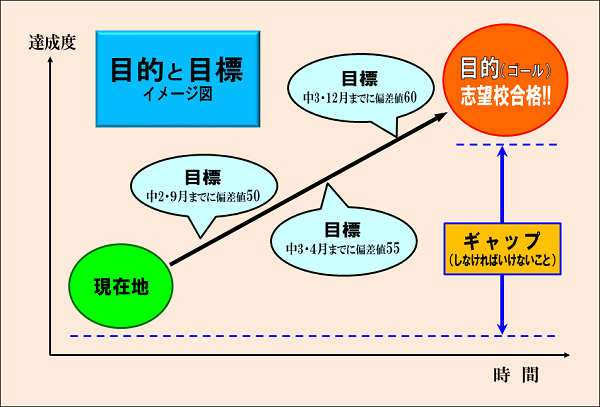
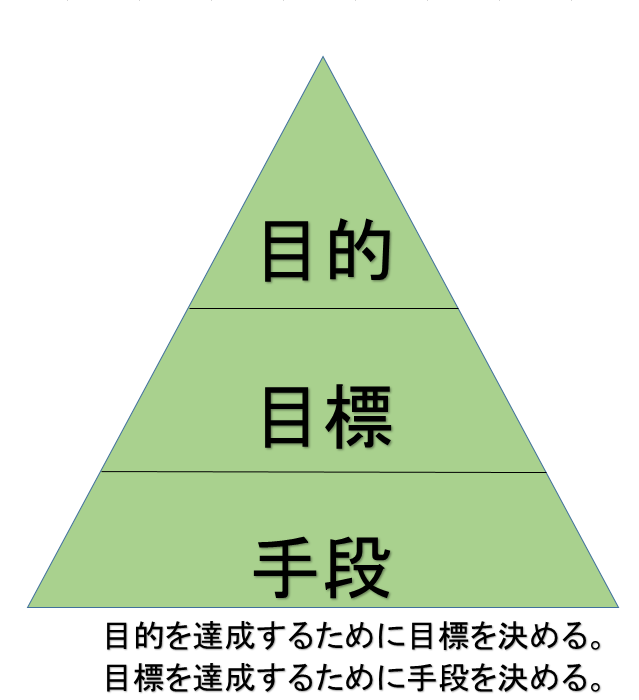
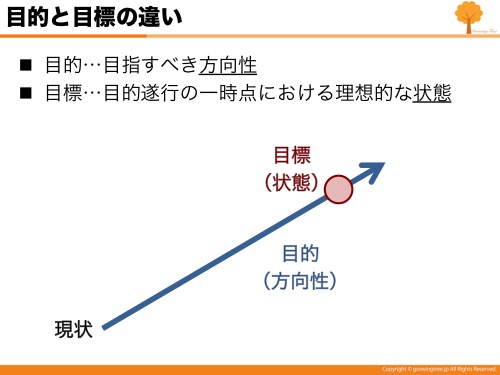
A goal is a destination, and a goal is a path to get there. Goals and objectives are related concepts, so they always appear one after the other. Here’s how to sync them for better results:
#1.Looking back on past goals and objectives
If past business goals are no longer contributing to the company’s overall goals, you should remove them.
#2.Set goals and then objectives
First, you need to set your overall business goals. Next, you need to create branches of tasks that lead to achieving your goal. Now, we can call these tasks goals.
# 3.Brainstorm as a team
Hold online or in-person meetings with stakeholders of your business goals. Stakeholders include the leadership team, managers, and team leaders.
Use an online whiteboard app to help participants draw ideas and thoughts about goals and objectives.
#4.Create a flowchart of goals and objectives
Use Flowchart Maker to create a detailed roadmap to your goals, including underlying goals within branches.
last word
This article provided concise definitions of goals, objectives, and examples. I also discovered the ultimate difference between goals and objectives. I also learned the best way to set business objectives and goals.
In a nutshell, a goal is a long-term plan, and an objective is a step towards achieving that long-term business goal.
You may be interested in OKRs and KPIs to regularly measure the success rate and performance of your team or business.


![How to set up a Raspberry Pi web server in 2021 [Guide]](https://i0.wp.com/pcmanabu.com/wp-content/uploads/2019/10/web-server-02-309x198.png?w=1200&resize=1200,0&ssl=1)


