One of the underlying themes regarding the coronavirus pandemic is that the world will never be the same.
The way we work and do business will fundamentally change in a matter of months, and it will stay that way. Part of the reason is because the virus never goes away. It is simply managed. A key element of virus management will be social distancing.
Humans are social creatures. We like the company of others and use physical cues to affirm each other. That’s what we know. That’s what we’re looking for. Therefore, many people find it difficult to cope with the new norm. Recommended protocols reduce the likelihood of social problems built into business relationships.
How do you express your commitment without meeting in person? How can we provide empathetic service through digital interfaces?
Ensuring social distancing in the workplace
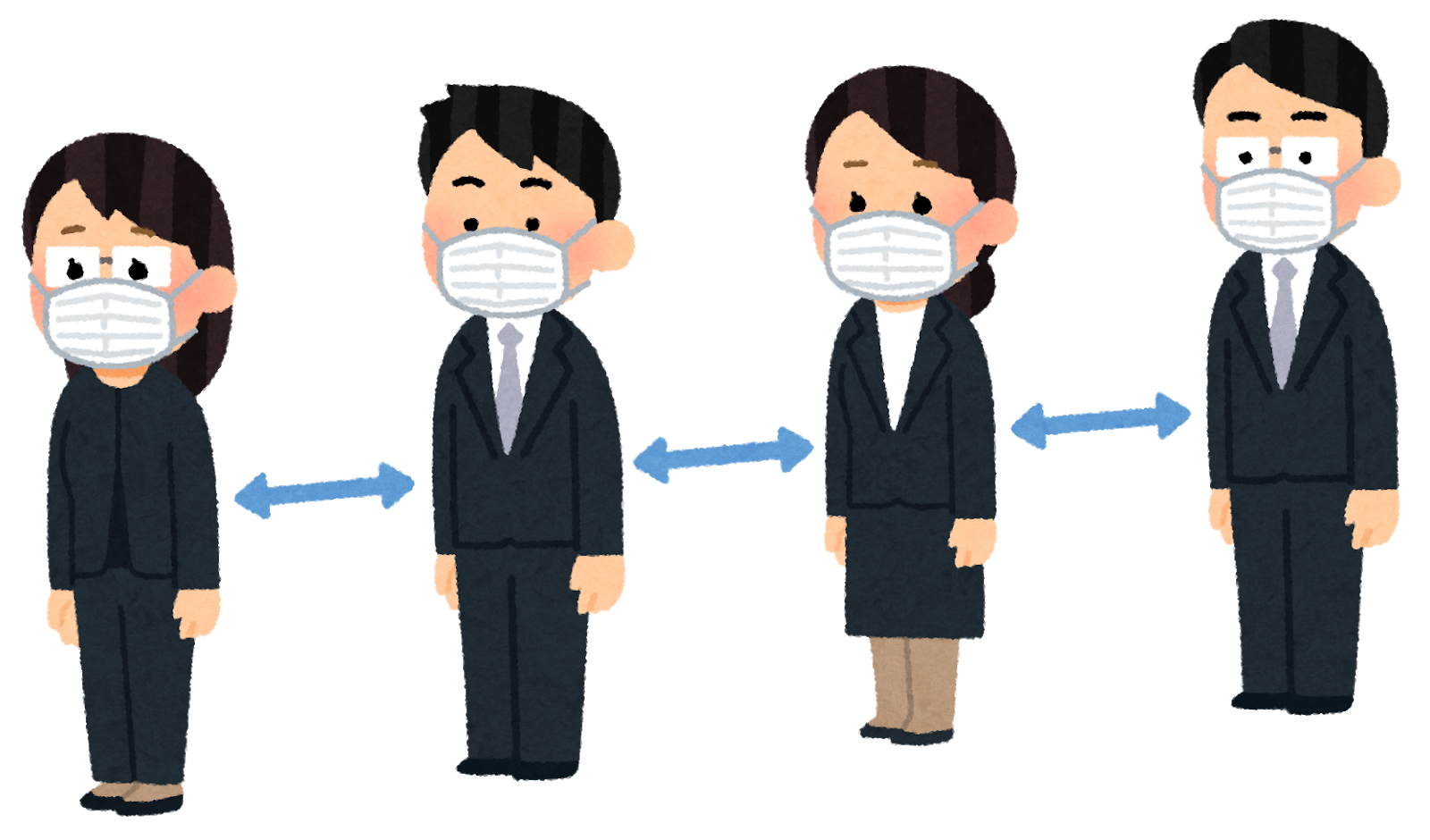
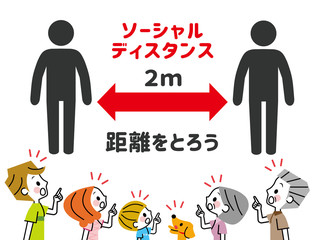
Business economics generally assumes that you can squeeze more profit out of cramming as many employees as possible into one space. That’s no longer possible. For their own health and the health of their customers, employees must stay several meters apart. This means fewer employees per square meter. This will give you a result like this:
- The number of open-plan offices and factories is decreasing. These workspaces have clear boundaries, such as lines drawn on the floor or higher partitions or plexiglass, to allow for physical distancing and protect workers from infectious droplets from sneezes and coughs. You will need a line.
- Investing in building a healthier work environment. For example, installing or improving IoT devices such as air filters or sensors that provide data about environmental conditions.
- The importance of cleaning staff and service companies will continue to grow.
- Masks, sanitizer, and personal protective equipment (PPE) are becoming essential parts of uniforms and work supplies.
- Use of rotating shifts and flexible working hours. These are used to minimize the number of employees at a single site.
- If you have multiple roles that need to perform similar tasks on-time, you can pool those tasks so that one or a few employees can perform them while the rest of your employees work remotely. You can enable it to run. Pooled task responsibilities can be performed according to a rotation schedule.
Customer service will also change. How vigorous an organization’s health protocols are will determine whether customers will patronize the organization. The same goes for companies.
- To gain the trust of visiting customers, you must display your health protocols.
- Practice access control to manage customer flow and risk
- We are moving many of our services online so that we can serve our customers remotely.

Let’s ride the cloud
Organizations are rushing to reshape the way they operate. Mandatory lockdowns, social distancing regulations, and social unrest surrounding the pandemic have made it difficult to go to the office. Both employers and employees understand that they need work to survive.
But how can organizations maintain productivity, keep employees safe, and effectively serve customers?
The answer lies in the cloud.
Employees who work from home, offsite, or while traveling need access to organizational resources to do their jobs. Emailing files back and forth is not efficient, as employees need to access data, process information, and perform analysis on an ongoing basis. The cloud is the only solution that allows your employees to work from anywhere and have all your business’s resources at their fingertips.
See how hair salons can use Slack to help their staff communicate and collaborate on-site, mobile, and remotely.
Most employees who work in administrative or desk jobs do not need to go to the office. Business functions such as ERP, CRM, and accounting can be run from the cloud without compromising effectiveness. In fact, working remotely has significant benefits for employees, employers, and customers .
use artificial intelligence
Today, the world runs on data. But collecting data is no longer enough. It needs to be processed, analyzed and acted upon accordingly. Artificial intelligence takes this even further by applying cognitive functions to data. This means that you can not only act on data, but also learn from it. AI processing and decision-making occur in a fraction of a second, giving this technology a distinct advantage over human reaction time.
Machine learning and speech recognition will be used in more business processes.
For example, CRM uses chatbots that can recognize voice and process customer queries, while ERP creates resource management plans that predict demand and reduce costs. These functions are not new. These are cloud standards.
This is Google’s cloud-based contact center solution. Connect remote agents to customers from any communication platform (phone, email, social media, live chat, etc.) using the cloud. The solution combines speech recognition, natural language processing, and AI to process and solve simple queries or gather information before passing it to an agent.

Introducing automation
When we think of automation, we often think of robots operating in factories. It will expand to more meanings and unmanned vehicle technology will be used in mines along with robotic mining equipment. Factories can operate without human intervention and be managed from miles away.
A lesser-known, but soon to be equally important form of automation is robotic process automation (RPA). RPA software completes repetitive, rule-based tasks. These are already in full use in banks, law firms, and distribution centers.
Automation using AI reduces the burden on employees. Automated AI is effective in eliminating paper-based paperwork. Remote employees don’t have access to forms, documents, stamps, signatures, etc., but automated AI collects information, engages with customers, validates documents, considers risks, makes decisions, and reports results. You can do it in just a few minutes.
intelligent collaboration
There are many meetings that can be held virtually rather than in person. This takes some getting used to. Although the etiquette and structure of virtual meetings are different, they can be just as productive. Moving to virtual meetings will require an investment to provide your employees with laptops, reliable internet, and the necessary software.
Cloud collaboration platforms are tools that bring teams together. Cloud collaboration platforms have standard voice, video, email, and chat communication capabilities that are further enhanced with additional features such as file sharing, file editing, third-party apps, automation, and AI.
Frankly, the possibilities with the cloud are endless. For a glimpse of how collaboration, automation, and AI can work together, see how the University of New South Wales uses Microsoft Teams to deliver lectures, course materials, and class collaboration, and how automated teaching assistants have evolved into teaching tools. See how you used it. assistance.
To be clear, adapting to social distancing norms will not necessarily revolutionize the workplace. It would accelerate the changes that were already occurring. Many technological changes had already occurred, with some exceptions related to health-related habits and practices. This is because the technology employed is economically viable and effective.
Before the pandemic, companies were embracing the cloud and remote working. According to the Office for National Statistics , 48% of UK employees are working remotely due to the pandemic. This is a significant increase from about 20% in 2018.


![How to set up a Raspberry Pi web server in 2021 [Guide]](https://i0.wp.com/pcmanabu.com/wp-content/uploads/2019/10/web-server-02-309x198.png?w=1200&resize=1200,0&ssl=1)


