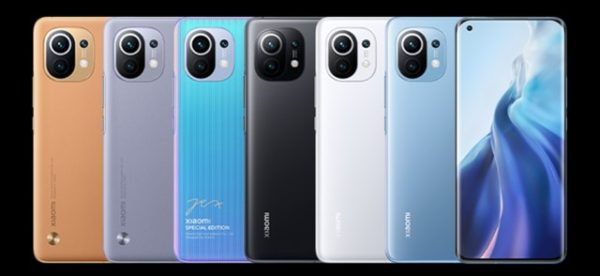
As you may know, Xiaomi Mi 8 is the world’s first dual-band GPS smartphone that supports L1 and L5 dual-frequency positioning and dual-band signal coordination, effectively improving navigation accuracy in urban complex environments. . Introducing this feature should theoretically eliminate GPS connectivity issues and make overall location tracking more accurate. This is a huge achievement for Xiaomi because it has accomplished something that no other smartphone manufacturer has been able to do before. That’s great, but how exactly does the new dual-frequency GPS work? In this article, we’ll explain exactly how the dual-frequency GPS on the Xiaomi Mi 8 works. 
What is dual frequency GPS on Mi 8?
In its simplest definition, dual-frequency GPS uses two frequency bands instead of one. There are three main bands available for civilian GPS applications: L1/E1, L2/E2, and L5/E5, where L stands for U.S. Global Positioning System (also known as GPS) and E stands for European Global Positioning System. (also known as GPS). as Glonass). The GPS used is called single-frequency GPS, as typical smartphones only operate on the L1/E1 band. Xiaomi Mi 8 has dual frequency GPS as it uses L1/E1 and L5/E5 bands . Mi 8 uses L1 and L5 bands, while dual frequency GPS can use any of the three bands in combination. 
How Mi 8 uses dual frequency GPS
To use dual-frequency GPS, your device must have supporting hardware. Xiaomi achieved this feat by using the Broadcom BCM4775 chipset, which uses a combination of a sensor hub microcontroller and integrated GNSS to make the device dual-frequency GPS compatible . According to a paper published by Broadcom, which manufactures this chipset, the BCM47755 can simultaneously receive the following signals:
- GPS L1 C/A
- Glonass L1
- Hokuto (BDS) B1 • QZSS L1
- Galileo (GAL) E1 • GPS L5
- Galileo E5a
- Quasi-zenith satellite L5
Technical aside, all you need to know is that the Broadcom BCM4775 chipset used in the Mi 8 allows it to receive signals from two different frequency bands simultaneously. L1/E1 and L5/E5, so the Mi 8 can use dual frequency GPS.
Mi 8 dual frequency GPS: what are the benefits?
The BCM47755 chip inside the Mi 8 supports two frequencies (L1+L5), resulting in the phone achieving lane-level accuracy outdoors and immunity to multipath and reflected signals in urban scenarios. higher and more resistant to interference and jamming. . Using two frequency bands simultaneously also reduces errors from other sources, such as those resulting from electronic interference in the ionosphere. All this means that with Mi 8 you will have better navigation capabilities and better positional accuracy when determining your location . This also means that third-party developers have the option of using these features for new applications such as virtual reality and star mapping.

We tested the new dual-frequency GPS on the Mi 8 ourselves and did not observe any significant differences. This may have something to do with the fact that Delhi doesn’t have many high-rise buildings and multipath effects and reflected signal issues are not noticeable enough to cause errors in other devices. Basically, Delhi is not the best place to test new dual-frequency GPS, so I can’t comment on how effective this new GPS system is.
See also: Dual GPS vs. Single GPS Frequency: What’s the Difference? 
Dual frequency GPS on Mi 8: new advances you won’t notice
We hope we were able to educate you about the new dual-frequency GPS technology found in the Mi 8. We have tried to simplify the content as much as possible, but if you still have problems understanding the concepts, please write your questions in the comments section below. We will be happy to assist you. Also, if you use Mi 8, let us know your experience with this new GPS technology.


![How to set up a Raspberry Pi web server in 2021 [Guide]](https://i0.wp.com/pcmanabu.com/wp-content/uploads/2019/10/web-server-02-309x198.png?w=1200&resize=1200,0&ssl=1)


