JavaScript continues to reign as one of the most used programming languages. Due to this fact, this programming language also has many libraries and frameworks. React is one of the most popular JavaScript libraries.
React also comes with many frameworks and libraries designed to perform various functions. Web frameworks provide a structured way to create web applications. Rather than writing everything from scratch, frameworks provide reusable code that developers can use in their applications.
Remix is one of the latest React web frameworks that is gaining attention these days. This article explains what the Remix framework is, what it does, how to configure it, examples of how to use Remix, and its limitations.
What is Remix Framework?
Remix is a full-stack web development framework built on React. You can use Remix apps to create backends and frontends for your app. Remix allows you to focus on your UI and provide a resilient and fast user experience.
This framework can be described as a compiler, a browser framework, a server framework, and an HTTP handler.
Remix was originally a paid service, but became open source at the end of 2021 . In 2022, it was also acquired by Shopify .
Remix framework features
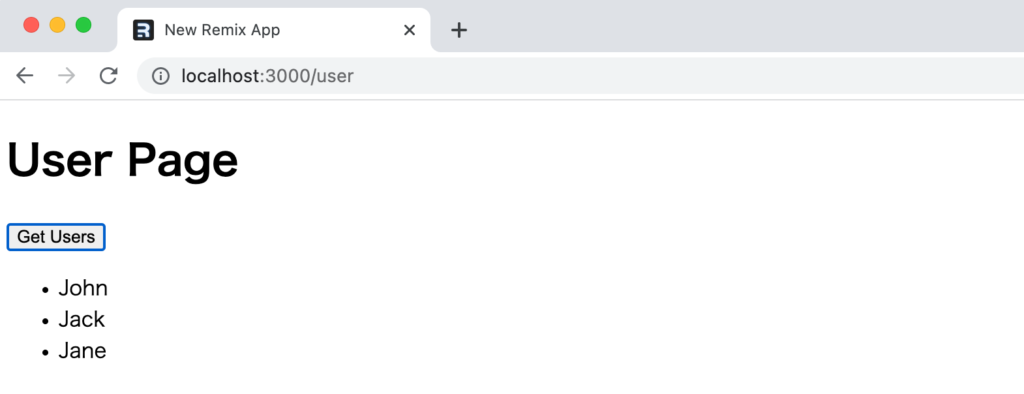
- Remix Stack: This Remix CLI feature allows you to quickly generate Remix apps. Some of these stacks are built-in. You can also create your own application from scratch. The official built-in stack includes automatic deployment pipelines, databases, testing, authentication, lint, and more. Stacks include the popular Blues Stack, Indie Stack, and Grunge Stack .
- Server-side rendering (SSR): This framework enables server-side rendering of React components. Initial rendering in Remix occurs on the server, and a fully rendered HTML document is sent to the client. Server-side rendering has several benefits, including improved accessibility, allowing search engines to crawl your content, and increased speed.
- Routing with nested routes: Remix uses React Router 6. With this framework, you just drop your files into the root folder and Remix’s root module turns them into a navigable path. A nested route is a route contained within another route.
- TypeScript and JavaScript support: You can use Remix whether you use JavaScript or TypeScript. The advantage of using TypeScript is that you can declare variables, making it easier to catch errors early.
- Built-in data loading and caching: This framework allows developers to define loaders that fetch data from various sources. Remix handles data retrieval both client-side and server-side. The caching mechanism provided by this framework makes it easy to reduce unnecessary data retrieval and optimize subsequent requests.
- Code splitting and prefetching: You can split the code in your Remix app into smaller bits that can be loaded on demand. This approach reduces initial bundle size and reduces prefetching functionality that loads data and code in the background.
Advantages of remix framework

- Full stack: Most people use different languages or frameworks to write the client and server sides of their apps. For example, you can use React for the front end and a Node.js framework such as ExpressJS for the back end. In other cases, you can use a Python framework such as Django on the backend. Remix is a full-stack framework, which means the frontend and backend are on the same app.
- Better data handling: Remix relies on native browser features and conventions. Good data flow makes it easy to send data between the frontend and backend of your application.
- Easy state handling: State management in React applications can be tedious, and most developers use third-party libraries like Redux. Remix uses loaders to manage server-side state. You can use the “useLoaderData” attribute from any component within the current route.
- Error Boundary: If an error occurs in a nested root or component of your Remix app, the error is confined to that component. Such errors won’t break the entire app like in other frameworks. Some React frameworks, such as Next.js, can implement error bounds functionality, but this functionality is built into Remix.
Prerequisites for remix settings
If you want to set up a Remix app, here are some of the things you’ll need.
- Node.js version 14.17.0 or later
- Package managers such as npm (7+)
- code editor
- Understand how React apps work
“Hello, World!” setting method remix
Create a simple project and name it “Remix-app”. Please follow us.
- Go to the location where you want to create the application, open a terminal and run the following command:
npx create-remix@latest remix-appThe terminal will ask you to set up the application by answering a few questions. Stick to the basics and choose TypeScript as your language.
- Navigate to the app you created (Remix app) and open it in your favorite code editor. The folder structure is as follows.

- Build your app using this command:
npm run build- Start the development server using the following command:
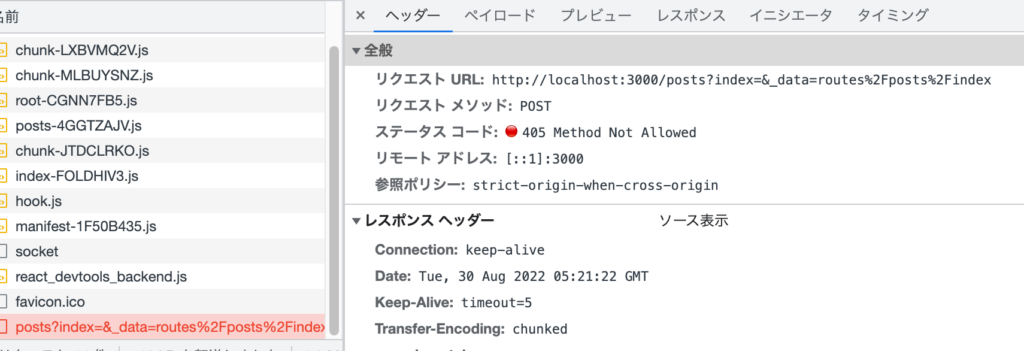
npm start Now you can open a window on your browser using http://localhost:3000 link and this will be displayed on your browser.
- Modify the contents of
app/root.tsxfile as follows:
 import { LiveReload } from "@remix-run/react";

export default function App() {

  return (

    <html lang="en">

      <head>

        <meta charSet="utf-8" />

        <meta

          name="viewport"

          content="width=device-width,initial-scale=1"

        />

        <title>Remix Demo</title>

      </head>

      <body>

        Hello world

        <LiveReload />

      </body>

    </html>

  );

}
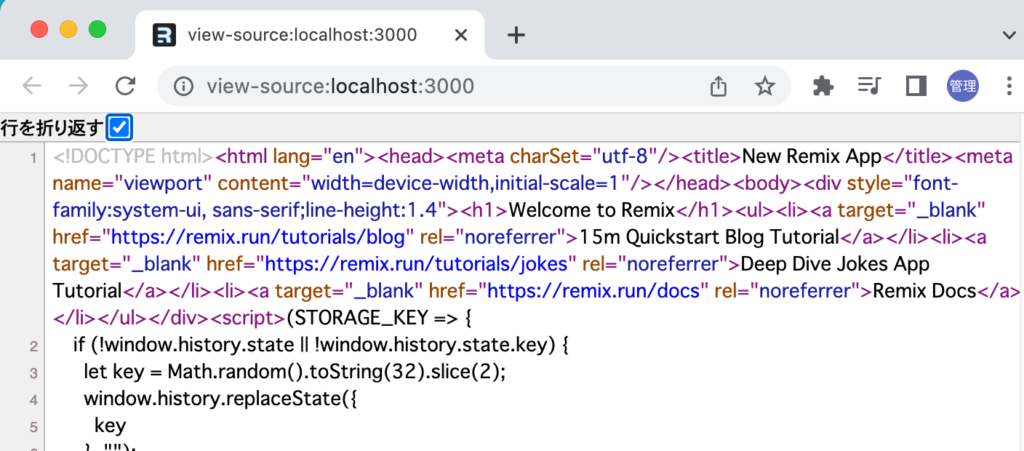
The rendered page looks like this:
Where the Remix framework is used
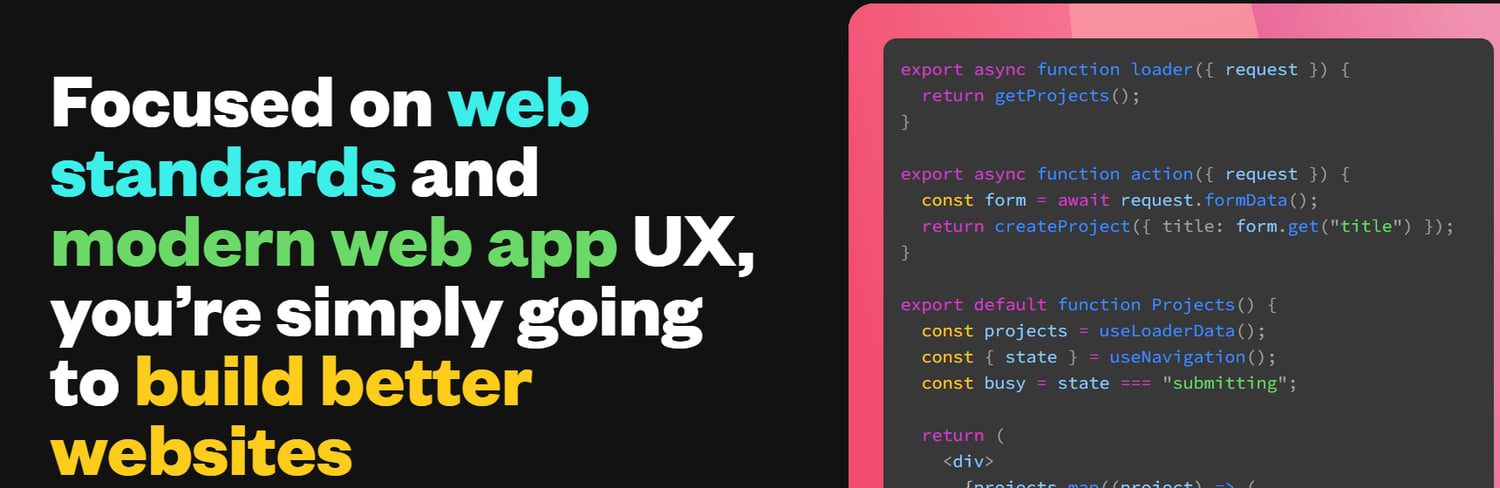
Similar to Next.js and React, you can use Remix to build many different types of applications. These are some of the best use cases.
- Single-page application: All code in the Remix app is loaded once. The server rendering approach allows for fast initial loads while the client processes subsequent requests seamlessly.
- SEO-friendly website: Remix uses pre-rendering functionality to generate static HTML pages. This allows your website to be indexed even if you are working with dynamic content.
- Dynamic websites: Remix uses server-side rendering in its applications. SSR loads the HTML page on the server before sending it to the client. Therefore, Remix is ideal for websites where the content is dynamically generated.
How the Remix framework works on the server side and client side

server side rendering
Remix renders your code in plain HTML on the server side. This approach reduces the amount of JavaScript and improves loading speed. Remix essentially uses native “action” and “loader” functionality. The server performs the specified server-side actions, renders the React code in plain and HTML, and sends it to the client’s browser.
Client-side rendering
Remix, like Next.js, offers a “prefetch” feature that provides smooth navigation for users.
In Next.js, <link> component lets you preload the page that a <link> redirects to your website, so you don’t have to wait for the page to download. However, such an approach only works for static websites.
Remix uses <link rel="prefetch"> to easily fetch <links> and other pages. Therefore, Remix allows pages whose content keeps changing based on user input to load faster.
Remix limitations
- Small community: Remix was originally a paid framework. However, it was not made open source until 2021, which is still a short time ago. This means there are limited resources and tools to make app creation easier.
- Steep learning curve: Remix introduces the concept of nested routes, which may be confusing for those coming from that framework, such as React or Next.js. However, once you get the hang of it, using this framework becomes easy.
What is the future of remixing?
- Recruitment may increase in the future. Remix is still young. Developers may not have discovered its potential yet, but more companies and developers will use it in the future.
- The ecosystem can grow. Remix still has few tools and libraries to support its ecosystem. As adoption continues, you can expect more tools and libraries.
- Community grows: Community is essential to the growth of a framework/programming language. We hope to see the community grow as developers discover what Remix has to offer.
The answer to this question depends on the nature of the app you’re building. If you want to build a full-stack app using one framework, Remix is a better choice than Next.js. However, if you want a mature framework with lots of resources and a good following, Next.js is the best choice.
yes. This is a great framework for building entire full-stack apps using one framework. It’s also a great framework if you want a technology with built-in error bounds functionality. However, if you want a framework with a large community and lots of resources, Remix is not the framework for you.
yes. If you are familiar with deploying Node.js applications, you will find it easy to work with and deploy Remix apps.
Remix is a React framework. So, before you start learning Remix, you need to understand how React works. However, if you have limited time and only want to learn one framework, your choice will depend on your end goal.
Remix allows you to build full-stack apps. You can learn Remix without understanding React, but the learning curve will be steeper.
However, with React, if you want a full-stack app, you’ll need to use a backend framework like Django or Ruby on Rails. If you decide to learn React, there are many resources and communities available to you.
conclusion
It’s still too early to tell if Remix is the future of web development. Amazing features like flexible routing, server-side rendering, code splitting, and focus on developer experience make it a very promising web framework.
However, Remix is still in its infancy and its resources are still limited. There are also small communities. There are few tools and libraries for the Remix JS framework, as most open source frameworks rely on community support and third-party tools.
You can also explore some frameworks and libraries that you should know about as a full stack developer.


![How to set up a Raspberry Pi web server in 2021 [Guide]](https://i0.wp.com/pcmanabu.com/wp-content/uploads/2019/10/web-server-02-309x198.png?w=1200&resize=1200,0&ssl=1)


