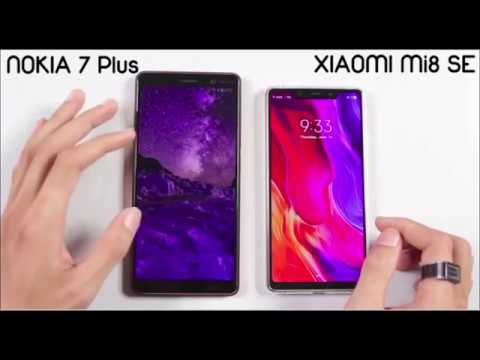
Mi 8 SE will be launched in India soon and it is a great mid-range device. I’ve been using the Mi 8 SE for a few days now and I’m very impressed with the device. However, when the Mi 8 SE is released in India, it is rumored that the price will be at the same level as the Nokia 7 Plus, so it will be difficult to complete. Therefore, we wanted to compare both devices and see which one is better. So, if you’re wondering whether you should wait for the Mi 8 SE or buy the Nokia 7 Plus instead, you’ve come to the right place. Comparing Nokia 7 Plus and Mi 8 SE, here’s what you’ll find:
Mi 8 SE vs Nokia 7 Plus: Specs
Before I share my personal experience with both phones with you, I would like to first check their respective spec sheets to see if either one gives you an unfair advantage over the other. Let’s see.
| name | Mi 8SE | nokia 7 plus |
| size | 147.3×73.1×7.5mm | 158.4×75.6×8mm |
| weight | 164 grams | 183 grams |
| screen | 5.88 inch (1080 x 2244 pixels) Super AMOLED | 6 inch, IPS LCD |
| processor | Qualcomm Snapdragon 710 | Snapdragon 660 Octa Core |
| GPU | adreno 616 | adreno 512 |
| rum | 4/6GB RAM | 4GB |
| storage | 64GB | 64GB |
| major camera | 12 MP (f/1.9) + 5 MP (f/2.0) | 12MP (f/1.75) + 12MP (f/2.6) |
| secondary camera | 20MP (f/2.0) | 16MP (f/2.0) |
| battery | 3120mAh | 3,800mAh |
| operating system | MIUI 10 based on Android 8.1 (Oreo) | android 8.1 oreo |
| sensor | Fingerprint authentication (mounted on the back), accelerometer, gyro, proximity sensor, compass | Fingerprint authentication (front mount), acceleration sensor, gyro, proximity sensor, compass |
| connectivity | Wi-Fi 802.11 a/b/g/n, GSM/CDMA/HSPA/EVDO/LTE | Wi-Fi 802.11 a/b/g/n, GSM/HSPA/LTE |
| price | N.A. | ₹25,999 |
As you can see from the spec sheet, none seem like a clear winner here. So let’s see how these two smartphones actually work.
Mi 8 SE and Nokia 7 Plus: design and build quality
It’s very difficult to declare a clear winner when it comes to design and manufacturing quality, but that’s a good thing. No matter which device you buy, you can be sure that you are getting a stable phone. Both phones are very well built, but follow completely different design languages.
Let’s start with the Mi 8 SE. This is a newcomer. At first glance, you might think that the Mi 8 SE is inspired by the iPhone X. But if you take a closer look, you’ll notice that it’s the only thing that resembles the Mi 8 SE, unlike its sibling, the Mi 8. A feature of the iPhone X is that the camera is placed vertically on the back. The design language of the rest of the phone is quite different as it features a blocky design and lacks rounded edges. The Mi 8 SE features a metal frame and glass sandwich design that most premium smartphones these days adopt . Needless to say, the phone looks very beautiful.

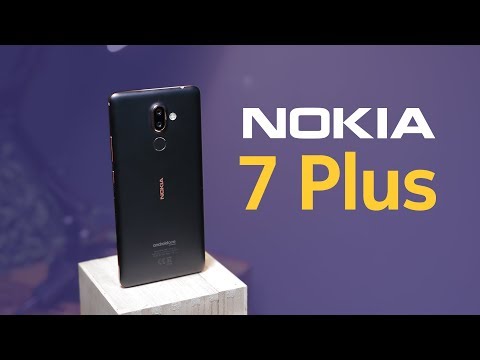
With the launch of the Nokia 7 Plus, Nokia’s parent company HMD Global has been trying to break quite a few molds. Rather than a glass-on-glass or glass-metal design, the Nokia 7 Plus has a triple ceramic coating on the back, giving the phone a very stealthy look . The phone also feels great in your hand. I especially love the bronze contour along the edges and camera module. The contours look smooth and beautiful, making your phone stand out from other phones.
As mentioned before, both of these phones have great design and quality, and you can’t go wrong with either one. In the end, it depends on your personal preference. I personally prefer the design of the Nokia 7 Plus, but some people may prefer the Mi 8 SE, and there’s nothing wrong with that.

Winner: draw
Mi 8 SE and Nokia 7 Plus: Display
There was quite a bit of confusion between the two smartphones in the previous section, but when it comes to display, the Mi 8 SE starts to lead the competition. Don’t get me wrong. Nokia 7 Plus has a great display. The 6-inch IPS LCD display with an 18:9 aspect ratio looks very nice . There are almost no bezels on the sides, and the top and bottom bezels are also quite minimal, so the display pops out right in front of you. Color reproduction and viewing angles are also very good. So, you might be wondering, if the situation here is so great, why am I hinting that the Mi 8 SE is winning this round?

The thing is, as great as the Nokia 7 Plus’s display is, the Mi 8 Se’s is even better. First of all, the Mi 8 SE has a 5.88-inch Super AMOLED display, and I’m going to use a good AMOLED display on an IPS panel at least once in my life . The Mi 8 SE’s AMOLED display means it can deliver true blacks and vibrant colors that IPS displays simply can’t match. This also means that the Mi 8 SE can support features like always-on mode, which is always a plus in my opinion. I love the Mi 8 SE’s display, but perhaps the only thing I can give away about it is the horrible notch at the top. I’ve accepted the fact that the notch will continue to exist, so it doesn’t bother me as much now. However, if you don’t like notches, the Nokia 7 Plus is for you. But when it comes to display quality alone, the Mi 8 SE is the clear winner here.
Winner: Mi 8 SE
Mi 8 SE vs Nokia 7 Plus: Performance
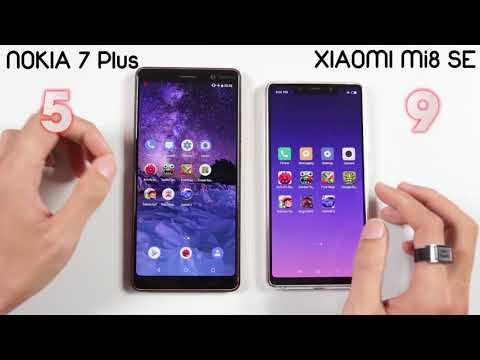
Before we discuss the day-to-day performance of both devices, let’s first take a look at the type of hardware they offer. As for the Nokia 7 Plus, all the processing work is handled by the Qualcomm Snapdragon 660 processor and Adreno 512 GPU. The Mi 8 SE, on the other hand, is powered by Qualcomm’s latest 700 series processor, the Snapdragon 710 to be precise, paired with an Adreno 616 GPU . As you can see, on paper, the Mi 8 SE has the advantage. In fact, the Snapdragon 710 chipset in Mi 8 SE is not only new and powerful, but also power-efficient as it is manufactured using Qualcomm’s latest 10 nm technology. As you can see from the AnTuTu scores below, the Mi 8 SE offers a 10-15% performance improvement compared to the Nokia 7 Plus.

However, the actual performance of a smartphone does not only depend on the processor, but rather many factors come into play. Perhaps that’s why I couldn’t see any significant performance difference between the two when I used both phones side by side. Both are equally fast and I didn’t ask for more power from either phone. Both phones were able to hold up very well even when playing games. However, I think the Mi 8 SE was slightly faster than the Nokia 7 Plus while loading games .
In conclusion, the performance of both phones is about the same, but I tend to give this round to the Mi 8 SE, since it has a newer processor and is likely to degrade more than the Nokia 7 Plus. .
Winner: Mi 8 SE
Mi 8 SE and Nokia 7 Plus: Software
If there’s one thing that sets these phones apart from each other, it’s the software experience. While the Nokia 7 Plus adopts the native Android experience by joining the Android One program, the Mi 8 SE brings MIUI 10, which is far from the standard Android experience. No matter what I say about the software experience on these phones, the fact remains that it all comes down to personal preference. So all I can do is tell you the pros and cons of each and then let you decide. If you can’t choose between the two, don’t worry, I’ll explain my choices and why. MIUI 10 for Mi 8 SE is a highly customizable custom skin that Xiaomi brings to all its devices. MIUI 10 is highly customizable and comes with a ton of features not found in stock Android, allowing users to theme the entire interface to get the look they want .
Stock Android, on the other hand, is simpler, less resource intensive, and more likely to be updated to the latest Android version . I love the additions in MIUI 10, but gestures are my favorite. You can’t wait months, if not years, for the next software update. Now that the Nokia 7 Plus has joined the Android One program, the phone will not only receive faster updates, but will also receive Android security updates on time. My phone is my most personal accessory, so I want it to have the latest security patches. We also like that the Nokia 7 Plus received the Android P beta right after its release, whereas the Mi 8 SE has to wait a full year to get Android P.
In conclusion, if you want more features, customizability, and theming capabilities, we recommend Mi 8 SE. However, if you want clean Android, faster updates, and on-time security patches, the Nokia 7 Plus is for you.
Winner: draw
Mi 8 SE vs Nokia 7 Plus: Camera
In the camera department, the Nokia 7 Plus has dual 12MP (f/1.75) + 12MP (F/2.6) cameras on the back and a 16MP f/2.0 shooter on the front , while the Mi 8 SE has dual 12MP has been. (f/1.9) + 5MP (f/2.0) setup on the back and a whopping 20MP (f/2.0) sensor on the front. As you can see, the cameras on both these phones look very good on paper as they have dual camera sensors on the back and a very good sensor on the front. As for actual performance, we tested the Nokia 7 Plus’s camera extensively and wrote an entire article on it alone. So, if you want more details, check out our detailed Nokia 7 Plus camera review article. However, the short answer is that while this phone takes decent photos in bright light and outdoor situations, it doesn’t achieve the same quality outdoors. Low light situations.
Whether you’re taking regular photos, portraits, or selfies, the story is the same. When lighting conditions are good, the Nokia 7 Plus takes great photos with excellent dynamic range, true-to-life color reproduction, and overall sharp images with punchy colors . However, as the ambient light begins to decrease, so does the image quality. In low light, photos lose detail and have more noise and grain. But it’s not made for nightlife.


As for the Mi 8 SE, we’ve only had the camera for a few days, but the phone has really impressed us. In good lighting conditions, the camera performed very well. Dynamic range was adequate and color reproduction was very good. As you can see from the camera samples, the Mi 8 SE consistently outperforms the Nokia 7 Plus when it comes to the primary camera . Images are clearer and have more details. I’m particularly impressed with this portrait mode, which beats out the Nokia 7 Plus’s portrait mode.
Portrait mode photos taken with the Mi 8 SE look better because the camera focuses on the subject. Shots have good edge detection and a good amount of blur. After all the tests, we can confidently say that the Mi 8 SE has a better primary camera .
However, when it comes to the front camera , the results are not so clear. Both smartphones took average selfies, and none of them really impressed me . Don’t get me wrong. It turns out the selfies aren’t bad by any standards, but they’re not that great either. The main problem with selfies taken with both phones is that they are too soft. But don’t just take my word for it, check out the photos below and judge for yourself. 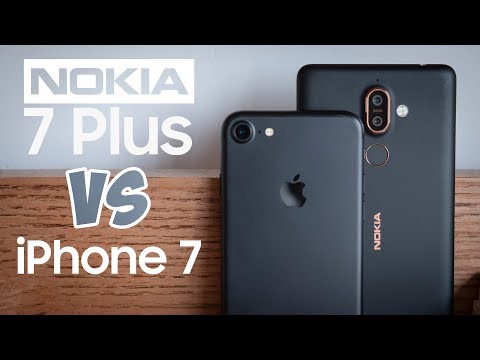

Winner: Mi 8 SE
Mi 8 SE vs Nokia 7 Plus: Battery
On the one hand, the Nokia 7 Plus has a 3800 mAh battery, while the Mi 8 SE has a 3120 mAh battery . On paper, the Nokia 7 Plus looks better than the Mi 8 SE, and that seems to be the case in real life as well. Don’t get me wrong. Mi 8 SE has all-day battery life, so you don’t have to look for a charging port during the day. That said, the Nokia 7 Plus’s battery lasts for a day and then a little. If you use your phone wisely, you can even use this phone for two days, which is not possible with the Mi 8 SE. So Nokia 7 Plus takes this round.
Winner: Nokia 7 Plus
See also: 12 great Mi 8 SE features and tricks you need to know
Mi 8 SE vs Nokia 7 Plus: And who is the winner?
After using both the phones, I can definitely say that the Mi 8 SE beats the Nokia 7 Plus . It has a better processor, a better display, a better camera, and overall feels more complete than the Nokia 7 Plus. That said, we don’t know the actual price of Mi 8 SE in India yet. The price is expected to be between Rs 20,000 and Rs 25,000, but it is difficult to declare the Mi 8 until it is officially launched in India. SE is the clear winner here. However, if the Indian version of the Mi 8 SE (which might be called Mi 8i) has all these features and costs less than the Nokia 7 Plus, we might have a new mid-range smartphone champion. I don’t know.


![How to set up a Raspberry Pi web server in 2021 [Guide]](https://i0.wp.com/pcmanabu.com/wp-content/uploads/2019/10/web-server-02-309x198.png?w=1200&resize=1200,0&ssl=1)


