Read this ultimate PostgreSQL vs. MySQL guide to learn how PostgreSQL and MySQL are evenly matched when it comes to creating, using, and maintaining databases.
PostgreSQL and MySQL are the primary databases (DBMS) used by many commercial and non-profit organizations. That’s not all! They are also the most rated open source relational databases. Therefore, IT companies, governments, NGOs, and independent database developers are free to use these databases with their own modifications.
Keep reading to get a clear understanding of the comparison between PostgreSQL and MySQL to help you choose the right database for your upcoming project.
PostgreSQL overview
If you’re looking for robust features like an object-relational model, free usage, and SQL compliance, you should consider PostgreSQL as your first choice for building a database. Data analytics agencies, enterprise-grade IT companies, and IT startups creating complex automation systems rely on PostgreSQL to provide powerful database technology.
The database system uses multiversion concurrency control (MVCC). MVCC creates a database suitable for data entry and data queries performed simultaneously by writers and readers. Big technology companies such as Yahoo, Facebook, Instagram, Apple, IMDB, Spotify, and Twitch rely on PostgreSQL for its MVCC and other features such as materialized views, updatable views, foreign keys, and triggers. Masu.
Its history goes back to July 8, 1996, when the first version was released. The POSTGRES project at the University of California, Berkeley, has released the first version of this DBMS. Since then, the project has undergone many acquisitions, but its usage license remains open source.
MySQL overview
MySQL, supported, developed, and distributed by Oracle, is one of the leading databases that utilizes open source licensing and Structured Query Language (SQL) programming for database creation. Oracle makes its database systems available to individuals, organizations, and government agencies by distributing downloadable packages.
Several mobile, computer, and website app building companies use this DBMS for free when they need to perform data queries up to medium-level workloads. Initial setup is easy and requires minimal maintenance after setup.
MySQL has many third-party GUIs, so even non-coding experts can easily create MySQL databases using tools such as HeidiSQL, dbForge Studio, Adminer, and MySQL Workbench.
MySQL AB released the first available version of MySQL on May 23, 1995. Then, in 2008, the company merged with Sun Microsystems through an acquisition. Additionally, Oracle acquired Sun Microsystems in January 2010, taking ownership of the MySQL database system.
Main features of PostgreSQL
- A strong community of developers from EDB, Microsoft, Amazon Web Services, Redpill Linpro, and Crunchy Data oversee PostgreSQL development projects.
- Compatible with major operating systems including Windows (XP and later), Linux (all modern distributions), macOS, NetBSD, and FreeBSD.
- Supports multi-user environment with MVCC function.
- Works with Extensible Markup Language or XML.
- Supports modern database applications such as JSON and open standard file formats for data exchange.
- Flexible data retrieval capabilities using table views and joins.
- Compatible with transportable code/skills via ANSI/SQL.
- For read scalability and data backup, DBMSs provide replication functionality.
Main features of MySQL
- It is available for use, modification, and study of the source code without payment under the GNU General Public License or Open Source License.
- Stores data in OS memory and maintains database consistency. Therefore, users can instantly modify or access data.
- MySQL is highly scalable and can easily work with machine clusters, large datasets, and small data tables.
- There are multiple data types such as FLOAT, CHAR, DOUBLE, variable character, DateTime, and timestamp.
- To maximize database security, we use an encrypted password and username authentication system.
- MySQL DBMS is compatible with OSes such as Windows 11, macOS 12, Microsoft Windows 2022 Server, Debian GNU/Linux 11, and Oracle Linux 9.
PostgreSQL and MySQL: similarities
#1. SQL is a common database language used by both DBMSs. These systems use SQL to interact with databases and their management systems.
#2. Both MySQL and PostgreSQL have simple structures that make them quick and easy to learn, even for non-technical employees. And with a few lines of code, users can join tables, manipulate data, add data, and more.
#3. The DBMS itself finds the correct data path and data points and compiles all data queries. Operators do not need to know the database drive path or search order.
#4. Whether you use PostgreSQL or MySQL, you can use common JSON, which is human-readable text, to transfer and store data, objects, and arrays.
#5. MySQL and PostgreSQL support many authentication protocols. One such protocol is PAM, a pluggable authentication module that can be used with both DBMSs.
#6.Both database systems provide account management features such as roles, groups, and individual users.
PostgreSQL and MySQL: Differences
governance model
The PostgreSQL global development group or community oversees the maintenance and development of the project. Users only need to download the distribution package under the MIT license.
MySQL is also free and available as a server version on GitHub. However, the development and maintenance of the DBMS is managed by Oracle.
SQL compatibility
PostgreSQL is highly compatible with SQL as the DBMS meets 160 of SQL’s 179 core features.
On the contrary, MySQL does not implement the complete SQL standard. Therefore, it is a partially SQL-compliant DBMS.
database coding language

MySQL used C and C++ for coding. For database development purposes, users can use Node.Js., Java, R, Delphi, Lisp, Perl, Go, C/C++, and Erlang.
Conversely, PostgreSQL is written in C. However, for development purposes we support C++, C, JavaScript, Java, R, Delphi, Tcl, Lisp, Go, .Net, Python, and Erlang.
speed and performance
MySQL is suitable for fast read requirements in online transaction processing (OLTP) and online analytical processing (OLAP) systems. Overloading the DBMS with complex queries can reduce performance.
PostgreSQL, on the other hand, is suitable for both small and large workloads where users perform complex data retrieval and modification queries.
You can see a concise comparison between PostgreSQL and MySQL in the table below.
| standard | PostgresSQL | MySQL |
| GUI application | pgAdmin | MySQL Workbench |
| storage | 1 storage engine | There are nine storage engines, but MyISAM and InnoDB are popular |
| Dropping or deleting a table | Dropping dependent objects such as views and tables using the CASCADE option | No CASCADE-based drop table functionality |
| Implementation language | C | C/C++ |
| Supported indexes | bitmap, expression, part | These indexes are not supported |
| partitioning | lists, ranges, hashes | lists, keys, hashes, etc. |
| Table inheritance | yes | no |
| cover index | supported | Conditionally supported |
| Supported data types | Standard, hstore, array, user defined, etc. | Standard data types only |
| MVCC support | Full service MVCC | Limited MVCC on InnoDB |
| troubleshooting | Finding and fixing faults is a complex task | easy |
| connection type | Connection is an operating system process | The connection is an OS thread |
| JSONB | Supports JSONB | JSONB is not supported |
| materialized view | Supports both temporary tables and materialized views | Materialized views are not supported. Temporary tables are supported |
| Changing default values | Changes can only be made at system level | Allows override of default values at statement and session level |
| Brand used | Twitch, International Space Station, Skype, Instagram, Apple, etc. | NASA, US Navy, BBC, Netflix, Spotify, Verizon Wireless, etc. |
Examples of using PostgreSQL
geospatial database
PostgreSQL extends support for geographic objects when used with PostGIS extensions.
Geographic information systems (GIS) and location-based services therefore use GIS as a geospatial database.
Common OLTP databases
Startups and large enterprises working with online transaction processing (OLTP) will find PostgreSQL particularly useful. By using it as your primary data store, all Internet-scale solutions and products receive the support they need.
LAPP open source stack
LAPP is an acronym for Linux, Apache, PostgreSQL, and (PHP, Python, and Perl). PostgreSQL can run dynamic applications and websites. Therefore, it can be used as an alternative to LAPP.
Federated hub database
PostgreSQL includes a foreign data wrapper and compatibility with JSON. As a result, it can be linked with other data stores such as NoSQL. Its use as a federated hub for multilingual databases is also common.
financial services sector
PostgreSQL is often a highly preferred choice in the financial industry. It is a fully ACID compliant database, making it ideal for OLTP workloads. PostgreSQL supports Matlab, R, and other mathematical applications with integrated support for very capable analytical databases, which is also why financial companies prefer to use PostgreSQL.
Web and NoSQL workloads
Today’s websites must handle hundreds of thousands of requests per second to handle traffic, so scalability can be a significant issue. This problem can be solved using PostgreSQL, which is compatible with all modern web frameworks such as Django, node.js, Hibernate, Ruby on Rails, and PHP.
Websites that use PostgreSQL can easily scale up to meet their needs thanks to the database’s replication capabilities. Additionally, PostgreSQL can also function as a NoSQL-style database. Therefore, you can take advantage of both relational and object-oriented database capabilities in one product.
scientific data
Various scientific and research projects generate terabytes of sensitive and mission-critical data that must be managed efficiently and carefully. PostgreSQL is often the database of choice for these cases, thanks to its analytical capabilities. The robust SQL engine makes it easy to process large amounts of data.
MySQL usage example
LAMP open source stack
MySQL is used by thousands of applications that run on the LAMP (Linux, Apache, MySQL, and PHP/Python/Perl) open source software stack. LAMP is a popular web services solution stack that is popular among dynamic websites and high-performance web apps.
Common OLTP databases
MySQL is a great choice for mission-critical apps and high-traffic websites that require a transactional SQL engine. For example, very popular platforms such as WordPress, phpBB, MyBB, Joomla, Drupal, TYPO3, and MODx use MySQL databases.
In addition to following ACID principles, it also supports XML and JSON and provides extensions to the ANSI/ISO standard SQL. Its ability to manage terabyte-scale databases and support high-availability clusters is the reason for its popularity in this field.
online shopping
E-commerce platforms that process thousands of transactions every day prefer using MySQL over other DBMSs. It helps e-commerce companies by carefully managing product catalogs, customer data, and transactions. E-commerce solutions typically use MySQL with other non-relational databases to store non-product data and synchronize order data.
social platform
Many top social platforms such as Facebook, LinkedIn, and Twitter use MySQL. This could be a great option if you are looking for a DBMS for social media.
Content management
MySQL is not a single-purpose document database. Therefore, you can run both SQL and NoSQL with its help. This database can retrieve data from JSON documents for analysis and reporting purposes. Users can also perform CRUD operations using MySQL Document Store.
Find popular resources for learning MySQL and PostgresSQL below.
learning resources
Learning MySQL
If you want to learn how to design and configure a functional database, you can get theoretical and practical help from Learning MySQL. You can own it as a Kindle e-book or a physical paperback book.
| preview | product | evaluation | price | |
|---|---|---|---|---|
 | Learning MySQL: Manage your data | $39.49 | Buy on Amazon |
Key highlights include:
- How to use MySQL in a production environment.
- Database infrastructure design.
- DBMS restore and backup.
- coding query.
This book covers not only the technical aspects, but also cost minimization theory, especially when you need to scale up your database.
PostgreSQL Bootcamp: Udemy
Looking for a one-stop resource for all things database management with MySQL and PostgreSQL? Check out this comprehensive and thorough course on Udemy.
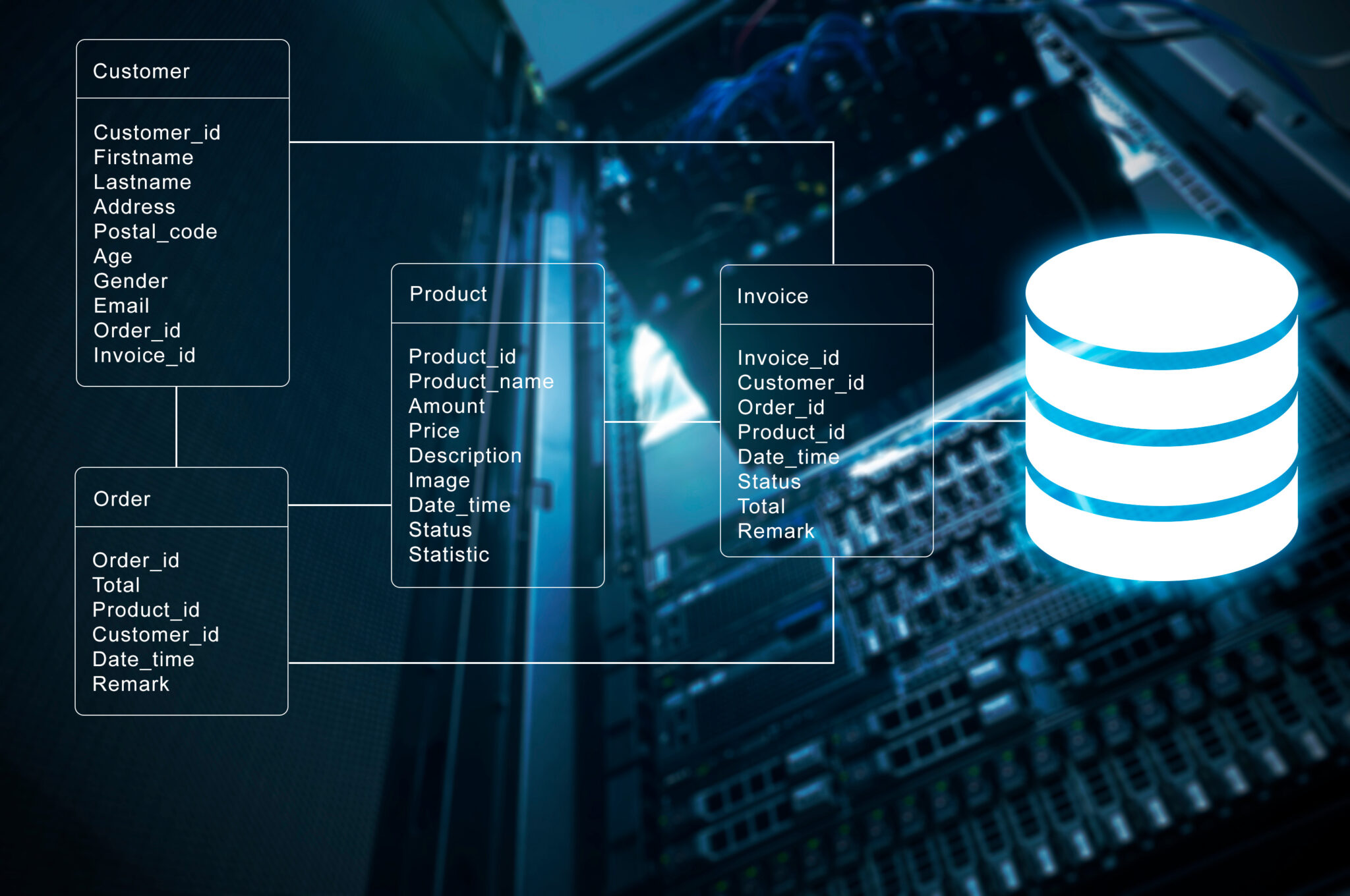
Featured course features:
- Over 60 hours of practical practice.
- Use or create many data types.
- Query analysis using dates and times.
- SQL language.
- JSON, PL/pgSQL, PL/SQL, etc.
This extensive self-paced course is suitable for beginners who want to create a working database for personal or professional projects.
SQL Overview: DataCamp
This Introduction to SQL course from DataCamp is suitable for beginners to SQL. It also helps you learn SQL syntax for SQL Server, MySQL, PostgreSQL, and Oracle in an easy-to-understand language.
Notable course highlights include:
- Basics of SQL.
- IMDb film data.
- Row filtering.
- Column selection.
- Aggregate functions.
This is a 4-hour self-paced online course consisting of 41 exercises and 1 video lecture.
conclusion
The bottom line of this PostgreSQL vs. MySQL discussion is that both have value in different scenarios. MySQL is ideal for web apps, mobile apps, or custom solutions that require light to moderate database queries or workloads.
However, if your project requires integration, data integrity, complex query processes, large queries, and complex designs, you should choose PostgreSQL.
You may also be interested in database threats and defense tools.


![How to set up a Raspberry Pi web server in 2021 [Guide]](https://i0.wp.com/pcmanabu.com/wp-content/uploads/2019/10/web-server-02-309x198.png?w=1200&resize=1200,0&ssl=1)


