VR and AR continue to be platforms of steady promise. But virtual reality has gotten the most attention since Snapdragon introduced dedicated XR series chips to its lineup. The company has a line of AR Smart Viewer reference glasses designs, but they were powered by the XR series. However, Snapdragon sees future possibilities and competition from the likes of Meta and has officially announced its augmented reality dedicated chip, the AR2 Gen 1 . AR2 Gen 1 is exciting with many features including performance improvements compared to the reference design. Please check here for details.
Built specifically for AR
Snapdragon AR2 Gen 1 sets a precedent as it is the company’s AR headset-specific solution. The new platform was built from the ground up to continue our renewed focus on augmented reality. The company’s intention behind AR2 Gen 1 is to unlock a new generation of sophisticated high-performance glasses . This helps create complex combinations that combine elements of the metaverse and reality. AR2 Gen 1 is focused on helping businesses create premium AR headsets, delivering the performance they deserve while remaining portable.
distributed processing architecture
To build the AR-specific AR2 Gen 1, Snapdragon created a multi-chip distributed processing system with customized IP blocks . This is done to balance performance, power, and size. Therefore, great attention is paid to portability and power consumption.
This means that AR Gen 2 is a multi-chip solution split into an AR processor, co-processor, and connectivity platform . When working together, these chips introduce a processing load to the AR glasses. However, Snapdragon has made it clear that AR2 Gen 1 is not a standalone solution . AR glasses require a Snapdragon-compatible host device, such as a smartphone or SD laptop, to handle other complex tasks.
Snapdragon took the multi-chip solution literally, carefully placing modules on different parts of the glass . The main AR processor, which handles perception and display output, is located in the arm of the glasses. Coprocessors that handle sensors, AI, and computer vision are located on the bridge. Meanwhile, the connectivity module will also be placed on the arm.

The Snapdragon AR2 Gen 1 reflects that, with 40% less PCB area and 50% less power compared to the XR 2 AR Smart Viewer reference design. Wire density has also been reduced by 45%, helping to slim down every aspect of the new AR glasses. This is equivalent to AR glasses that consume only 1W of power .
Improving efficiency through processor distribution
The dedicated Snapdragon AR2 Gen 1 main processor is based on a 4nm platform that houses a dedicated visual analytics block. This allows the processor to process hardware-accelerated sensory data directly on the AR glasses. This essentially means that the glasses intelligently track objects around the user and understand them through support for up to nine simultaneous cameras.
Powering the other side is a Qualcomm reprojection engine block that stabilizes the information being transmitted in real time. This ensures that the AR experience feels effortless and seamless to the user.

The Snapdragon AR2 Gen 1 coprocessor was created to simplify glass design while giving it more AI information. Snapdragon claims it will help make AR glasses slimmer while reducing the number of wires. As such, coprocessors handle sensory aggregation, AI, and computer vision. This helps the coprocessor handle eye tracking, biometric information, and other tasks. The coprocessor keeps the focus on what the user is seeing to reduce power consumption.
The final part of this chip design is a connectivity platform powered by the world’s first AR Wi-Fi 7 . The platform is based on Qualcomm FastConnect 7800 , which enables glass-to-host connection latency of less than 2ms .
By intelligently distributing and optimizing different chips, Snapdragon has created an alternative combination to the AR Viewer reference design with the XR 2 chip. Even after significantly slimming down AR glasses, the performance factor remains high. SD AR2 Gen 1 has 2.5x better AI performance compared to XR 2 in areas such as hand tracking, object recognition and more.
availability
While there is no clear availability of Snapdragon AR2 Gen 1 powered glasses, the company is partnering with a series of OEMs to create unique AR2 Gen 1 powered experiences.
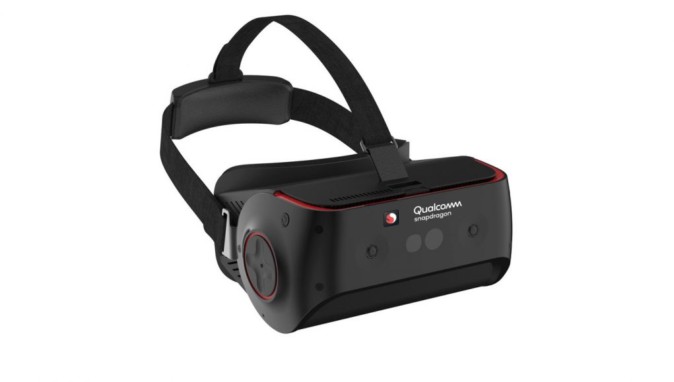
This includes companies such as Lenovo, LG, nreal, OPPO, Mi, and TCL . Depending on the OEM, an AR experience must be in development, and that experience can be either consumer-based or commercial-based. Only time will tell if we will see experiences powered by Snapdragon AR 1 Gen 2 soon.
Snapdragon AR2 Gen 1 brings AR to life
As development in immersive technology expands, advances like Snapdragon AR2 Gen 1 are a solution in the right direction. With a great combination of performance and power, this chip is poised to power the AR experiences that may become the norm. AR2 Gen 1 should also help us finally create slimmer, less burdensome AR glasses. what do you think about it? Let us know what you think in the comments section below.


![How to set up a Raspberry Pi web server in 2021 [Guide]](https://i0.wp.com/pcmanabu.com/wp-content/uploads/2019/10/web-server-02-309x198.png?w=1200&resize=1200,0&ssl=1)


