Xiaomi recently released the Redmi Note 5 Pro, the long-awaited successor to the Redmi Note lineup. It comes with a price tag of Rs. The $15,000 device goes head-to-head with the Mi A1, currently the best mid-range budget offering. As such, many of us were wondering if the latest offering from the Chinese giant is actually better than the Android One devices that are already selling like hotcakes in the country. So, let’s take a look at the comparison between Xioami’s best budget products, Redmi Note 5 Pro and Mi A1.
Redmi Note 5 Pro vs Mi A1: Specs
Before we get into the actual comparison part, let’s first explain the specs. The Redmi Note 5 Pro is the more modern of the two, with an updated processor and a new 18:9 screen.
| device | Redmi Note 5 Pro | Mi A1 |
|---|---|---|
| screen | 5.9 inch 18:9 Full HD+ IPS display | 5.5-inch FHD LCD display, 1920 x 1080p resolution |
| size | 158.6×75.4×8.1mm | 155.4×75.8×7.3mm |
| weight | 181 grams | 165 grams |
| processor | Octa-core 1.8Ghz Qualcomm Snapdragon 636 (with Adreno 509 GPU) | Octa-core Snapdragon 625 processor, clocked at 2.0GHz |
| rum | 4/6GB | 4GB |
| storage | 64GB, expandable up to 128GB using microSD card | 64GB, expandable up to 128GB via MicroSD card |
| primary camera | 12+5 MP dual camera with dual-tone flash | Dual 12MP wide angle + 12MP telephoto lens with two-tone flash |
| secondary camera | 20 MP with LED flash | 5MP, f/2.6 aperture, beautification and facial recognition |
| battery | 4,000mAh (with QC 2.0) | 3,080mAh |
| software | Android 7.1.1 Nougat with MIUI 9 | Stock Android 7.1.1 |
| connectivity | VoLTE, Bluetooth 5.0, Wi-Fi 802.11 a/b/g/n/ac, headphone jack | VoLTE, Wi-Fi 802.11 a/b/g/n/ac, Wi-Fi Direct, Bluetooth 4.2, GPS, GLONASS |
| price | 4GB 13,999 yen, 6GB 16,999 yen | ₹14,999 |
Quality of design and construction

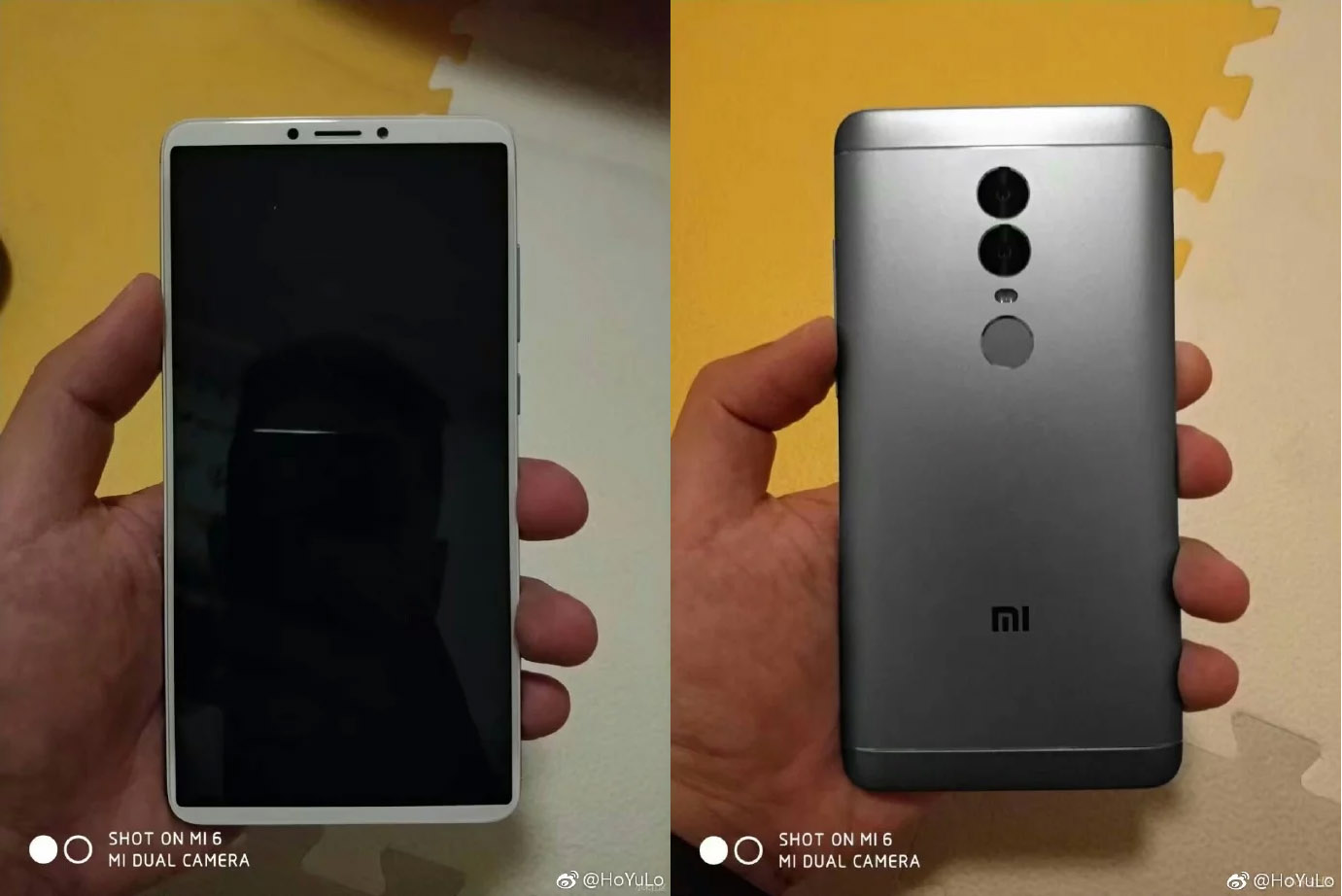
Both devices follow different design languages but are essentially the same. Both are Xiaomi devices with the same bands on the top and bottom and the same fingerprint sensor. However, I personally would like to praise the Mi A1 for having an original dual-camera setup design rather than a copy of the iPhone X that is featured on the Redmi Note 5 Pro. However, on the front , the Redmi Note 5 Pro shines with a more modern 18:9 almost bezel-less display , while the Mi A1 looks like a device from 2016.

In terms of build quality, both devices feature the same aluminum build . The 5.5-inch Mi A1 has a better grip than the Redmi Note 5 Pro and is easier to use with one hand. Also, despite being the newer of the two devices, the Note 5 Pro has a micro USB , while the Mi A1 has a USB Type-C port . Overall, the Redmi Note 5 Pro certainly looks more modern than the two models, but the Mi A1 is better in terms of overall design and build quality.
screen
The display is one of the factors that makes Redmi Note 5 Pro clearly better than others. The 5.99-inch 18:9 resolution is aesthetically pleasing, and the Mi A1 falls short of the Redmi Note 5 Pro. Don’t get me wrong. The Mi A1’s 5.5-inch display is impressive, but the device falls short of the latest Note 5 Pro.

Colors are vibrant and the Full HD+ resolution looks very sharp . Sure, it might not be up to the level of a 1440p display, but then again, you have to remember that this is a budget device. Redmi Note 5 Pro is clearly the winner here.
camera quality
Probably the part most people are most interested in: camera performance. Although Xiaomi’s devices have always offered the best hardware in affordable devices, the camera segment has always been a drawback. Everything changed with the Mi A1, which has a very good camera. The Redmi Note 5 Pro is currently being touted as ‘India’s camera beast’, but does it have what it takes to beat Xiaomi’s personal best?

When we thoroughly tested the camera performance, both devices were a close contender. In some cases, the Redmi Note 5 Pro performed better, and in others, the Mi A1 reproduced colors better. Overall, the performance of both cameras is inconsistent and there are slight differences between them. Portrait mode is excellent on both devices, and video recording is also decent considering the price range of both smartphones. 


In fact, if cameras are your main preference, you can’t go wrong with either device. Having said that, Xiaomi has promised to bring a new update for Redmi Note 5 Pro that brings further improvements to the camera. Therefore, it might be better to use only Redmi Note 5 Pro.
software
Now, this comes down to personal preference. On the other hand, there is the Stock Android OS, which comes directly from Google’s AOSP. The thick-skinned MIUI, on the other hand, is Android-only but offers a completely different user experience.
Personally, I have always admired the rich customization options that MIUI offers end users, as well as the excellent battery optimization for long-term usage . However, the only issue I experienced with MIUI was memory optimization, with the thick-skinned OS hogging up a lot of RAM. However, considering it comes with 4GB of RAM, this shouldn’t be much of an issue.

That being said, I still prefer the standard Android experience. This is Google’s idea of Android, free of bloatware and allowing users to use their devices however they want. Additionally, one of the big advantages of the Mi A1 is that it is an Android One device, so it will be one of the first devices to run the latest version of Android. In fact, the device is already running on Android Oreo 8.0, while the Redmi Note 5 Pro is still running on Android Nougat. Also, if you are someone who likes to tinker with devices, stock Android is compatible with all the mods out there.
At the end of the day, the software part comes down to personal preference. Want more features or longer battery life? Use MIUI 9 on Redmi Note 5 Pro. If you prefer a clean interface without bloat, get the Mi A1 with stock Android.
performance
When it comes to performance, I think we already know who will be the winner. Compare Snapdragon 636 in Redmi Note 5 Pro and Snapdragon 625 in Mi A1. The new processor is definitely better than the latter. As you can see from the benchmark results, the performance improvement is clearly noticeable, although not huge.
When it comes to day-to-day use, both devices work equally well. However, the Redmi Note 5 Pro is the clear winner here, offering snappier performance with faster app loading times and processing speeds.
battery
Mi A1’s stock Android doesn’t come with bloatware, while Redmi Note 5 Pro’s MIUI 9 comes with great battery optimization features. In our test results, both devices lasted a full day with moderate usage, but the Redmi Note 5 Pro’s 4,000mAh battery certainly lasted longer than the Mi A1’s 3,080mAh battery . In fact, even on the second day, the Redmi Note 5 Pro had enough energy left to last for several more hours.

The new Snapdragon 636 SoC is highly power efficient and combined with a large battery and MIUI optimizations proves to be a battery-friendly package.
See also: 10 best fast chargers for Redmi Note 5 Pro you can buy
Which one should I buy?
At the moment, it is obvious that you are wondering which device is suitable for you. Well, to be honest, Xiaomi has outdid itself this time with the Redmi Note 5 Pro. Sure, there are a few things we don’t like, like the micro-USB port and the copycat rear camera design, but other than that, the Redmi Note 5 Pro is an absolute beast. You get a beautiful 18:9 display, a more powerful camera setup on both sides of the device, a bigger battery, a faster processor, and the snappiest MIUI ever, all for a low price of just Rs. 15,000. In this battle against Xiaomi’s cheaper products, it is clear that Redmi Note 5 Pro is the absolute winner.
Buy Redmi Note 5 Pro: ( ₹13,999 )
Bu MI A1: ( ₹13,999 )
But again, that’s what we think. what about you? Do you agree or disagree with our comparison? Let us know your thoughts in the comments section below.


![How to set up a Raspberry Pi web server in 2021 [Guide]](https://i0.wp.com/pcmanabu.com/wp-content/uploads/2019/10/web-server-02-309x198.png?w=1200&resize=1200,0&ssl=1)


