Customers are the driving force behind any business. Knowing what they think about your product or service can help your organization make great strides. Sentiment analysis tools make it easy to learn about your customers from feedback data.
Sentiment analysis plays a huge role in understanding your audience and customers. This method allows applications to glean important insights from large amounts of unorganized data.
Let’s take a closer look at opinion mining, its types, helplessness, challenges, working methods, and real-life examples.
What is sentiment analysis?

Sentiment analysis refers to identifying emotions and sentiments through text analysis and mining. Also called opinion mining. Companies can use this approach to categorize opinions about their products and services. In addition to sentiment judgments, this analysis can collect text polarity, subject matter, and opinion.
Opinion mining uses AI, ML, and data mining technologies to mine personal information from unorganized, unstructured text such as emails, support chats, social media channels, forums, and blog comments. There is no need for manual data processing as algorithms generate emotions at scale using automatic, rule-based, or hybrid methods.
Grammarly as a sentiment analysis tool
Grammarly is not only a tool for correcting grammar and punctuation mistakes, but also an opinion mining tool. If you’ve ever used Grammarly’s integration in your emails, you may have seen emojis appear at the bottom of your emails to mark the content of your emails as friendly, formal, informal, and more.
This emoji indicates the result of tone or sentiment analysis of the text. Grammarly uses a set of rules and machine learning to identify signals that influence tone and emotion in your writing. We analyze words, capitalization, punctuation, and punctuation to show you how recipients find them.
Apart from emails, it detects the emotion in any text you write and tells you the main emotion in that sentence. It allows you to choose the right tone that will help you build healthy relationships with others.
Importance of sentiment analysis
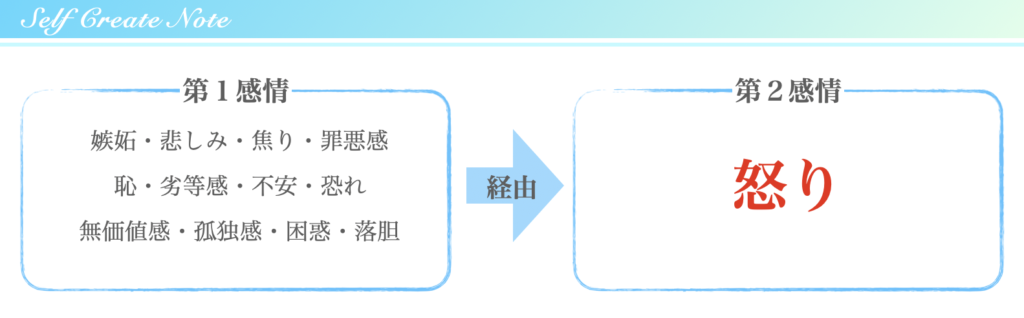
Real-time emotion tracking
Acquiring new customers is more expensive than retaining existing customers, but the latter also requires continuous monitoring. What someone feels about your brand today could change tomorrow. Opinion mining allows you to understand sentiment in real time and take immediate action.
better products and services
Customer sentiment allows you to see customer reactions and feedback. Data helps us develop better products and provide improved customer service. It also improves team productivity by quickly identifying emotions and themes.
Get actionable data
Sentiment analysis provides actionable data. Social media these days is full of data as people keep talking about and tagging brands. Analyzing these data for sentiment means knowing your brand image and product performance.
Carefully selected marketing campaigns
Opinion mining can be used to evaluate marketing campaigns. Based on the results, we will be able to respond in a way that is tailored to the customer’s feelings. These insights can help businesses improve their marketing strategies. For example, you can run a special campaign targeting people who are interested in purchasing your product and have positive thoughts about your company.
Brand image monitoring
Today’s business world is so competitive that maintaining a brand image is difficult. Opinion mining allows you to determine how your customers perceive your company and take action accordingly.
Types of sentiment analysis
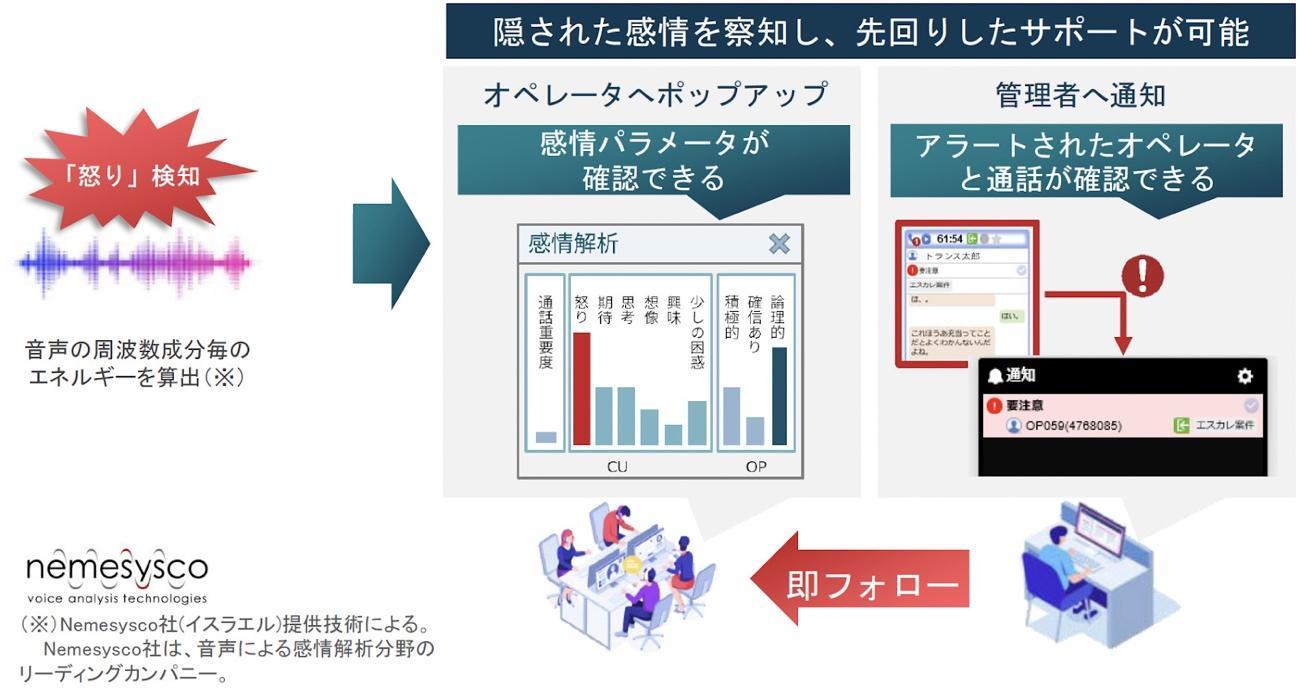
Depending on your company’s needs, you can run opinion mining models to capture different sentiments.
detailed analysis
This model helps derive polarity accuracy. It will help you find out the reviews and ratings received from your customers. Companies can apply this analysis to different polarity categories such as very positive, positive, negative, very negative, and neutral.
Aspect-based analysis
This type of sentiment analysis allows for deeper analysis of customer reviews. It determines what aspects of your business or idea your customers are talking about.
If you’re a fruit juice seller and receive a review that says, “Refreshing, but biodegradable straws should be included.” This analysis reveals that the juice is talked about positively, but the packaging is talked about negatively.
emotion detection analysis
Using this model, organizations can detect emotions such as anger, satisfaction, frustration, fear, worry, happiness, and panic in user feedback. This system typically uses dictionaries, but some advanced classifiers also use machine learning algorithms.
However, to detect emotions, you need to use machine learning instead of a dictionary. A single word can convey both positive and negative meanings, depending on its use. Dictionaries may inaccurately detect emotions, but ML can correctly determine emotions.
intent analysis
This model allows you to accurately determine consumer intent. As a result, you won’t have to spend time and effort following an audience that has no intention of buying anything right away. Instead, you can focus on customers who are planning to purchase your product. You can use retargeting marketing to get their attention.
How does sentiment analysis work?
Opinion mining typically works through algorithms that scan sentences and determine whether they are positive, neutral, or negative. Advanced opinion mining tools replace static or traditional algorithms with artificial intelligence and machine learning. Therefore, industry players also refer to opinion mining as emotional AI.
Sentiment analysis currently follows two working models:
#1.Sentiment analysis using machine learning
As the name suggests, this technique leverages ML and natural language processing (NLP) to learn from a variety of training inputs. Therefore, the accuracy of the model is highly dependent on the quality of the input content and a proper understanding of the sentiment of the text. More information is provided in the How to create sentiment analysis using machine learning section below.
#2.Rule- based sentiment analysis
This is the traditional method of opinion mining. This algorithm has some preset rules to identify the sentiment of a sentence. Rule-based systems can also utilize NLP manually through word lists (lexicon), tokenization, parsing, and stemming.
Here’s how it works:
dictionary library
The programmer creates a library of positive and negative words within the algorithm. To do this, you can use a standard dictionary. Here it helps to carefully decide which words are positive and which are negative. If you make any mistakes, the output will be defective.
Text tokenization
Since machines cannot understand human speech, programmers must break the text into the smallest possible pieces, such as words. Thus, sentence tokenization is performed, which divides the text into sentences. Similarly, word tokenization splits the terms of a sentence.
Delete unnecessary words
Lemmatization and stop word removal play an important role at this point. Lemmatization is the grouping of similar words into one group. For example, Am, Is, Are, Been, Were, etc. are considered “be”.
Similarly, stopword removal removes extra words such as For, To, A, At, etc. that don’t make a significant change in the sentiment in the text.
Computer counting of sentiment words
Because sentiment analysis projects involve analyzing terabytes of text, computer programs must be used to efficiently count all positive, negative, and neutral words. It also helps reduce human error in the process.
Calculating sentiment score
Well, the task of opinion mining is easy. The program needs to give a score to the text. Scores can be in percentage format, such as 0% being negative, 100% being positive, and 50% being neutral.
Alternatively, some programs use a scale of -100 to +100. On this scale, 0 represents neutral sentiment, -100 represents negative sentiment, and +100 represents positive sentiment.
Application of sentiment analysis to real life

Companies continue to collect qualitative data that needs to be properly analyzed. Here are some real-world use cases for opinion mining:
- Sentiment analysis is used to analyze customer support conversations. It helps companies streamline their workflow and improve the customer service experience.
- What customers say in forums and online communities is important to businesses. They use this method to understand their customers’ overall impressions of these platforms.
- Customer reviews on social media can make or break your business. Sentiment analysis is often used to identify what your audience is saying about your company.
- Opinion mining allows you to identify market trends, determine new markets, and analyze competitors. Therefore, people use it for market research before launching a new product or brand.
- Product reviews are another area where companies use sentiment analysis. Therefore, companies know where they can improve their products.
- Surveys for newly launched products or app betas contain information that can be used to improve the product. Opinion mining can also help you collect important data from customer surveys.
Create sentiment analysis using machine learning

Preprocessing text
In text preprocessing, ML algorithms may utilize stopword removal and lemmatization to remove unimportant words that play no role in AI mining.
Feature extraction
After processing the raw text, the AI program applies vectorization techniques to convert emotion words into numbers. The industry term for the numerical representation of this word is “feature.”
Bag-of-n-gram is a common method of vectorization. However, deep learning has made many advances in this field, introducing the word2vec algorithm that utilizes neural networks.
AI and prediction training
The AI trainer needs to be fed a set of training data with emotion labels. The data mainly contains many pairs of features. A feature pair means a numerical representation of a sentiment word and its corresponding label (negative, neutral, or positive).
Prediction of real text
Here, the programmer will feed unseen or new text to the ML system. Generate tags or classes for invisible text using learning from training data.
In some cases, AI systems can also utilize classification algorithm models such as logistic regression, naive Bayes, linear regression, support vector machines, and deep learning.
opinion mining tool

Now that you know more about the concept of sentiment analysis, let’s explore the top opinion mining tools.
monkey learn
MonkeyLearn is sentiment analyzer software that allows you to quickly detect sentiment in unorganized text data. This tool allows businesses to quickly spot negative comments and respond instantly to build a positive impression.
You can monitor what your customers think about your product, service, or brand. Therefore, the company’s response time for urgent inquiries will also increase significantly. You can also visualize emotional insights.
MonkeyLearn supports integration with hundreds of text analysis applications, including Zapier, Airtable, Gmail, Intercom, MS Excel, Google Sheets, Zendesk, SurveyMonkey, Typeform, and Service Cloud.
Awario
If you’re looking for a reliable sentiment analysis tool to track your social listening, Awario is the application for you. You can understand reputation by measuring the sentiment built around your brand and how it changes over time.
This tool allows you to find negative comments on social media and respond to them as a priority. Inform customers about their response to marketing campaigns and new product launches.
Additionally, businesses can use this platform to analyze their competitors and identify their strengths and weaknesses. You can also get your analysis statistics in PDF format and share them with others.
By theme
Thematic is a feedback analysis platform that can also be used for sentiment analysis. Use AI-powered opinion mining to provide complete customer insights. This tool allows you to understand customer feedback and prioritize responses in a central platform.
The platform collects feedback from surveys, social media, support chats, customer open-ended responses, and reviews. We then use AI to categorize them into different themes and emotions.
So we know what’s important to our customers. The platform allows you to seamlessly understand the themes that are trending among your customers, without the need for training or manual coding.
last word
Customer emotions and purchase intent are closely related. Companies can design marketing plans by knowing the positive or negative impressions of potential and existing customers. Sentiment analysis is also useful for social media management and corporate branding.
Now that you know the importance of opinion mining and how it works, you can implement this method in your business with the help of a top sentiment analyzer. You can also use machine learning to create sentiment analysis solutions.
If you’re interested, check out this list of customer feedback tools to improve your products.


![How to set up a Raspberry Pi web server in 2021 [Guide]](https://i0.wp.com/pcmanabu.com/wp-content/uploads/2019/10/web-server-02-309x198.png?w=1200&resize=1200,0&ssl=1)


