In cloud computing, the term tenant refers to a group or individual user who has access to a shared pool of computing resources such as storage, servers, and applications. Resources are provided by cloud service providers.
Each tenant is isolated from other tenants and cannot access each other’s data or resources. Multiple tenants can share the same infrastructure while maintaining their own privacy and security. A tenant can be an individual, an organization, or a department within an organization.
When resources and infrastructure are dedicated to only one tenant, such an architecture is called single tenant. When multiple different tenants share the same resources, this represents a multi-tenant architecture.
However, the difference between single-tenant and multi-tenant architectures is a little more complex. For example, you can use AWS as your cloud service provider to set up multi-tenant as well as single-tenant architectures. The difference is in the details. please.
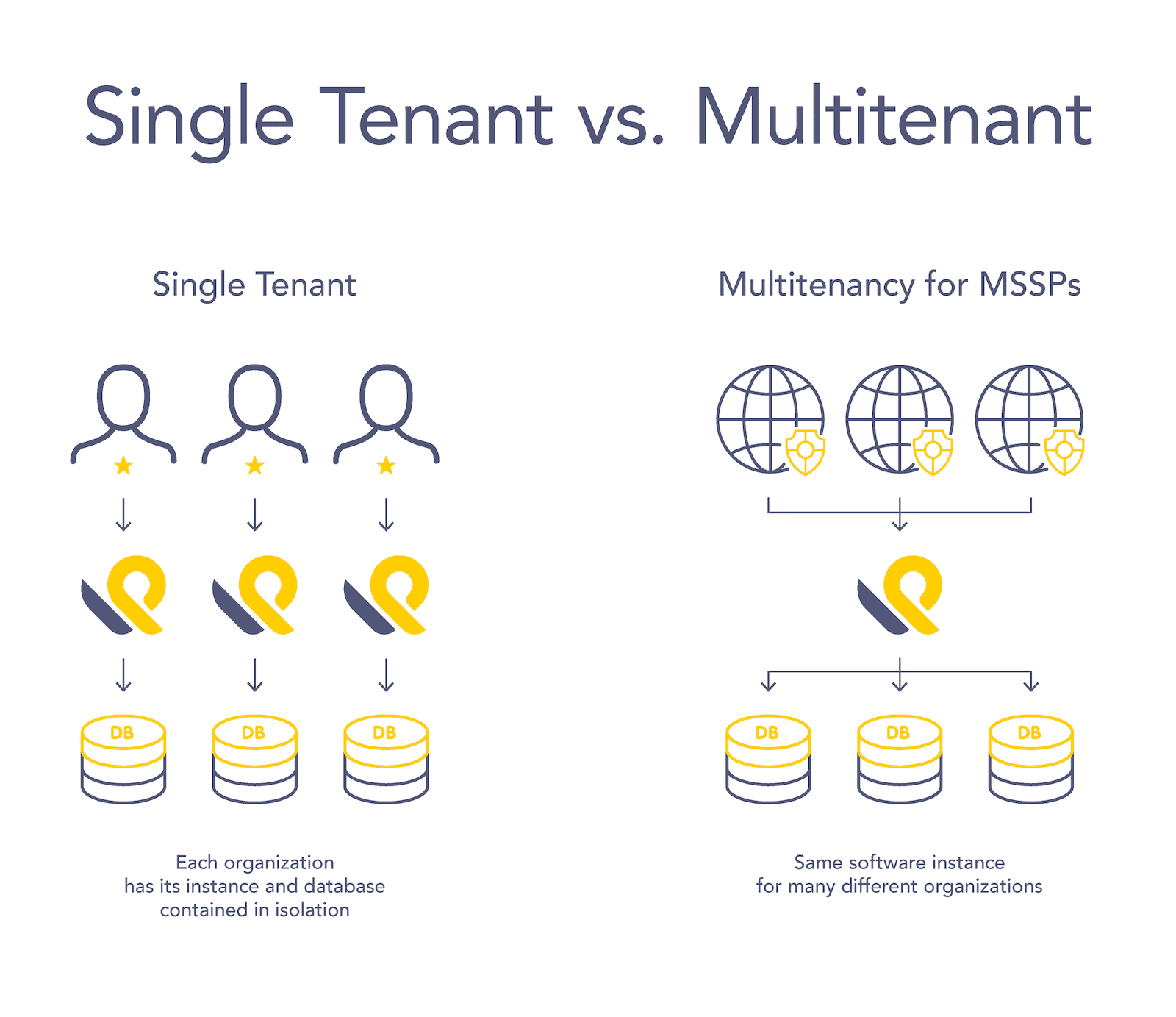
Now, before we get into the details, let’s take a quick look at both architectures.
| Features | Single tenant architecture | multi-tenant architecture |
|---|---|---|
| Sharing resources | Not shared with others | Shared with multiple customers |
| customization | highly customizable | limited customization |
| Fee | generally more expensive | generally cheap |
| safety | Enhanced security | security level is low |
| performance | Predictable performance | Impact on scalability |
| maintenance | Customer maintains resources | Cloud provider handles maintenance |
| collaboration | Limited collaboration | better collaboration |
| compliance | Improved compliance with specific regulations | Standard process for all tenants |
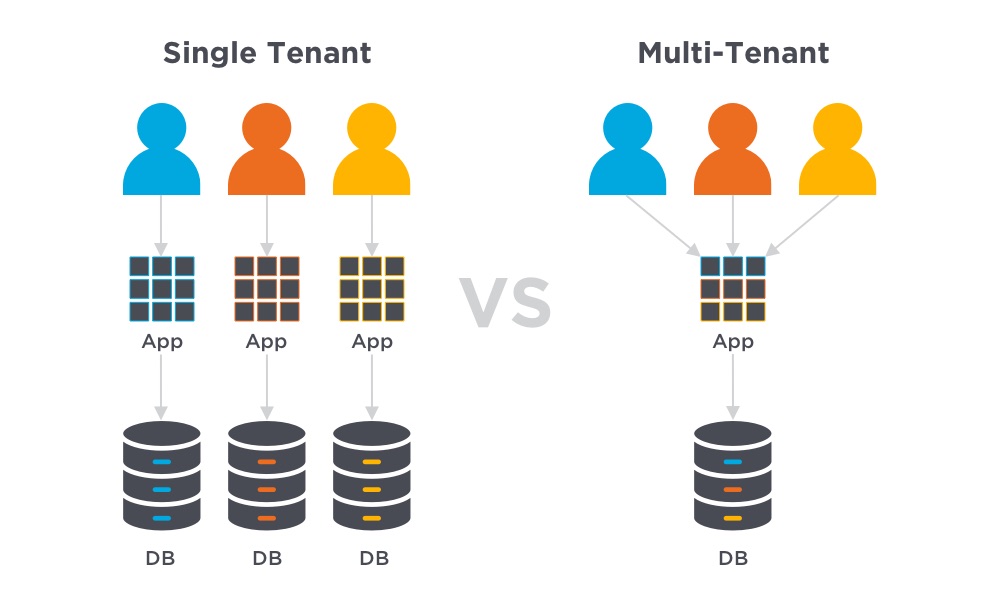
Single tenant architecture
Single-tenant cloud applications are designed to serve a single customer or organization and provide dedicated resources that are not shared with other customers.

This is a model where a single customer or tenant has exclusive access to servers, applications, or infrastructure in the cloud. In this model, customers have full control over their resources and can customize them to suit their specific needs. This means that cloud resources are dedicated to that customer.
This single tenant allows you to customize resources to suit your specific needs. This means more flexibility and control over your resources.
Generally more expensive than multi-tenant architectures because only the customer pays for dedicated resources.
Below is an example of how to build an end-to-end single tenant architecture on the AWS Cloud.
- Create a virtual private network (VPC) to isolate single-tenant resources. VPC provides network isolation and security.
- Use Identity and Access Management (IAM) to manage access to resources in a single tenant. IAM creates policies that define the resources that a tenant can access.
- Provision virtual machines to a single tenant using Elastic Compute Cloud (EC2). EC2 creates instances with specific configurations and gives you complete control over your resources.
- Use Elastic Block Store (EBS) to provide block-level storage for your virtual machines.
- Use relational database services (RDS) to provide managed database services to a single tenant. You can create a separate database instance for your tenant to provide isolation and security.
- Use Amazon S3 to store static assets such as images, videos, and documents. You can create a separate bucket for your tenant that only your tenant can access.
- Use an Elastic Load Balancer (ELB) to distribute traffic across multiple instances of your application, all within resources dedicated to your tenant.
Cloud application example
Here are some of the most popular cloud applications that can be used for single tenant architecture.
- Workday is a cloud-based human resources and financial management software that provides a single tenant architecture for customers.
- SAP HANA cloud-based platform.
- Oracle Cloud Architecture.
- IBM Cloud Dended with dedicated resources not shared with other customers.
- Rackspace Private Cloud.
Advantages of single-tenant cloud architecture
Single-tenant cloud architectures have several advantages over multi-tenant architectures.
- Increased security as resources are dedicated to a single customer. Customers have complete control over the security of their resources. Eliminate the risk of data leakage and unauthorized access that can occur in multi-tenant environments.
- Another advantage is that it is highly customizable. You can customize resources to meet your specific needs, improving performance and efficiency. You also have more flexibility when it comes to software and hardware selection.
- Performance is predictable because resources are dedicated to a single customer. You can expect consistent performance loads. This is important for applications that require high levels of performance and reliability.
- Resources are used for only one tenant, improving compliance with certain regulations and standards.
- Improves scalability as customers can scale up or down resources as needed.
However, single-tenant architectures are generally more expensive than multi-tenant architectures, so they may not be the best choice for every organization.
Real-world use cases for single-tenant cloud architectures
Here are some best use cases for single tenant architecture.
- Healthcare organizations must comply with strict regulations such as HIPAA, which require high levels of security and privacy. Single-tenant architecture gives healthcare organizations complete control over resources and the ability to implement security measures tailored to patient and staff needs.
- Financial institutions are required to comply with strict regulations such as PCI DSS. Therefore, single tenant architecture is a good solution.
- Government agencies must adhere to strict regulations such as FISMA, which again requires high levels of security and compliance.
- Research organizations often require a high degree of customization and performance from their resources.
- E-commerce organizations are another use case for single tenant architecture. You can scale up or down your resources as needed to meet your customers’ changing needs.
multi-tenant architecture
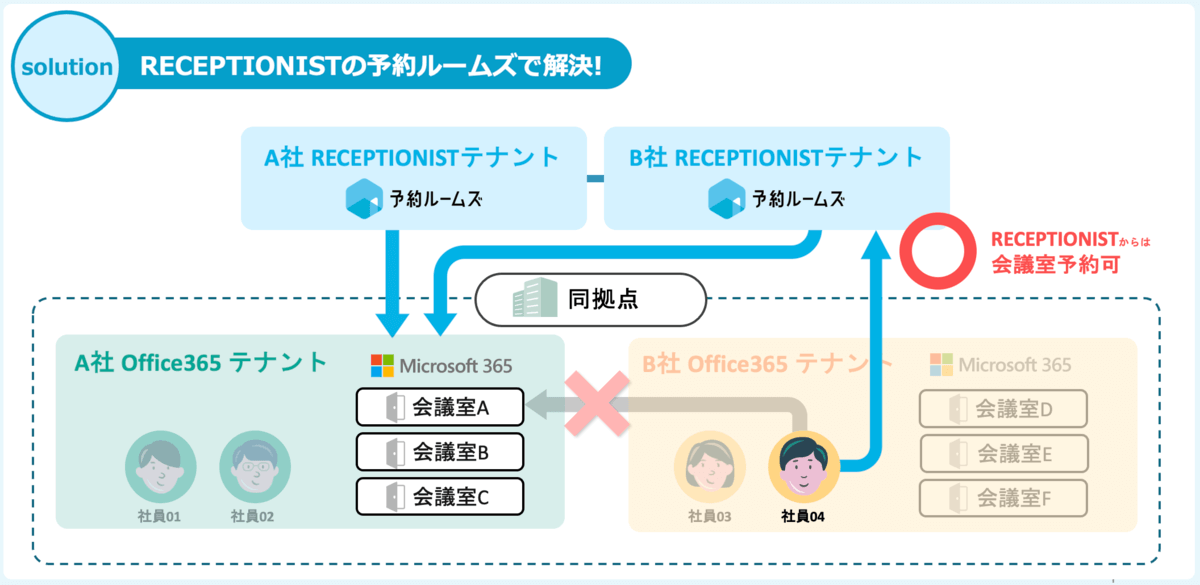
Multitenant architecture is often the best solution for organizations that prioritize cost savings, scalability, and collaboration over advanced security and customization needs.
- Multiple customers share the same resources in the cloud. This means that the resources are shared among all customers, rather than being dedicated to a particular customer.
- Multi-tenant architectures are generally cheaper than single-tenant architectures simply due to the shared nature of the resources.
- There are limits to the customizations you can perform. This can be a disadvantage for customers who require highly customized resources.
Below is an example of how to build an end-to-end multi-tenant architecture on the AWS Cloud.
- Create a VPC to isolate resources for each tenant. Each tenant has its own VPC, providing network isolation and security.
- Use IAM to manage access to resources for each tenant. IAM defines policies and the resources that each tenant can access. Different policies can be applied to different tenants.
- Use ELB to distribute traffic across multiple instances of your application. Control what traffic goes to which tenant.
- Use RDS to provide managed database services to each tenant. Create a separate database instance for each tenant with separate database permissions and data content. You can use the same database cluster. This provides isolation and security for the tenant.
- Use Amazon S3 to store static assets such as images, videos, and documents. You can control access to your tenant’s buckets. You can share it between multiple accounts or separate it as needed.
- Distribute static assets to your users using CloudFront. Creating separate distributions for each tenant provides isolation and security.
Cloud application example
Here are some real-world examples of multi-tenant cloud applications.
- Salesforce is a cloud-based customer relationship management (CRM) platform that allows multiple organizations to use the same infrastructure while keeping data separate and secure.
- Dropbox is a cloud-based file storage and sharing service that allows multiple users to collaborate on the same files.
- Microsoft Office 365 is a cloud-based productivity suite that allows multiple users to collaborate on the same documents, spreadsheets, and presentations.
- Google Workspace is a cloud-based productivity suite similar to Microsoft’s.
- AWS is a cloud-based infrastructure platform that allows multiple organizations to use the same infrastructure while keeping data separate and secure.
Advantages of multi-tenant architecture
Multi-tenant cloud architecture has unique benefits, including:
- This architecture is typically less expensive than single-tenant architecture. Multiple customers share resources.
- The impact on scalability will be greater. Resources scale up or down as needed to meet changing needs as customers share resources. All scaled at the same time.
- This architecture requires less maintenance. The cloud provider is responsible for maintaining the same resources across all tenants. Therefore, maintenance is performed only once.
- Collaboration between customers is enhanced because they share the same resources. Customers can collaborate on projects and share data more efficiently.
- This architecture promotes standardization. Cloud providers can implement standard processes and procedures and apply them to all tenants simultaneously.
However, if your organization requires high levels of security, compliance, or customization, a multitenant architecture may not be the best choice. Shared resources reduce all these opportunities.
Real-world use cases for multi-tenant architectures
Here are some best use cases for multi-tenant architecture.
- Small and medium-sized businesses (SMBs) often have limited budgets and resources, making multi-tenant architecture an attractive option.
- Software as a Service (SaaS) providers use multitenant architecture to serve multiple customers.
- Social media platforms require high levels of scalability and collaboration. Multi-tenant architecture allows social media platforms to scale up or down resources as needed to meet the changing needs of users.
- Educational institutions often require cost-effective solutions for their IT infrastructure. Multi-tenant architecture reduces costs by allowing institutions to share the cost of resources with other institutions.
- Public cloud providers use multitenant architecture to serve multiple customers.
Where does the AWS Cloud fit in?

As mentioned above, AWS can be set up as a single-tenant or multi-tenant architecture.
You can create an infrastructure dedicated to a single customer or organization. For example, AWS has EC2 dedicated hosts that provide a physical server dedicated to a single customer. This gives customers complete control over the underlying hardware.
AWS also has Virtual Private Cloud (VPC), which allows customers to create isolated virtual networks within the AWS Cloud.
However, AWS offers a variety of services that you can use to create shared infrastructure. For example, AWS offers EC2 instances (not dedicated) that provide virtual servers that can be shared by multiple customers. They then share the same underlying hardware and infrastructure while maintaining their own privacy and security.
Alternatively, you can use a service like Amazon S3 that allows you to share the same storage among multiple customers. Customers can store and retrieve data in a shared environment.
When it comes to RDS databases on AWS, you also have the option of setting them up in different ways. You can also create separate database instances for each tenant. You can also create dedicated database clusters and instances for sole tenant use.
Finally, you can use RDS to create a shared database service for multiple tenants. In that case, such a database instance supports multiple tenants, ultimately limiting its level of customization and performance.
This means that the platform does not determine whether it is a single-tenant or multi-tenant architecture. It’s more about how you configure and set up your platform.
last word
The choice between single-tenant and multi-tenant architectures depends on the specific needs of the customer. Single tenant architecture is generally suitable for organizations that require high levels of security, compliance, and customization. Multitenant architecture is suitable for organizations that prioritize cost reduction and scalability.
Cloud platforms like AWS, for example, offer the possibility to change your mind over time. You can also use these to create a hybrid environment where each case has its own location and works well together.
Next, let’s talk about multi-tenancy in cloud computing.


![How to set up a Raspberry Pi web server in 2021 [Guide]](https://i0.wp.com/pcmanabu.com/wp-content/uploads/2019/10/web-server-02-309x198.png?w=1200&resize=1200,0&ssl=1)


