Google Firebase is a platform that allows you to easily and quickly build backends for your applications. It helps speed up application development and increases team productivity.
Firebase lets you build scalable backends using a variety of cloud services. This article introduces Firebase and provides an overview of the various services it offers.

What is Firebase?
Firebase is a group of cloud services for applications provided by Google. These services are provided to increase the productivity of application development teams.
Unlike popular cloud services such as Amazon Web Services, Google Cloud, and Microsoft Azure, Firebase automatically configures itself to provide a simplified abstraction layer on top of your virtual servers. This gives you less to worry about and primarily allows front-end engineers to set up a production-grade backend for your application.

What is serverless computing?
Firebase is a provider of serverless computing. But what is serverless computing? Serverless computing is a cloud computing model in which cloud providers such as Google Cloud, Amazon Web Services, and Microsoft Azure manage much of the technology stack.
As a result, app developers only need to worry about application-specific code, and almost everything else is taken care of. This makes setting up a scalable backend easier and faster.
Why should I use Firebase?
Firebase has multiple advantages over manually configuring your backend. The main benefits of using Firebase are:
- Simple – Firebase automatically configures a lot of things for you. Therefore, you don’t have to worry about many details such as software updates, backups, and detailed security.
- Extensive free tier – Firebase has an extensive free tier that you can use to create proofs of concept quickly and for free. You also pay a fee based on usage.
- Works on multiple platforms and languages – Firebase can integrate with applications running on multiple platforms, including iOS, Android, and the web. It also provides SDKs for many popular programming languages.
- High Availability – Firebase increases the reliability of your applications by handling multi-region replication and creating redundancy to increase application reliability.
- Scalability – As a serverless solution, Firebase is designed to scale without requiring manual intervention from developers. This allows you to handle spikes in traffic.
Here’s an overview of Firebase services.
Firebase service overview
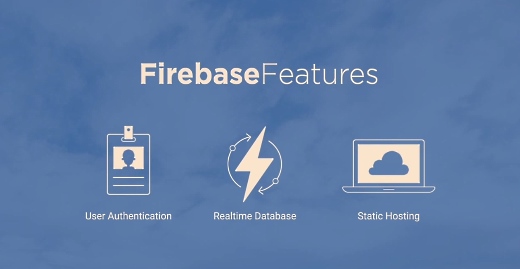
As mentioned earlier, Firebase is a collection of services that you can use to build the backend of your application. There are many more services on this platform than those listed here, but here is an overview of some of the most popular ones.
certification
Google Firebase Authentication Service helps you set up a secure and reliable application authentication system. It simplifies your life by not having to store user login credentials.
Works on all major platforms including iOS, Android, Web, and Unity. The service supports authentication systems such as phone number, email, and social sign-in using platforms such as Google, Facebook, GitHub, and Twitter.
To build a sign-in user interface, Firebase provides FirebaseUI, which provides a user experience flow that users are familiar with. FirebaseUI is open source and can be easily customized to match the look and feel of your application.
real-time database
Google Firebase provides real-time database services. It is a cloud-hosted NoSQL database based on JSON. Data is stored as objects with key-value pairs.
Clients can connect to your database using the Firebase SDK or Rest endpoints. This means supporting a variety of clients, from mobile applications to web applications.
Real-time database services allow applications to cache data locally for faster access. Data updates are set in real time for all connected clients. If the client is offline, updates are saved locally and shared when connectivity is restored.
Firebase Real-time database security is further enhanced by using security rules to restrict access and permissions.
cloud fire store
Google Cloud Firestore is a document-based database. Firestore organizes your data into collections made up of documents. Each document contains data in key-value pairs. These pair values can become more complex and deeply nested objects.
Similar to a real-time database, Firestore provides real-time data synchronization and local caching between different clients, making data accessible even when clients are offline. It also enables offline data writes that are synchronized after connectivity is restored.
Unlike real-time databases, Firestore excels at storing deeply nested hierarchical data. Real-time databases are recommended for storing relatively shallow data.
Firestore is a scalable data storage option with automatic multi-region data replication. This makes it very performant and highly available.
hosting
Google Firebase also provides easy-to-configure hosting websites. It supports HTML, CSS, JavaScript, a static front end using Express.js microservices, and an API for more dynamic content.
Firebase makes it easy to manage security by automatically serving content over HTTPS without having to manually configure SSL. It’s also easy to deploy your site using Firebase command-line tools or GitHub pull requests.
Google Firebase infrastructure is designed to be fast and highly available. Firebase Hosting is no exception. The website is delivered through a worldwide content delivery network to ensure the fastest possible load times for our users.
Cloud function
Cloud Functions is a serverless framework for creating and running functions in a NodeJS environment. These functions are executed in response to events. Events that can trigger execution include HTTPS requests and other Firebase service events.
Cloud functions run in NodeJS, so they are written in JavaScript and TypeScript. All functionality runs on fully managed Google Cloud infrastructure for high reliability and availability.
Additionally, since it is a serverless platform, applications using cloud functionality are highly scalable.
cloud storage
Google Firebase Storage service is a service that allows you to store files such as images and videos on Google Cloud. This may be user-generated content. This service provides robust uploads and downloads that are restarted and prevent clients from losing network connectivity. This helps save user time and data.
Access to files stored in Firebase Storage can be configured using security rules that restrict access using a number of criteria. Like most Firebase services, storage is highly scalable and can store exabytes of data.
cloud messaging
Firebase Cloud Service can send notifications to users of your application. This allows you to invite users to your application and keep them engaged by sending push notifications.
This service allows you to choose from multiple sending options. This includes sending messages to everyone, individuals, groups, or users who have chosen to receive them. The service provides a reliable and cost-effective way to send messages to users while using efficient channels that do not drain users’ batteries.
Disadvantages of Firebase
Firebase has some great advantages, but it also has some disadvantages. It’s important to consider these points before completely building your application on Firebase.
Vendor lock-in – Applications built specifically to integrate with Firebase services may require significant code rewriting before they can work with other service providers.
Limited customizability – Too many layers of abstraction prevent you from customizing and configuring some of the details to work according to your application’s demands.
Cost – Firebase has a generous free tier, but costs can increase significantly as your application scales.
For this reason, it is also important to consider alternatives such as Supabase and Appwrite, which are briefly discussed below.
Firebase Alternatives
Firebase is a great service, but there are some alternatives worth considering. These include:
#1. super base
Supabase is an open source backend platform. Similar to Firebase, it offers authentication, storage, serverless functionality, and a PostgreSQL-based database. Since the Supabase database is based on Postgres, it offers more query options.
This is open source. Therefore, you can self-host your Supabase instance. This reduces costs, but adds complexity because you need to manage the servers on which your instances are running.
#2. app light
Appwrite is an open source alternative to Firebase. Provides NoSQL databases, authentication services, and serverless functionality. These services can be accessed using RESTful APIs or SDKs. SDK supports multiple languages. Appwrite can be self-hosted or use cloud-hosted options.
#3. AWS Amplify
AWS Amplify is a product that helps you build and ship applications faster. Similar to Firebase, you can build a backend for your application that works with a web or mobile frontend.
It also provides offline functionality. Build your front end visually and connect to your back end using Amplify. This eliminates the need to write large amounts of code. Amplify also helps you host your applications on AWS infrastructure.
last word
This article was an introduction to Firebase and its most popular services. Among other things, we discussed the advantages, disadvantages, and alternatives of Firebase.
Next, read about how to build APIs using Firebase.


![How to set up a Raspberry Pi web server in 2021 [Guide]](https://i0.wp.com/pcmanabu.com/wp-content/uploads/2019/10/web-server-02-309x198.png?w=1200&resize=1200,0&ssl=1)


