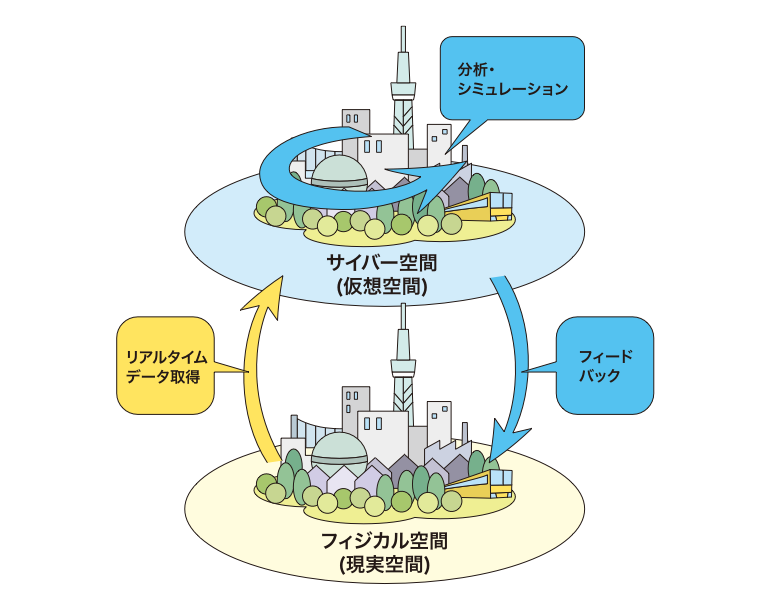
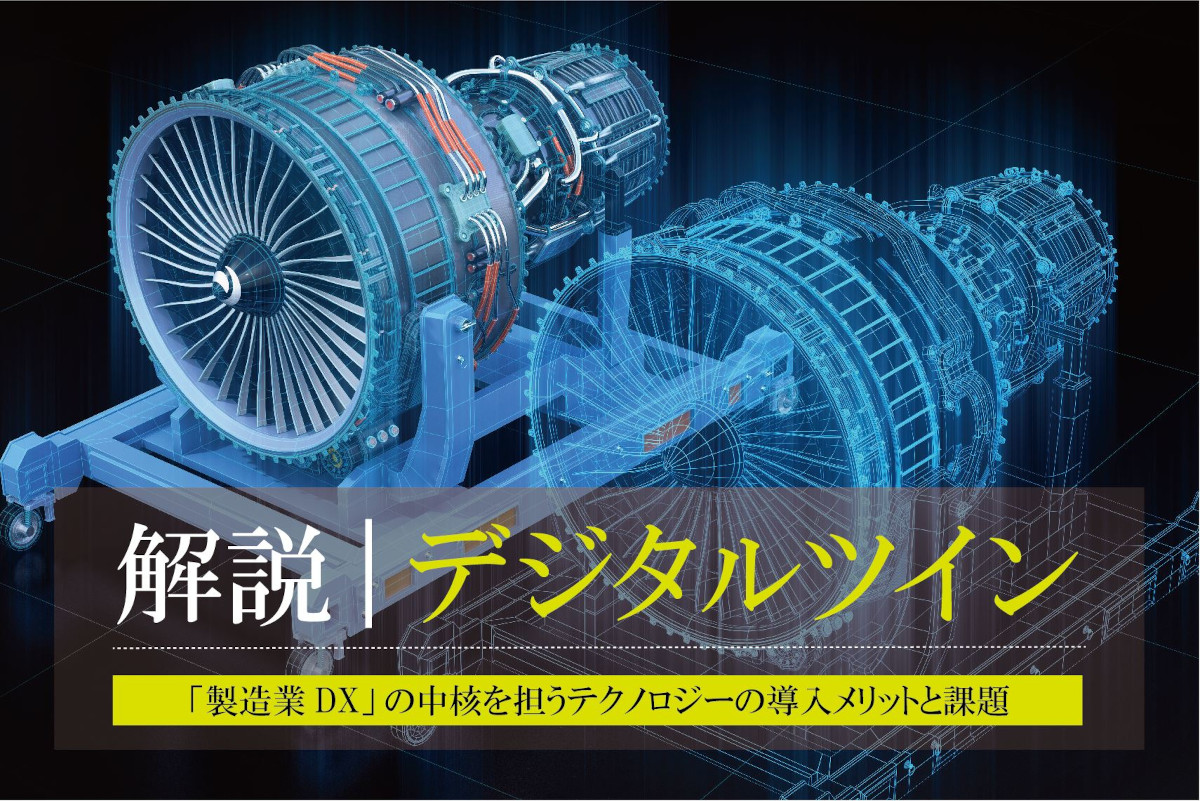
Future-ready companies use digital twins to efficiently create, troubleshoot, update, and innovate physical or digital products. Don’t know what that is? It’s as below!
The Internet of Things (IoT) enables businesses to collect large amounts of data from the real world. The application of IoT for commercial reasons will revolutionize various manufacturing and service delivery processes. It also helps companies create real-time simulations of new and existing products/services.
An advanced level of simulation or digital twin concept powered by IoT provides accurate data from the field.
If you learn the concept of digital twin technically and theoretically, great opportunities will open up.
Build solutions as a digital twin agency for large companies or secure a high-paying job at a top company. Of course, you can also use technology for your business. So let’s learn the what, how, why, and everything else about digital twins.
What is a digital twin?
Digital twins are virtual and computerized models of physical products, assets, employees, business process workflows, and digital software.
Throughout the product lifecycle, digital twins capture real-time data through sensors and survey inputs. Data analysis algorithms analyze the collected data and provide future predictions.
Therefore, product development teams can debug any product, improve it in the next development cycle, and discover new business ideas.
Anything of business interest may have a digital twin. Everything from simple product warehouses to corporate headquarters, spacecraft, offshore oil rigs, hyperloop systems, CRMs, and cyber security software can be replicated within a computer program.
How does a digital twin work?
The digital twin journey begins with the creation of a graphical replica of a physical object. For example, if you want a digital replica of an office building, use architectural CAD software. Additionally, 3D scanners can be used to create near-authentic digital replicas of the building’s various interior spaces.
Next, you need to deploy IoT devices for data collection. These include thermostats, OCR-enabled smart security cameras, mesh Wi-Fi boxes, temperature sensors, water sensors, air sensors, ambient sound sensors, and more.
One or more edge analytics devices allow you to collect valuable data from these IoT devices and sensors. After local analysis, you can save the data to the cloud and use the insights to build a live model of your building using the CAD model on your computer.
The digital twin recreates everything happening inside the building. A continuous stream of data allows you to predict pedestrian counts, power usage, Wi-Fi coverage, AC usage, optimal commercial space utilization, and more.
Types of digital twins
#1.Business Asset Twin
When two or more business components work together to produce a valuable result, they are called business assets. When you create a digital twin of such an asset, you get an asset twin.
Such digital replicas can help study the real-world interactions of components and collect performance data for process improvement.
#2.Parts or components twins
A component or part twin is the smallest digital replica of a business process. For example, things like conveyors and robotic arms can be digitally modeled on a computer program for simulation purposes.
#3.Unit or system twin
A unit twin is a digital replica containing live working data of a business system that can generate intermediate or finished products. For example, mineral water bottling machines produce packed mineral water for labeling units.
#4.Process or Workflow Twin
A workflow or process-level digital twin is a digital replica at its best. For example, creating a digital simulation of a real car manufacturing plant is a process twin.
A process twin shows how human labor, robotic assets, production units, and other microscopic equipment work together to produce a car.
Digital twin vs. simulation
Although they both sound the same, this table shows the detailed differences below.
| Features/Attributes | digital twin | simulation |
| scale | From small business systems to large manufacturing plants. | Companies typically use simulation on a small scale to meet specific needs. For example, flying an airplane or simulating a cyber attack. |
| live data | Real-time data collected from the environment in which digitized objects operate is at the core of digital twin technology. | Simulations do not require real-time data input. |
| Research scope | You can learn the entire business or small tasks. | The simulation focuses on one task at a time. |
| Sharing insights | A digital twin automatically shares output insights with a physical object or process. | Simulations do not automatically share insights. You must implement the results manually. |
Examples of using digital twins
#1.Manufacturing industry
Digital twins exist to reflect the lifecycle of a product. Digital twins are therefore essential at every manufacturing stage, guiding products from the design stage to the finished product and all the other stages.
#2.Health management
Just like products and services, patients can also benefit from digital twin technology. Different healthcare IoT devices collect data at different levels.
Experts can apply such medical data and treatment strategies to digital replicas to simulate the situation. This approach yields the best methods for treating medical conditions.
#3.Automobile
Vehicles contain many different types of complex, variable, and interworking systems. Designers and engineers use digital twins extensively in automotive design and manufacturing.
This approach improves vehicles, minimizes production costs, and generates huge revenues for the automotive industry.
#4.Retail
Major shopping chains are already applying digital twin technology to their shopping malls and plazas.
They collect customer data through a series of IoT devices that track customer sentiment regarding product display, packaging, specific brand choices, pricing considerations, and more.
By analyzing such data, retail marketing teams can then create retail strategies to maximize sales.
Using digital twins in IoT
IoT and digital twin technologies are interconnected. IoT devices must be deployed to collect live data about real objects and transfer that data to digital replicas on computer servers.
IoT can communicate with each other and with a central server, making it easy to collect comprehensive data about the physical objects you monitor. Because IoT devices constantly feed data, digital twin models can analyze and present performance insights.
Similarly, IoT manufacturers can also create a digital replica of a single device, or an entire home or office, to test the effectiveness of the various IoT devices they wish to develop.
For example, IoT manufacturers can create smart home simulations using CAD and 3D scans of physical homes. Next, place different IoT devices in different locations on the digital twin to see if they can connect to your home Wi-Fi or if they need improvement.
Benefits of digital twin
Find out below how your business can benefit from implementing this technology.
#1.Improve efficiency
During the manufacturing phase of new products, you can optimize the entire process in real time, replace faulty plant equipment, prevent accidents and minimize system downtime.
#2.Cost -effective research and development
Digital twin copies of real-world products or services store large amounts of performance data on centralized servers.
Therefore, you can slice and dice your data to make predictions and hypothesize. When such a hypothesis works, new products, services, or revenue models are discovered from existing products or services.
#3.Better performance
You can also use IoT to collect real-time data and project that data into a digital twin to ensure the best performance of your products and services at all times.
For example, future system failures will be automatically displayed on the screen. Avoid lost production time by safely stopping the process and replacing equipment immediately.
#4.Reliable monitoring
For hazardous manufacturing equipment, remote monitoring using digital twin models can be leveraged.
#5.Prediction
Manufacturing and service industries can accurately predict production or service capacity for large orders.
#6.Minimum production time
Additionally, simulating various failures and issues on the digital twin can significantly reduce product failures, impurities, and manufacturing time. Once you find a solution, apply it to your product to improve it.
#7. Product end-of-life management
Manufacturers can proactively plan their end-of-life management or recycling strategies even before producing a prototype.
Digital replicas also provide insight into hazardous materials so that product designers can use safer alternatives.
Digital twin challenges
Like any new technology, digital twins face challenges such as:
- IoT sensors collect large amounts of data from the real world for digital twin programs. However, analyzing huge data sets efficiently and in a timely manner is a major challenge.
- Before data can be analyzed, it must be processed through data cleansing and formatting. This is also a bottleneck.
- As you collect terabytes of data, you need to store it securely until you can extract business insights. The cost of secure data storage is increasing every day.
- Digital twin technology relies heavily on IoT. IoT is also an expensive infrastructure that requires maintenance, large storage, high-speed internet, and security monitoring.
- Integrating digital twin creation tools and consumption software is a major challenge. Leading software developers create one-to-one integrations, such as CAD integrations for PLM software. Therefore, there is potential for monopoly and vendor lock-in.
- The reluctance of third-party vendors to share internal data such as production processes, supply chains, and inventory can limit information flow in digital twins.
- Finally, this technology is extremely complex and requires a significant learning curve. You can’t train your employees overnight. Initially, you will need to hire highly paid professionals.
Then you can explore the future of digital twin technology.
The future of digital twins
The future growth of digital twins will primarily rely on artificial intelligence and machine learning. As the technology matures, the cost of ownership decreases, leading companies to extend the application of this technology from their most expensive assets and processes to everything relevant to business growth.
According to Fortune Business Insights , the market share of digital twin technology should be $96.49 billion by 2029.
In the future, we will also see increased involvement of cloud computing, augmented reality, and IoT in the implementation of digital twins. Therefore, these career options require highly skilled professionals.
learning resources
Building an industrial digital twin
To learn how to create a minimum viable product (MVP) using digital twin technology, you need to read the book Building Industrial Digital Twins.
| preview | product | evaluation | price | |
|---|---|---|---|---|
 | Build industrial digital twins: Design, develop, and deploy digital twin solutions for the real world. | $62.99 | Buy on Amazon |
This book also covers the Microsoft Azure digital twin user interface, how to design, operate, and maintain industrial assets and products using digital twin technology, and the real-world business uses and practical use cases of this cutting-edge technology. I am.
Digital Twin A Complete Guide
The Digital Twin Complete Guide comes with digital learning materials and a paperback book.
| preview | product | evaluation | price | |
|---|---|---|---|---|
 | Digital Twin A Complete Guide 2021 Edition | $81.15 | Buy on Amazon |
Develop your ability to ask and answer questions about digital twin technology by studying this resource. Finally, there is a self-assessment at the end of the book.
Digital Twin: A Beginner’s Guide
Digital Twin: A Beginner’s Guide helps you assess whether you need this future-ready technology to solve your business problems. It also helps you understand if you need to train your employees using digital twins.
No products were found.
Various assessment modules are especially useful for consultants, advisors, managers, professionals, etc.
Digital Twin: The new philosophy of the digital revolution
By taking a virtual course on digital twins, you can understand the existence, reality, and future development of digital twin technology.
This 33-minute learning content focuses on:
- New digital twin protocol
- BIM in the digital twin era
- Gemini principle
- digital revolution
This course includes 5 video lectures.
Digital Twin: A comprehensive overview
This comprehensive introduction to digital twin course is perfect for learning the basics of digital twin concepts and technology. There are 46 video lectures in 18 sections that you can watch as many times as you like until you understand the main points.
This course covers Industry 4.0, digital twin implementation, challenges, career opportunities, and more.
last word
So far, you have learned the basic concepts of digital twins from a basic level. You’ll also find some learning and reading resources to help you on your journey to master digital twin technology as a business, agency, or professional.
Then check out the best cyber attack simulation tools.


![How to set up a Raspberry Pi web server in 2021 [Guide]](https://i0.wp.com/pcmanabu.com/wp-content/uploads/2019/10/web-server-02-309x198.png?w=1200&resize=1200,0&ssl=1)


