AR Cloud creates a digital twin of the real thing around the user, allowing consumers to share AR experiences with others.
Cloud computing has made digital technology affordable. Nowadays, more software development companies are easily founded because they can create cloud instances online to code, test, deploy, and iterate on their software development projects.
The massive development and proliferation of cloud technology has opened new doors for other technologies to flourish and mature. One such next-generation technology is augmented reality or AR cloud, which enables shared experiences of real-world objects and places on demand.
Learn the basics of AR cloud, how it works, architecture, and more. Also, check out our learning resources to help you master AR Cloud.
What is augmented reality?
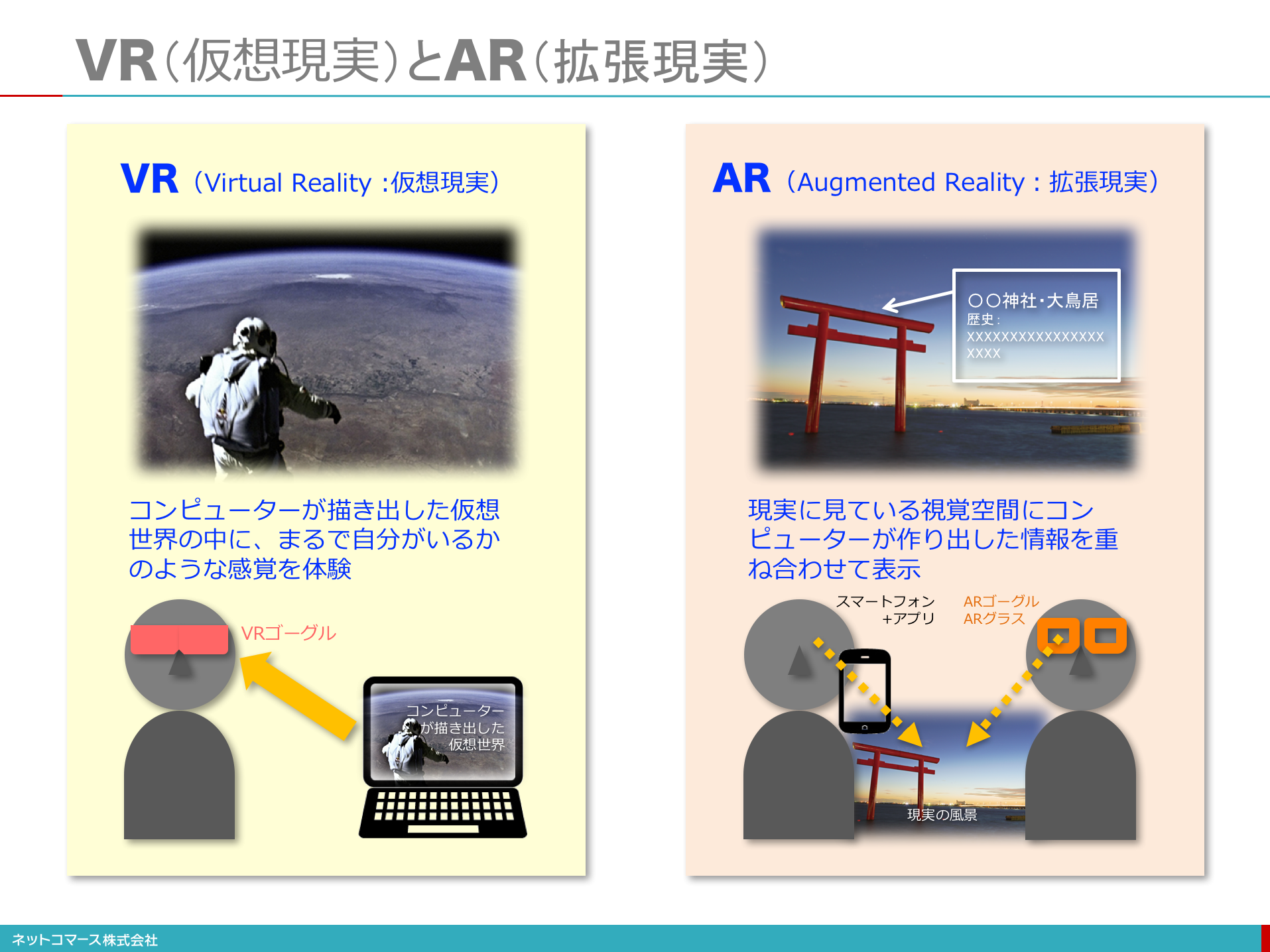
Augmented Reality (AR) is the next generation version of the real-time world around us, enabled through a number of related IT technologies. For example, a standard AR experience includes the following advanced technologies:
- Real-world 3D augmented images, text, and animations are delivered and displayed on head-mounted devices (HMDs), smartphones, tablets, smartwatches, car windshields, and more.
- Internet of Things (IoT) devices collect data from the real world and feed it to AR content processors.
- Comprehensive web search results included in the AR experience.
- Edge analytics to provide business users of AR with rapid data insights.
AR is a mature technology used in many industries, including:
- E-commerce and corporate retail
- customer service
- Automobile manufacturing business
- Business operation and management in remote areas
- Online and mobile games
- online and offline entertainment
AR technology is concerned with how end users use digital technology to consume content, shop online, and experience lifestyle. Once the next iteration of AR is complete, you will have easy access to the AR cloud. Users can share their experiences with a persistent copy of their real-world experiences available on the cloud.
What is AR Cloud?
Augmented Reality (AR) Cloud is an online space where AR developers can store AR experiences of any location, product, moment, etc. The idea is to create an unreduced copy of the present, supplemented with extensive information from the web about the present.
For example, you are walking down the street in a new city. Are you looking for a great place to eat local food?
In today’s digital world, you would open Google Maps or Apple Maps. Then search for keywords like restaurants, bakeries, diners, etc. and the map will retrieve many places around you.
You must select each location and review information such as star ratings, customer review text, and menus.
AR Cloud replaces this location experience using AR and cloud processing infrastructure. A central or edge analytics app automatically analyzes nearby restaurants and suggests some of the best ones by analyzing review data through artificial intelligence (AI).
When you go near one of these restaurants, more detailed information such as the menu, cooking instructions, name of the server, and the price of the items are all displayed on your smartphone screen or head-mounted display.
Data captured online is projected into real-time camera views of products, locations, locations, and more. Developers can store this information in the cloud. Other customers can also access the AR experience on demand.
AR Cloud can also be a framework for AR content development. Cloud service providers such as Google, Microsoft, and Amazon can develop easy-to-use AR development SDKs and host their tools on the cloud.
Developers around the world can access these AR development platforms, code their own content, and publish it online for their target consumers.
When the AR cloud takes off, online search will change from top to bottom. Users don’t have to surf through hundreds of pages to find the content, documents, images, and experiences they’re looking for. The user’s intended search is done visually, with answers appearing where the questions are.
How does AR Cloud work?
Traditional AR content uses connected IoT devices, smartphone screens, mobile cameras, etc. to place an abstraction layer on top of dynamic visuals of the real world. For example, Snapchat lenses, Pokemon Go gaming app, hair coloring app, beautification app, etc.
AR Cloud allows content creators and AR solution developers to create content for mass consumption using cloud resources such as cloud instances such as graphic design, animation, IoT emulation, and edge analytics on the cloud. Masu.
In an AR cloud environment, AR apps are hosted on the cloud instead of on smartphones, head-mounted displays, visors, VR gadgets, etc. Therefore, GPU and processing power is also provided by the cloud instance. There is no need to procure high-performance devices for end-user use.
All users need is a camera, GPS, internet, and a computing device with web browser capabilities. Everything else is provided by an AR cloud solution hosted on a virtualized cloud computing instance.
AR cloud components
According to Ori Inbar, a functioning AR cloud includes the following components:
- A shareable, scalable, machine-readable persistent image of the world that includes real-world location coordinates
- Localization program code that allows you to instantly find local places of interest
- Media distribution system that places virtual content on AR devices while supporting many users
However, from a technology and software perspective, the following are the minimum requirements to set up a functioning AR cloud:
- AR browser for visual search, user authentication, AR rendering, content syndication, hand tracking, gesture tracking, object tracking, and more.
- Edge computing enables real-time analysis on the fly without waiting for a central server
- AR virtual assets such as holograms, social graphs, contextual data, and 3D maps.
- AR data storage including metadata repositories, content, and point clouds
- Core technologies such as 3D geometry detection, dynamic object tracking, 3D emantics understanding, and vision intelligence
Next, explore business opportunities in the AR cloud ecosystem.
Business opportunities in the AR cloud ecosystem
The most promising and profitable business use of AR cloud may be a functional AR cloud browser. Consumers can use visual search to find content, products, offers, and more instead of typing in a browser’s search field.
The AR search browser displays information such as items, products, and locations that users see with their HMD gadget or smartphone camera, depending on the search context and keywords.
Search results pop up near your search query like 3D images, animations, text, content blocks, and more. These can be physical or digital in the real world.
Other business-centric use cases that can generate millions of dollars in revenue include:
#1. small AR cloud
Several startups in the AR cloud space are developing small-scale AR clouds. These are persistent, updateable 3D and real-world experiences of cities, towns, countries, and regions on digital maps delivered through AR devices.
#2. AR cloud game
Online and multimedia developers can use the AR cloud to develop games that depict the real world rather than an animated world. For example, the game app “Pokemon Go” for mobile phones and tablets.
#3. real estate
Real estate registration services and authorities can use AR cloud to map the real world. Multimedia-based land records can then be used to register, transfer ownership, issue building and development permits, and more.
#4. AR cloud development infrastructure and tools
Tech startups can also develop AR cloud APIs/SDKs for 3D mapping, real-world spatial mapping, etc., and sell access to AR developers, content creators, etc.
#5. AR cloud content
Cloud repository providers can leverage their infrastructure and investments to scan cities of interest for business, travel, tourism, shopping, and more. These cloud AR repositories can sell access to mapped content to AR software developers.
AR content creators can use data from AR cloud providers on demand, including 3D scanning, spatial imaging, localization, and visual positioning, to create engaging AR content and experiences for consumers.
#6. AR cloud-based advertising
The introduction of AR cloud could significantly change the advertising industry. Businesses can display personalized product and content recommendations when target users visit key locations.
For example, a restaurant brand can proactively display sales and promotions on the HMD or mobile phone screen of users arriving near the restaurant’s premises.
Benefits of AR cloud
The main benefit of AR Cloud is that it saves you time and effort searching for high-quality content on the web. As the augmented reality cloud becomes accessible and mature, businesses and end users will be able to find the content they are looking for right in front of their eyes, via HMDs, tablet screens, smartphone screens, helmet visors, etc. .
Other notable benefits of AR Cloud include:
- Cybersecurity developers can leverage AR Cloud’s cloud infrastructure to develop content delivery solutions that are more secure than today’s Internet systems.
- Customer service businesses can serve customers more efficiently from remote locations.
- Easily find locations, stores, shopping points, restaurants, campsites, hunting spots, fishing spots, and more by overlaying information and guidance on your real-world view using AR navigation on your mobile screen, HMD, or visor You can.
- Even novice users can use AR cloud solutions visually without having to know how to code or operate complex apps, making IT and digital technology easier and more accessible.
Next, we discuss the future scope of the AR cloud.
The future of AR cloud
AR Cloud leads futuristic product development in the field of augmented reality. Businesses are already realizing value and return on investment (ROI) by using AR technology. Commercial organizations are using AR cloud technology for do-it-yourself (DIY) remote collaboration with third-party partners.
Companies are already training users through remote, immersive, and realistic experiences that combine 3D and real-world content.
AR cloud-based real-world mapping allows businesses to expand their use cases. Companies can also offer multi-user AR experiences for entertainment, education, sports, and more.
As real-world mapping develops, existing AR development frameworks that use marker-based AR or detect objects will change to take advantage of real-world mapping data. This will create even more new use cases in the business world, further increasing the demand for AR cloud in the future.
learning resources
#1. What is augmented reality?
What is Augmented Reality? A comprehensive book to learn about the current state of AR development and its business benefits. The author provides many interviews with leaders in AR development in plain English to help anyone understand what’s going on in the world of AR.
| preview | product | evaluation | price | |
|---|---|---|---|---|
 | What is Augmented Reality?: Everything you wanted to know… | $8.16 | Buy on Amazon |
The book features real interviews with designers, CEOs, developers, and AR engineers, as well as the evolution of AR development tools, software, and devices.
#2. Augmented Reality, 1st edition
The first edition of Augmented Reality covers the topics in AR theory, AR program design, and code development that AR engineers and developers need to learn in college and professional life.
| preview | product | evaluation | price | |
|---|---|---|---|---|
 | Augmented Reality, 1st edition | $29.60 | Buy on Amazon |
Some of the AR topics covered in this book are:
- computer coordinate system
- Camera calibration
- homogeneous matrix representation
- AR Lab Hardware Requirements
- computer vision
It also introduces readers to the mathematics behind AR development and real-world project examples.
#3. Cloud computing: concepts, technology, architecture
Cloud Computing: Concepts, Technology, and Architecture is intended for professionals learning cloud computing, recent graduates looking to enter the IT ecosystem as cloud computing professionals, or businesses needing to move their business to the cloud. This is a must-have book for anyone involved.
| preview | product | evaluation | price | |
|---|---|---|---|---|
 | Temporarily out of stock; When in stock… | $54.99 | Buy on Amazon |
This book describes current trends in cloud solution development, cloud framework technologies, and best practices that businesses should follow to move their operations to the cloud.
The book also describes cloud technology mechanisms, models, concepts, and cloud architectures from a vendor-neutral perspective. Needless to say, all discussions are centered around business and industry, so CTOs, CEOs, and startup practitioners can benefit from cloud adoption.
summary
Augmented reality (AR) is already a mature technology. It is not included in the list of emerging technologies published in the Gartner Hype Cycle for Emerging Technologies . Therefore, companies, technology enthusiasts, developers, and researchers believe that AR is no longer a nascent technology.
The next version of AR is AR Cloud. Enabled by secure, accessible, and affordable cloud infrastructure. AR Cloud will soon become the most used World Wide Web search standard, along with Google, Bing, Yahoo, and others. Therefore, as new use cases emerge, new business opportunities will emerge.
Next, you can find more information about advanced analytics.


![How to set up a Raspberry Pi web server in 2021 [Guide]](https://i0.wp.com/pcmanabu.com/wp-content/uploads/2019/10/web-server-02-309x198.png?w=1200&resize=1200,0&ssl=1)


